Self-Regulating Pipe Heat Tape (6W/ft) | YeloDeer
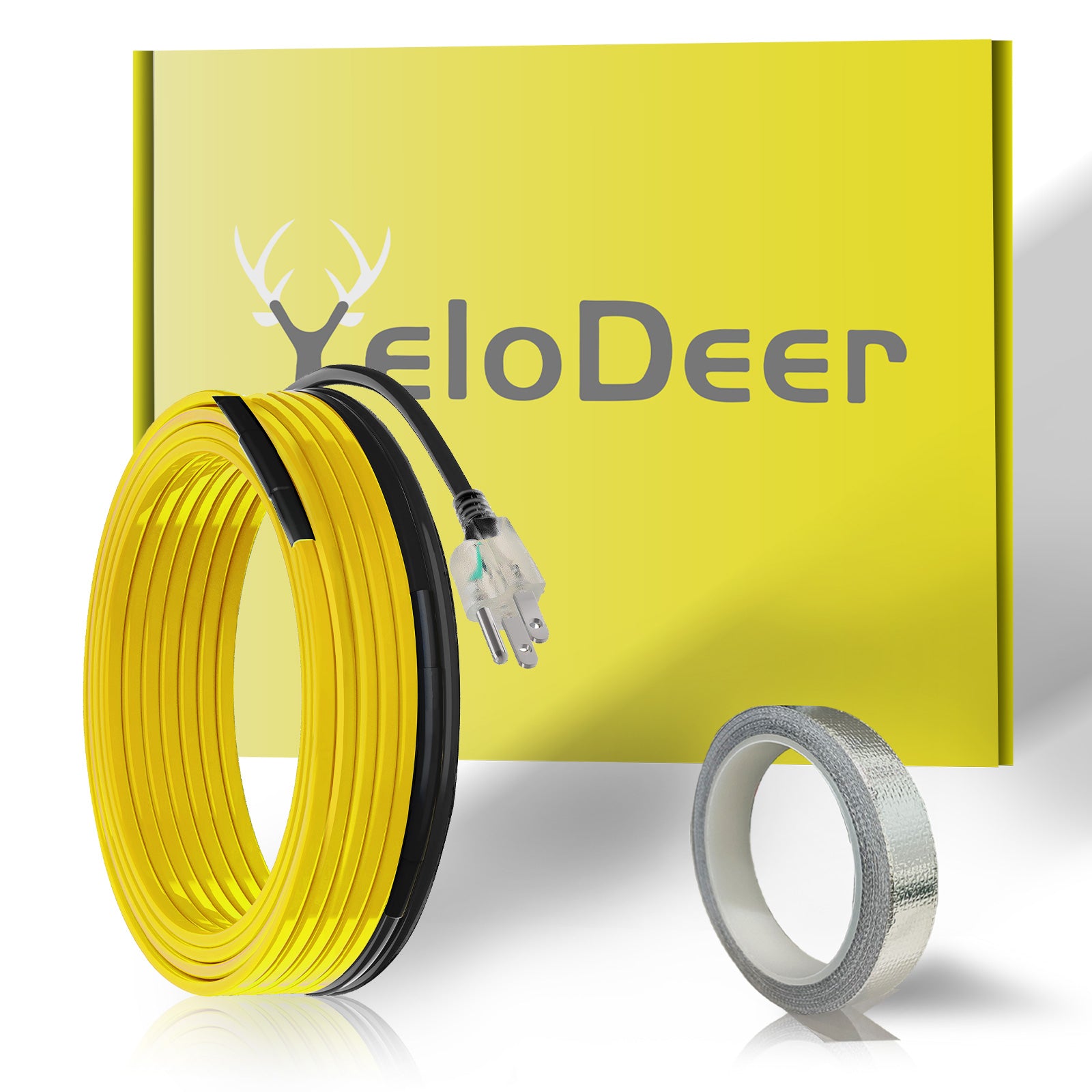
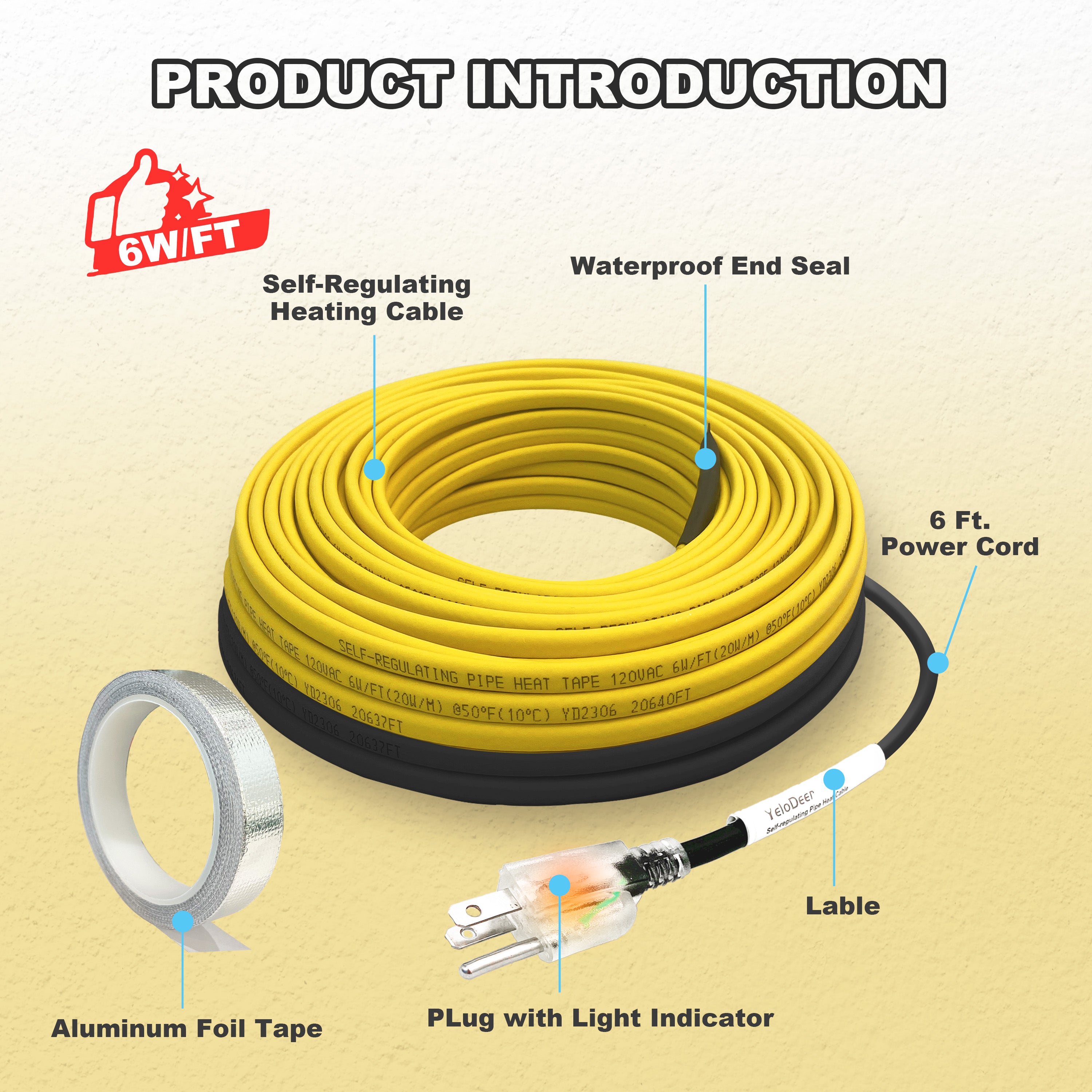
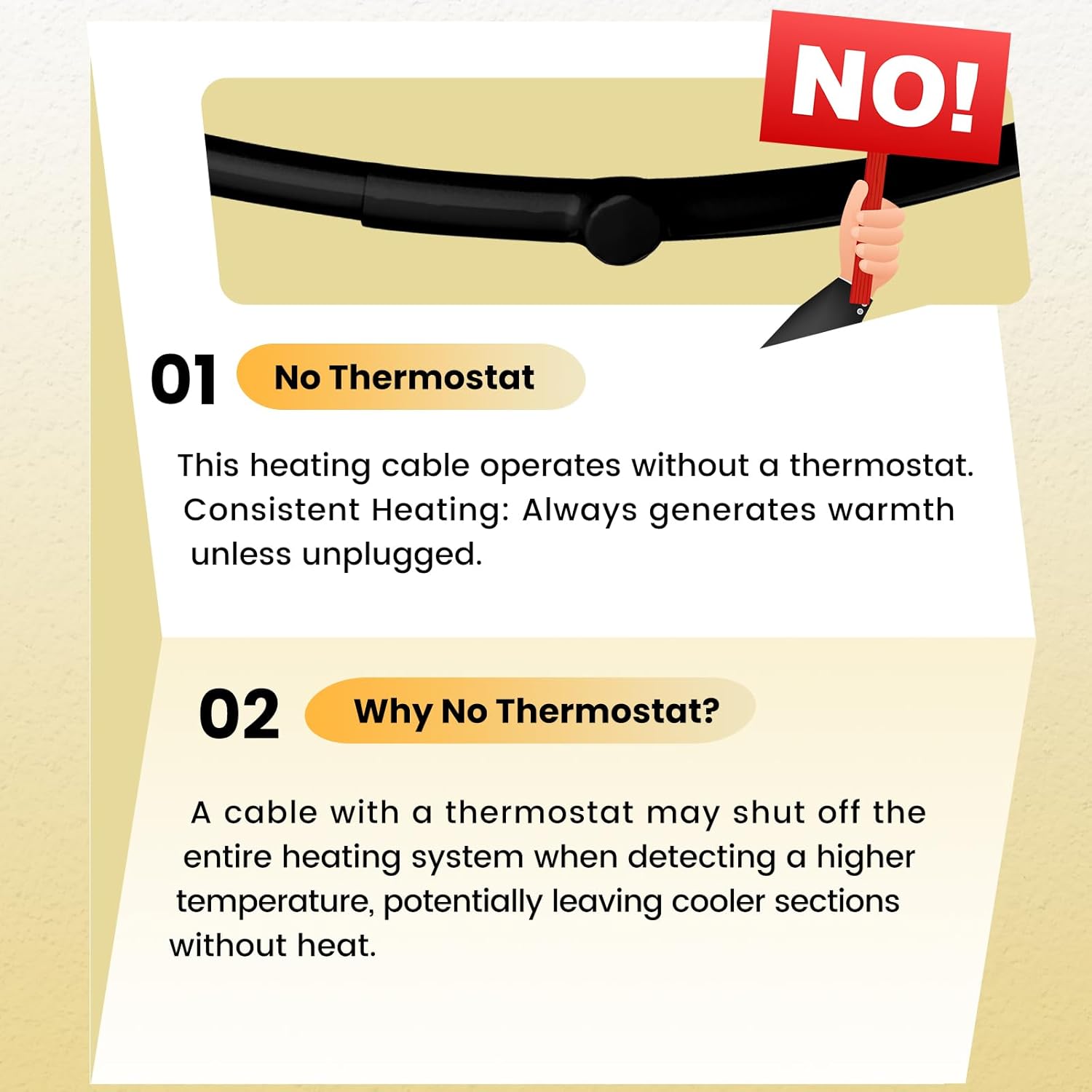
Plug and Heat 120V AC Extra 6ft Power Cord Self-regulating No Thermostat
Regular price $22.79 USD Sale price $22.79 USD
Size 6 ft
In stock

Enjoy free shipping on orders over $30.

We ship orders within 48 hours for quick delivery.

1. Our website accepts Visa, MasterCard, and American Express. If you are using a card issued by another bank, please ensure it is enabled for international transactions.

2. During payment, you may be required to complete 3D Secure (3DS) verification. Please ensure that the cardholder completes the verification to avoid payment failure.

3. If your usual spending amounts are relatively low and you are making a larger purchase, your bank may flag the transaction as a potential risk. If your payment fails, please contact your bank to approve the transaction.

On Pipe Heating Cable

Common Questions

This FAQ section is based on real customer questions about YeloDeer external self-regulating pipe heat cables, including plug-in pipe heat tape, dual-indicator pipe heat tape, and bulk cut-to-length pipe heating cable.

If you are not sure which version or length to choose, please contact us at yelodeer@yelodeer.com with your pipe diameter, pipe material, exposed pipe length, installation photos, and whether you need a plug-in cable or a cut-to-length bulk cable.

on_pipe.png

All three are external self-regulating pipe heating cables designed to help prevent frozen water pipes.

The standard plug-in version is the easiest option for most homeowners. It comes with a power plug, built-in thermostat, and ready-to-use design.

The dual-indicator version is the upgraded plug-in model. It works like the standard version, but the plug has two indicators: green means power is connected, and red means the cable is actively heating.

The bulk cut-to-length version is for custom pipe layouts. It allows you to cut the cable to the required length, but it requires manual assembly of the power connection and end seal. It is better for professional installers, plumbers, electricians, or experienced DIY users.

No. These products are external pipe heating cables. They should be wrapped on the outside of the pipe.

Do not insert them inside drinking water pipes, sewer pipes, drain lines, tanks, or any pipe where the cable will be in direct contact with water.

For internal pipe freeze protection, please choose a YeloDeer in-pipe or in-water heating cable instead.

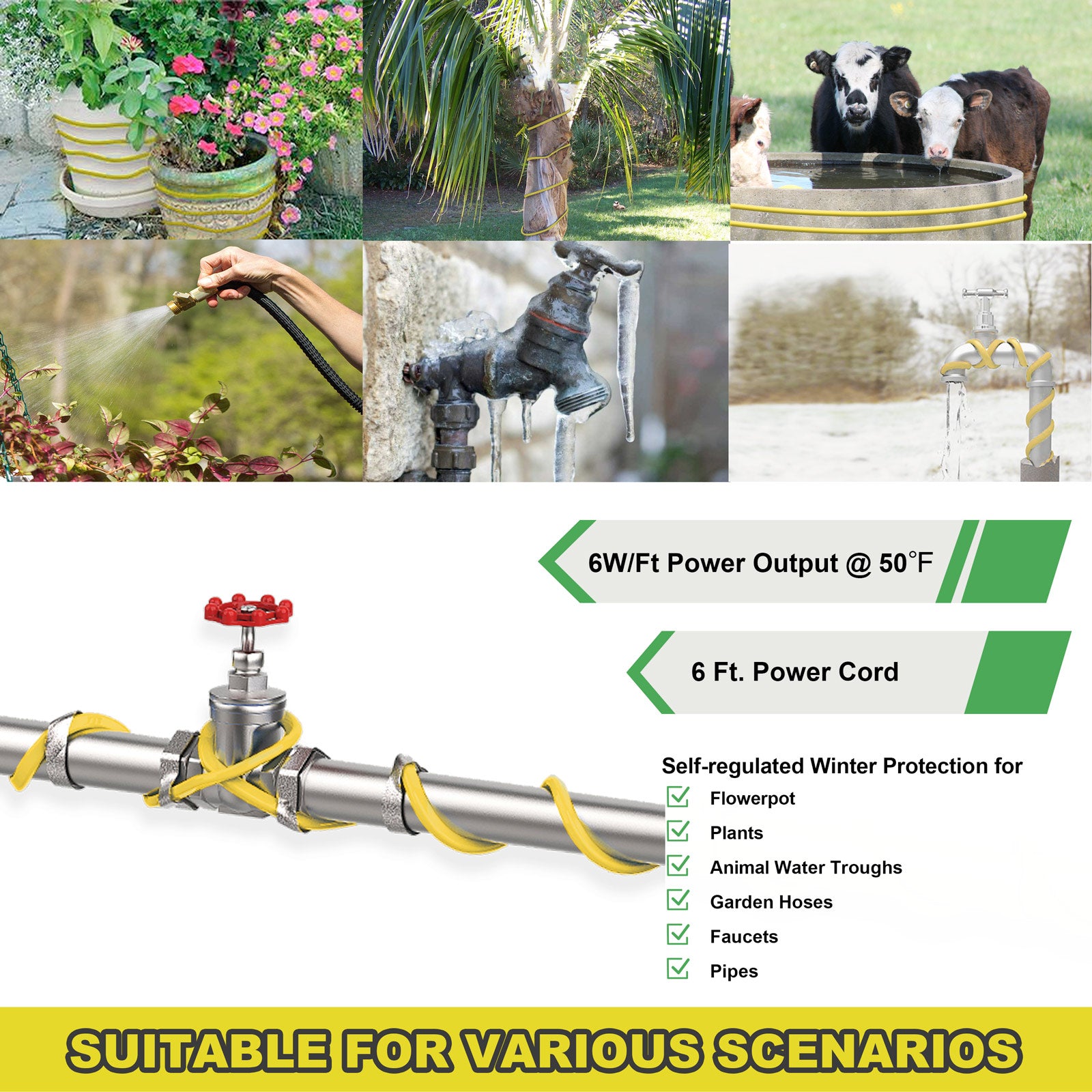
Yes. YeloDeer external self-regulating pipe heat cables can be used on many common pipe materials, including PVC, PEX, ABS, copper, steel, galvanized pipe, and other suitable plastic or metal water pipes.

Before installation, make sure the pipe is clean, dry, undamaged, and safe to heat. Do not install the cable on leaking, cracked, or unsafe pipes.

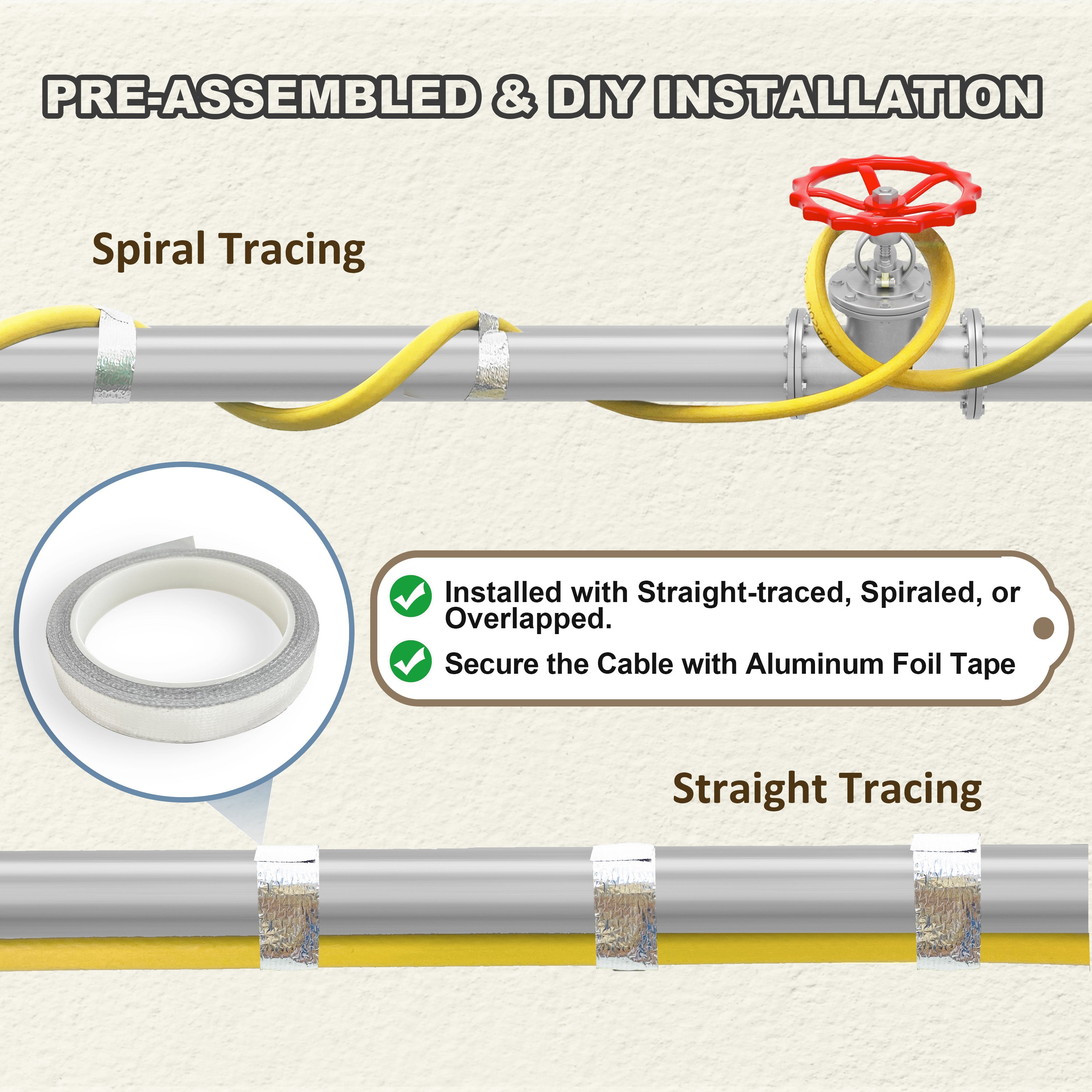
Yes. Because this is a self-regulating heating cable, it can be installed straight, spiral-wrapped, crossed, or overlapped when installed properly.

This is helpful for protecting valves, elbows, joints, short exposed sections, and areas where freezing often starts.

Avoid tight knots, crushing, sharp bends, or fastening methods that may damage the cable.

If you have extra cable, the best option is to adjust the installation by wrapping the cable more densely along the pipe, especially around valves, elbows, or colder sections.

You may also wrap the remaining cable back around the pipe end. Because the cable is self-regulating, overlapping is allowed when installed properly.

For cuttable self-regulating cable, the extra length may be cut only if the cut end is properly sealed with the correct waterproof end seal.

Do not cut the plug end.
Do not leave a cut end unsealed.
Do not cut constant-wattage heating cables.
If you are using the bulk version, make sure the power connection and end seal are assembled correctly before use.

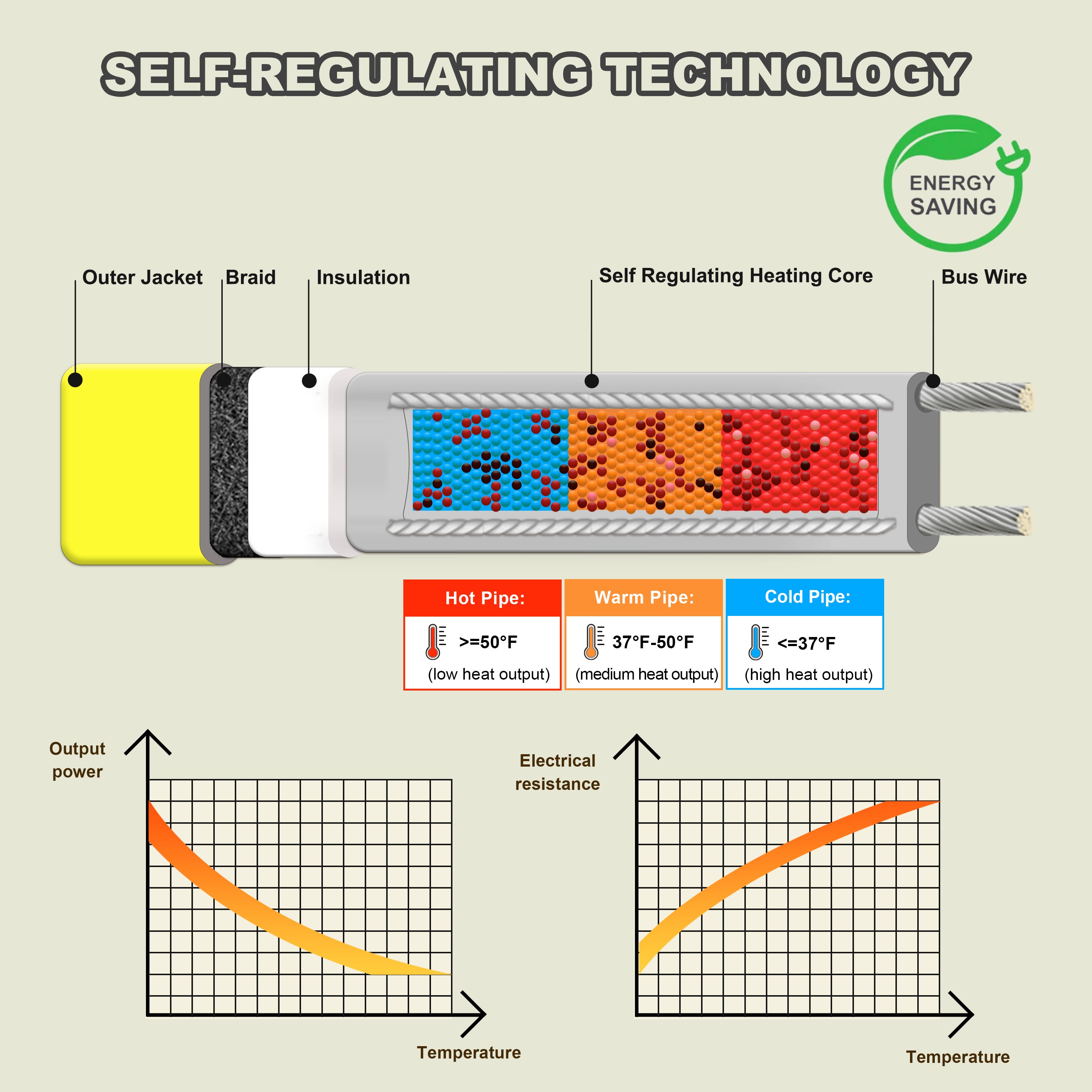
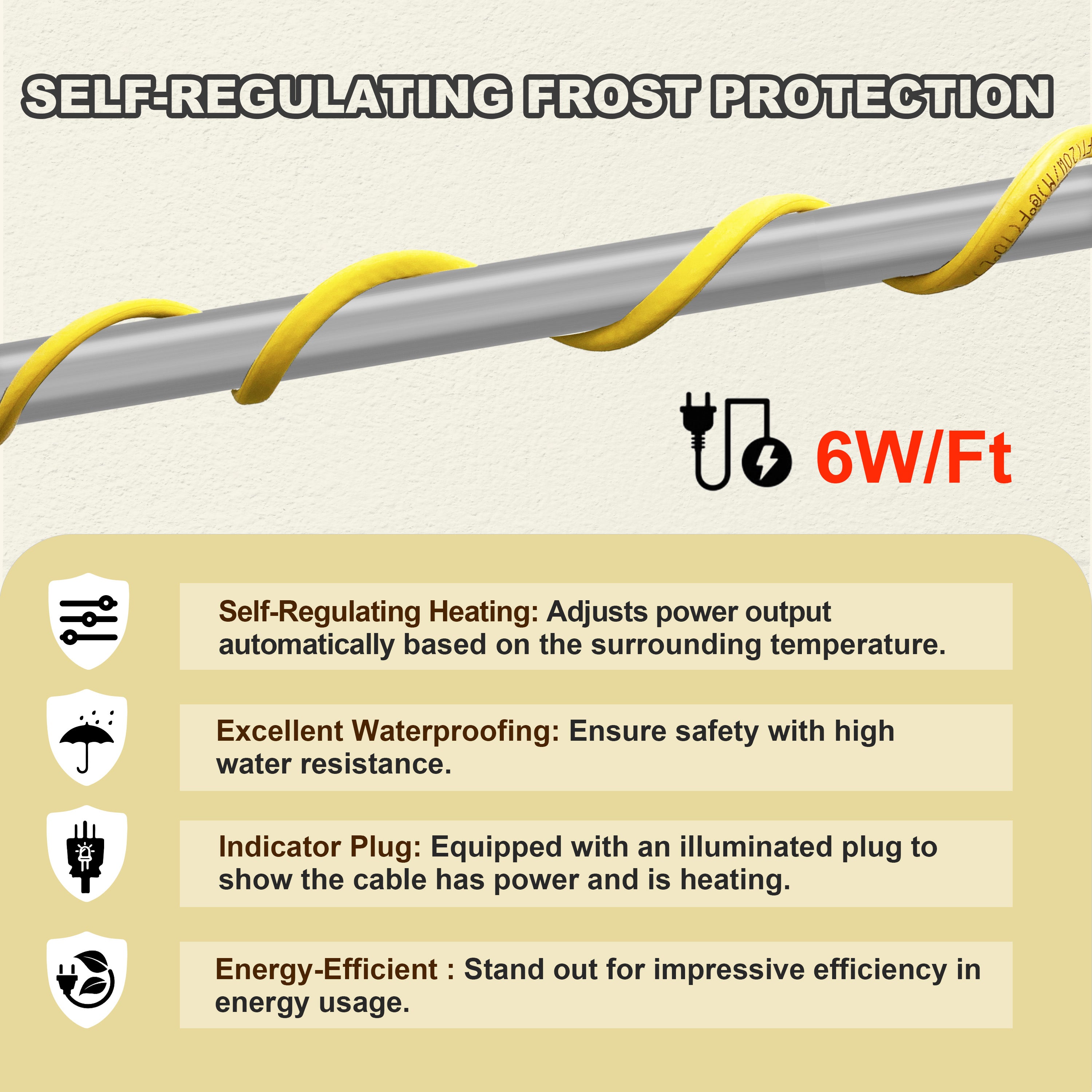
Self-regulating means the cable adjusts its heat output as the pipe and surrounding temperature change. It produces more heat in colder areas and reduces output as the pipe gets warmer.

However, self-regulating does not always mean the cable is completely off.

For plug-in versions with a built-in thermostat, the cable turns heating on around 37°F / 3°C and off around 50°F / 10°C.

For custom bulk installations, adding a controller or thermostat can help reduce unnecessary energy use and make the system easier to manage during winter.

For the dual-indicator version, this is normal.

Green light means the plug is connected to power.

Red light means the cable is actively heating.

If the temperature is above the thermostat activation point, the cable may not need to heat, so the red light may stay off even though the green light is on.

For the standard plug-in version, the plug indicator only confirms power. It does not necessarily mean the cable is actively heating.

For the bulk version, indicator behavior depends on the connection kit or controller used.

Yes, pipe insulation is strongly recommended for better freeze protection.

The heating cable provides heat, while insulation helps keep that heat around the pipe.

Insulation can improve performance, reduce heat loss, and lower energy use, especially for outdoor pipes, crawl spaces, basements, windy areas, farm water lines, RV plumbing, and very cold climates.

Install the heating cable first, then cover the pipe and cable with suitable pipe insulation.

Yes, but the electrical connection must be protected from moisture.

For outdoor use, plug the cable into a properly installed outdoor-rated outlet and use a weatherproof in-use cover. Do not allow the plug, outlet, extension cord connection, power connection, or cable end seal to sit in standing water, snow, or direct rain exposure.

If an extension cord is needed, use a suitable outdoor-rated extension cord. We recommend 16AWG or thicker for safer operation.

For bulk cut-to-length installations, make sure all power connections and end seals are assembled correctly and protected from moisture. If you are not familiar with electrical wiring or waterproof sealing, consult a qualified electrician or installer.

Questions & Answers

Have a Question?

Be the first to ask a question about this.

Ask a Question