

Overview
Self-Regulating Pipe Heat Tape with Built-In Thermostat
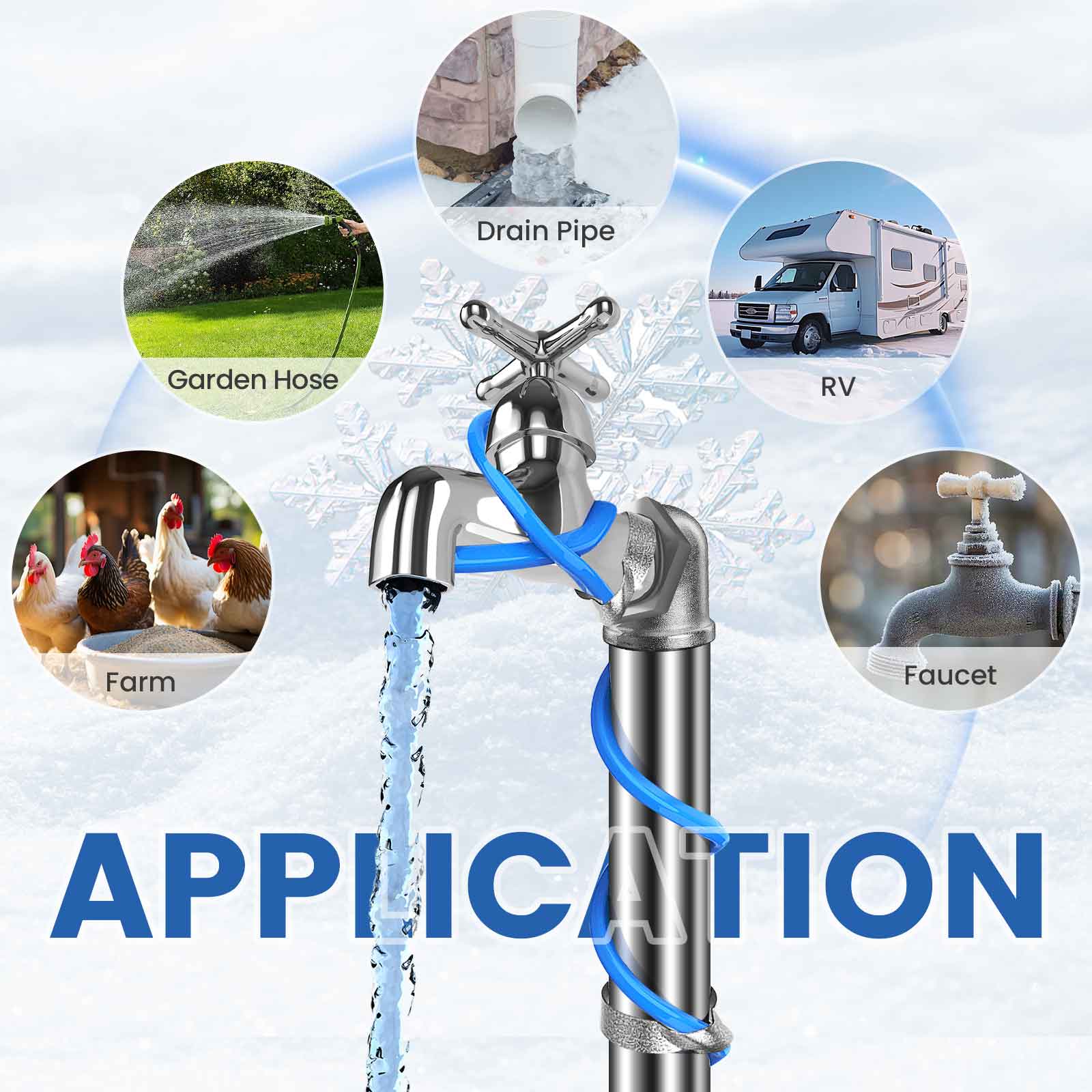
YeloDeer Self-Regulating Pipe Heat Tape is an easy-to-install external pipe heating cable designed to help prevent frozen water pipes during winter. It is ideal for outdoor water pipes, garden hoses, farm water lines, crawl space pipes, basement pipes, RV plumbing, valves, joints, and other exposed pipe sections that may freeze in cold weather.
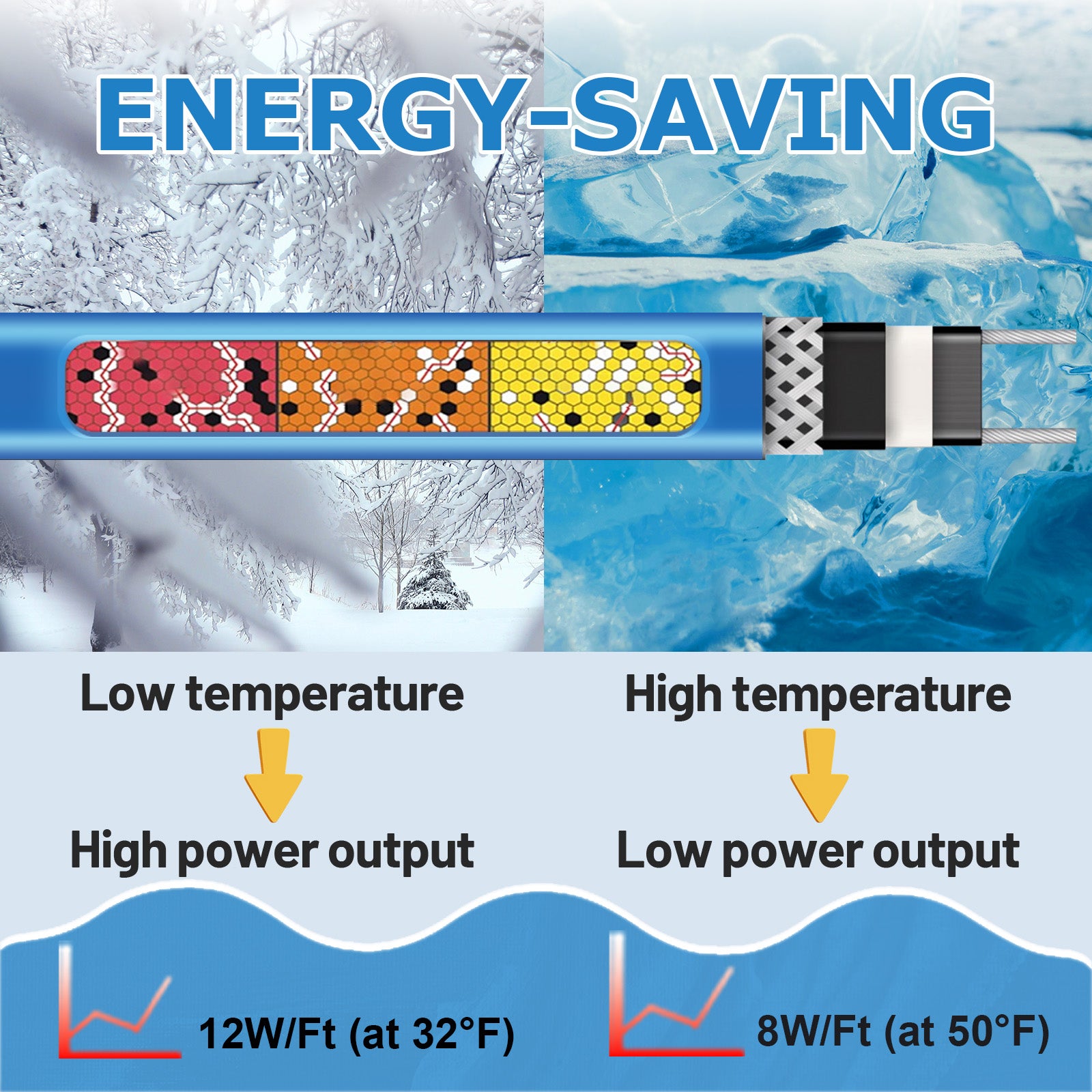
This plug-in pipe heat cable automatically adjusts its heat output as the surrounding temperature changes. It delivers more heat when the pipe is cold and reduces output when the pipe gets warmer, helping provide reliable freeze protection without the overheating risk commonly associated with constant-wattage cables.
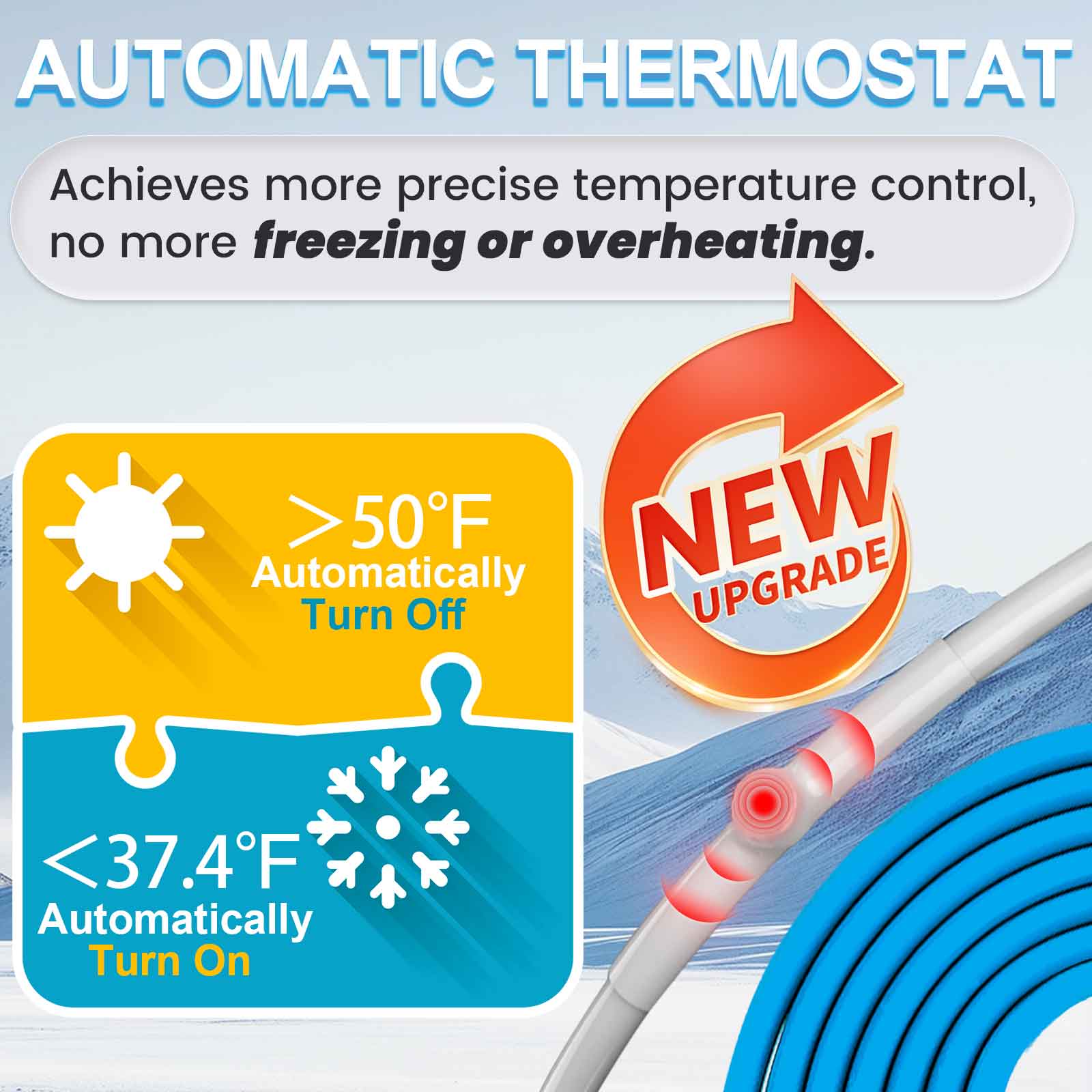
The built-in thermostat turns the heating cable on around 37°F / 3°C and off around 50°F / 10°C, so the system works automatically when freezing conditions begin.
Key Benefits
• Self-regulating heating technology adjusts heat output as temperature changes
• Built-in thermostat turns on at 37°F / 3°C and off at 50°F / 10°C
• Helps prevent frozen water pipes in winter
• 5W/ft heating output for residential, farm, RV, and light commercial pipe freeze protection
• Suitable for metal and plastic pipes, including PVC, PEX, ABS, copper, steel, and galvanized pipes
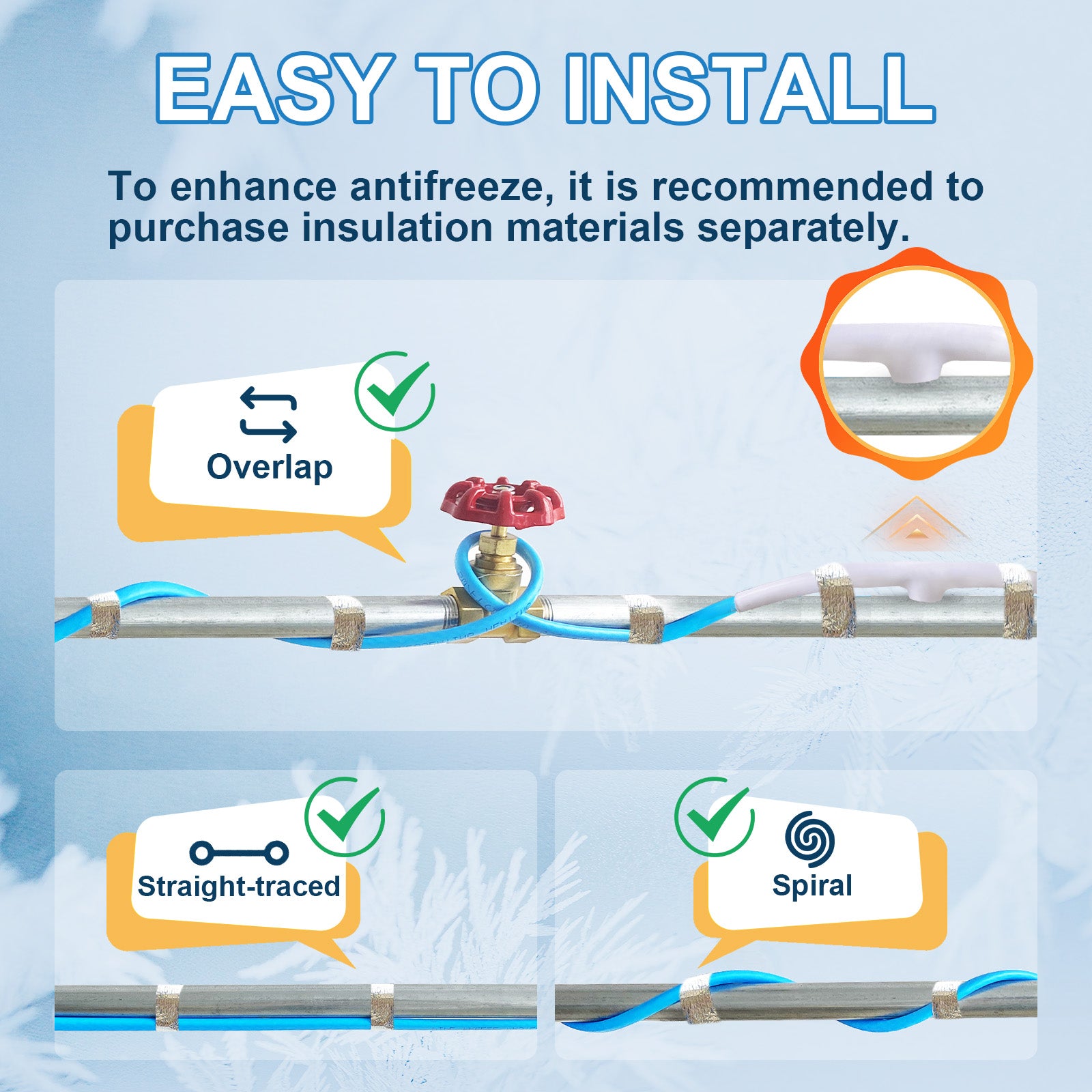
• Safe for straight, spiral, and overlapping installation
• Can be used on dry or water-filled pipes
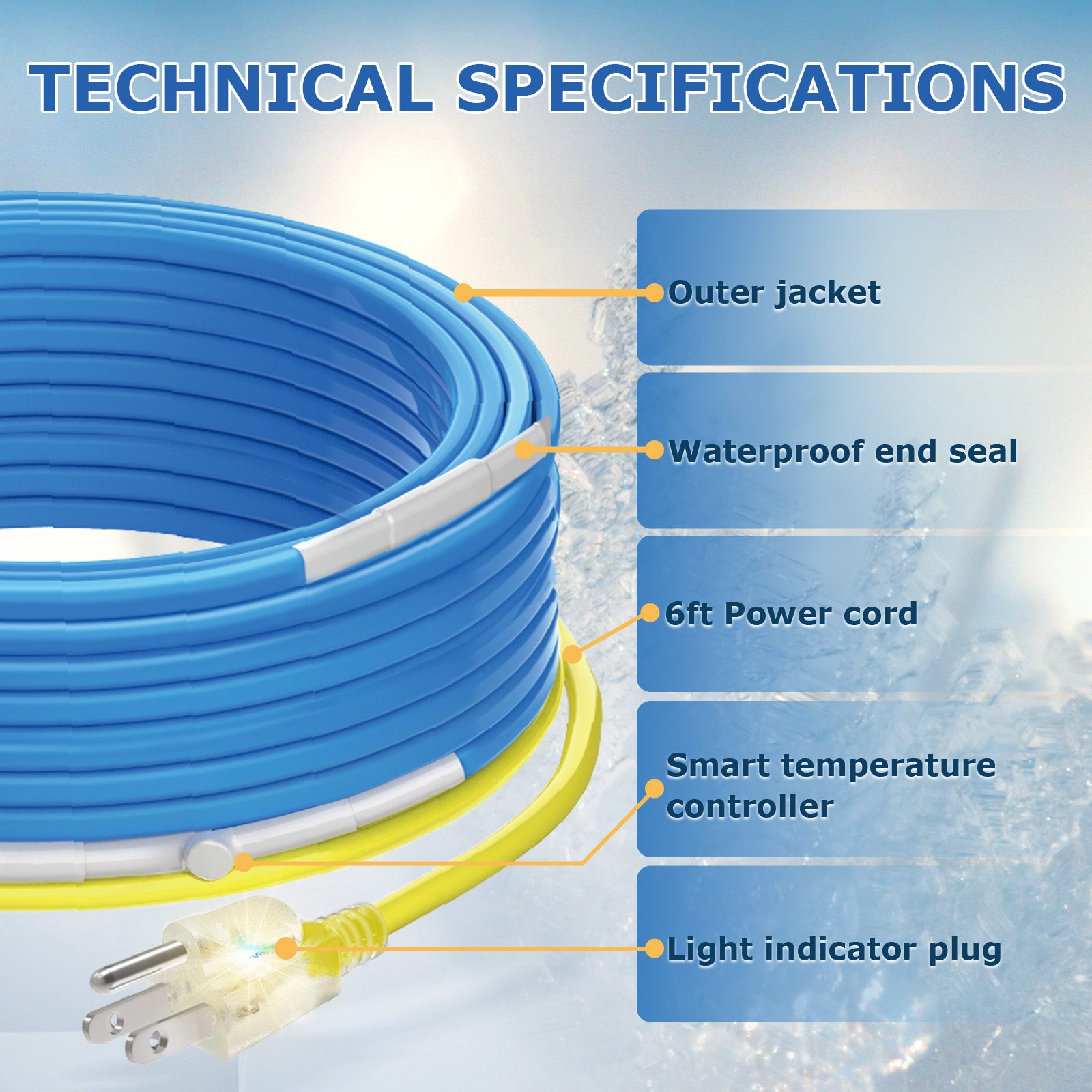
• 6 ft power cord for easier outlet connection
• Plug-in design for simple DIY installation
• Visible plug indicator confirms power connection
• Can be cut to length when properly sealed with a waterproof end seal
• Works well with pipe insulation for improved freeze protection and energy efficiency
Best For
• Outdoor water pipes
• Garden hoses
• Farm faucets
• Livestock water lines
• RV, camper, and trailer plumbing
• Basement and crawl space pipes
• Garage pipes
• Valves and pipe joints
• Short exposed pipe sections
• Seasonal pipe freeze protection
Important Before You Order
This product is an external pipe heating cable. It should be wrapped around the outside of the pipe.
It is not designed to be inserted inside pipes, tanks, sewer lines, drain lines, or drinking water systems. If you need internal pipe freeze protection, choose YeloDeer in-pipe or in-water heating cable products instead.
The plug indicator confirms that power is connected. It does not necessarily mean the cable is actively heating. The cable begins heating when the built-in thermostat senses cold conditions around 37°F / 3°C.
Looking for Clear Heating Status?
This standard version includes a visible power indicator.
If you want to see both power status and heating status, choose the upgraded Dual-Indicator Plug version.
Standard Version: Power indicator only
Dual-Indicator Version: Green light = power on, Red light = heating active
For most basic pipe freeze protection applications, this standard plug-in version is simple, reliable, and cost-effective.


Applications & Compatibility
Recommended Applications
YeloDeer Self-Regulating Pipe Heat Tape is designed for external freeze protection on water pipes and hose-style plumbing systems.
Common applications include:
• Outdoor water supply pipes
• Garden hoses
• Farm faucets
• Barn and livestock water systems
• RV and camper plumbing
• Trailer water lines
• Basement pipes
• Crawl space pipes
• Garage pipes
• Exterior wall pipes
• Sprinkler system pipes
• Valves, elbows, and joints
• Residential and light commercial water pipe freeze protection
This product is especially useful for pipes exposed to cold air, wind, unheated spaces, or seasonal freezing conditions.
Compatible Pipe Materials
This heating cable can be used on many common pipe materials, including:
• PVC
• PEX
• ABS
• Copper
• Steel
• Galvanized pipe
• Other suitable plastic and metal water pipes
Before installation, make sure the pipe is clean, dry, undamaged, and safe to heat.
Recommended Pipe Size
This product is designed for pipes up to 2 in diameter.
For larger pipes, severe freeze conditions, long exposed pipe runs, or special installation layouts, please contact us before ordering so we can help confirm the correct cable length and installation method.
Where This Product Works Best
Use this product when you need simple plug-in freeze protection for:
• Water supply pipes
• Outdoor exposed pipes
• Pipes in unheated spaces
• RV or camper water lines
• Farm and livestock water systems
• Seasonal winter pipe protection
When Not to Use This Product
This product is not recommended for:
• In-pipe installation
• Potable water pipe internal installation
• Sewer or drain pipe internal heating
• Long-term submersion in water
• Roof and gutter de-icing
• Pipes larger than 2 in without confirming suitability
• Damaged, leaking, or unsafe pipes
• Applications where the plug or outlet may sit in standing water
If you need internal pipe freeze protection, choose YeloDeer in-pipe heating cable.
If you need long-term submerged use, choose YeloDeer in-water heating cable.
If you need roof and gutter de-icing, choose a dedicated roof de-icing heating cable.
Standard Version vs Dual-Indicator Version
Choose this standard version if you need:
• Simple plug-in pipe freeze protection
• Built-in thermostat control
• A visible power indicator
• A cost-effective solution for common pipe heating applications
• Easy DIY installation
Choose the dual-indicator version if you want:
• Green light for power status
• Red light for active heating status
• Easier winter inspection
• Clearer plug status during cold weather
The main difference is the plug indicator system. The heating application range remains external pipe freeze protection.
Specifications & Sizing
Product Specifications
Product Type: Self-regulating external pipe heating cable
Application: External freeze protection for water pipes
Heating Cable Type: Self-regulating pipe heat tape
Heating Output: 5W/ft
Built-In Thermostat: Yes
Thermostat On Temperature: 37°F / 3°C
Thermostat Off Temperature: 50°F / 10°C
Voltage: 120V AC
Power Cord Length: 6 ft
Maximum Stable Cable Temperature: Approx. 140°F / 60°C
Plug Indicator: Visible power indicator
Recommended Pipe Size: Up to 2 in diameter
Compatible Pipe Materials: PVC, PEX, ABS, copper, steel, galvanized pipe, and suitable plastic or metal water pipes
Installation Methods: Straight, spiral, or overlapping installation
Cutting: Can be cut to length when properly sealed with a waterproof end seal
How to Choose the Right Length
Choose the heating cable length based on the pipe section that needs freeze protection.
Before ordering, measure:
• Total exposed pipe length
• Valves, elbows, or joints that need extra coverage
• Whether you plan to install the cable straight or spiral-wrapped
• Whether the pipe is in a windy or very cold location
• Distance from the pipe to the outlet
• Whether insulation will be added after installation
Straight Installation
Straight installation is suitable for many small and medium water pipes.
Run the cable along the pipe length, usually along the bottom side or coldest side of the pipe, then secure it properly before adding insulation.
Spiral Installation
Spiral installation provides more heating coverage per foot of pipe and may be useful for:
• Very cold locations
• Wind-exposed pipes
• Short pipe sections needing extra protection
• Valves, joints, or elbows where freezing often starts
Spiral installation uses more cable length, so choose a longer cable if you plan to wrap it around the pipe.
Overlapping Installation
Because this is a self-regulating heating cable, overlapping is allowed when installed properly.
This makes it easier to protect valves, elbows, and irregular pipe sections.
Can the Cable Be Cut?
Yes, this self-regulating heating cable can be cut to length if needed.
After cutting, the cut end must be properly sealed with a waterproof end seal.
Do not leave a cut end unsealed.
Do not cut the plug end.
Do not cut constant-wattage heating cables.
If you are not comfortable cutting and sealing the cable, choose a standard length that fits your pipe layout or contact us before installation.
Length Selection Tip
If you are choosing between two sizes, it is usually better to choose a slightly longer cable.
Extra cable can often be managed by adjusting the wrap spacing or wrapping more densely around valves, elbows, or colder sections.
Installation & Accessories
Basic Installation Overview
YeloDeer Self-Regulating Pipe Heat Tape is designed for simple external pipe installation.
Typical installation steps:
1. Confirm the pipe is clean, dry, and in good condition.
2. Measure the pipe section that needs freeze protection.
3. Place the heating cable along the pipe in a straight or spiral pattern.
4. Position the thermostat area where it can sense pipe or ambient temperature properly.
5. Secure the cable with suitable tape or cable ties.
6. Do not use metal wire, nails, screws, or sharp fasteners that may damage the cable.
7. If cutting is needed, cut only the heating cable end, not the plug end.
8. Seal the cut end with a waterproof end seal.
9. Add pipe insulation for better freeze protection and energy efficiency.
10. Plug into a properly protected 120V outlet.
11. Check the plug indicator to confirm power connection.
Straight Installation
For straight installation, run the cable along the pipe length and secure it at intervals.
This method is simple and suitable for most basic water pipe freeze protection applications.
Spiral Installation
For spiral installation, wrap the cable around the pipe evenly.
Use spiral installation when the pipe needs more heating coverage or is exposed to stronger freezing conditions.
Overlapping Installation
Because this cable is self-regulating, it can cross or overlap itself during proper installation.
Overlapping is useful around:
• Valves
• Elbows
• Pipe joints
• Short exposed sections
• Areas where freezing often begins
Avoid tight knots, crushing, or sharp bends.
Using Pipe Insulation
For best freeze protection, cover the pipe and heating cable with suitable pipe insulation after installation.
Insulation helps:
• Reduce heat loss
• Improve freeze protection
• Save energy
• Protect the cable from wind and weather
• Improve performance on exposed outdoor pipes
Install the heating cable first, then apply insulation over the pipe and cable.
Outdoor Power Connection
For outdoor use, plug the cable into a properly installed outdoor-rated outlet.
Use a weatherproof in-use outlet cover.
Do not allow the plug, outlet, or extension cord connection to sit in standing water, snow, or direct rain exposure.
Using an Extension Cord
If an extension cord is needed, use a suitable outdoor-rated extension cord. We recommend 16AWG or thicker for safer operation.
Keep all plug and connector areas dry and protected.
Important Installation Notes
• Do not insert this cable inside a pipe.
• Do not use this product for long-term submersion.
• Do not install on damaged or leaking pipes.
• Do not use sharp clamps, nails, or screws to secure the cable.
• Do not leave a cut end unsealed.
• Do not allow the plug or outlet to sit in water.
• Do not cover the plug indicator where it cannot be inspected.
• Always follow local electrical safety requirements.
• Consult a qualified electrician or plumber if your installation is complex.
FAQ & Resources
Additional Product Questions
1. Is this cable the same as the dual-indicator version?
The heating cable application is similar, but the plug indicator is different.
This standard version has a visible power indicator.
The dual-indicator version has two separate indicators:
Green light = power on
Red light = heating active
If you want to see both power status and heating status, choose the dual-indicator version.
2. Does the plug light mean the cable is heating?
Not necessarily. The plug indicator confirms that power is connected. The cable only begins heating when the built-in thermostat senses cold conditions around 37°F / 3°C.
If the surrounding temperature is too warm, the plug may show power while the heating cable is not actively heating.
3. Can this cable be used on plastic pipes?
Yes. It can be used on suitable plastic pipes such as PVC, PEX, and ABS, as well as metal pipes such as copper, steel, and galvanized pipe.
4. Can this cable be used on garden hoses?
Yes. It may be used on many garden hoses or hose-style water lines if the hose is in good condition and the installation is suitable.
For best results, secure the cable properly and add insulation where needed.
5. Can this cable be used for RV or camper pipes?
Yes. It can be used for RV, camper, trailer, and seasonal plumbing freeze protection when the pipe size, outlet, and installation environment are suitable.
Make sure the outlet and plug are protected from weather and moisture.
6. Can this cable be used inside a wall?
This product is primarily designed for external pipe freeze protection. If the pipe is inside an enclosed wall cavity with limited airflow, heat dissipation may be different from normal exposed-pipe installation.
For enclosed wall installations, check local building and electrical requirements and consult a qualified professional before use.
7. Is this cable waterproof?
The heating cable has waterproof properties for normal pipe freeze protection use, including outdoor and wet environments.
However, it is not designed for long-term full submersion. If your application requires long-term submerged use, choose YeloDeer In-Water Heating Cable instead.
8. Can the cable touch itself?
Yes. Because this is a self-regulating cable, it can touch or overlap itself when installed properly. Avoid tight knots, crushing, or sharp bending.
9. Can I use it for roof and gutter de-icing?
No. This product is designed for pipe freeze protection.
For roof, gutter, and ice dam prevention, choose a dedicated roof de-icing heating cable.
10. What should I do if I am not sure which cable to choose?
Please contact yelodeer@yelodeer.com with:
• Pipe diameter
• Pipe material
• Exposed pipe length
• Indoor or outdoor installation
• Straight or spiral wrapping plan
• Photos of the pipe and outlet location
Our team can help you choose the correct product and length.
Related Resources
For clearer plug status, compare with YeloDeer Dual-Indicator Pipe Heat Cable.
For custom cut-to-length professional installations, choose YeloDeer Bulk PGB Self-Regulating Heating Cable.
For long-term submerged or internal drain applications, choose YeloDeer In-Water Heating Cable.
For potable in-pipe water line freeze protection, choose YeloDeer In-Pipe Heating Cable.
For product selection help, contact yelodeer@yelodeer.com with your pipe size, pipe material, required length, and installation photos.
Real Customer Installations
The installation photos below show how customers use YeloDeer self-regulating pipe heat tape to protect water pipes, hoses, valves, and exposed pipe sections from freezing in real winter conditions.
Common installation examples include outdoor faucets, garden hoses, farm water lines, crawl space pipes, basement pipes, RV plumbing, valves, elbows, joints, and other water pipe freeze protection applications.
Every installation is different. Pipe size, pipe material, exposure level, wind, insulation, outlet location, and winter temperature can all affect performance.
Before ordering, please check:
• Pipe diameter
• Pipe material
• Total exposed pipe length
• Whether the pipe is indoors or outdoors
• Whether the pipe is exposed to wind
• Whether valves or elbows need extra protection
• Whether straight or spiral installation is needed
• Whether pipe insulation will be added
• Whether the outlet and plug can be protected from moisture

For most installations, we recommend wrapping the heating cable first and then covering the pipe and cable with suitable pipe insulation. Insulation helps improve freeze protection and reduce heat loss.
If you are unsure which length or version to choose, send your installation photos and pipe details to yelodeer@yelodeer.com. Our team can help review your application before you order.

