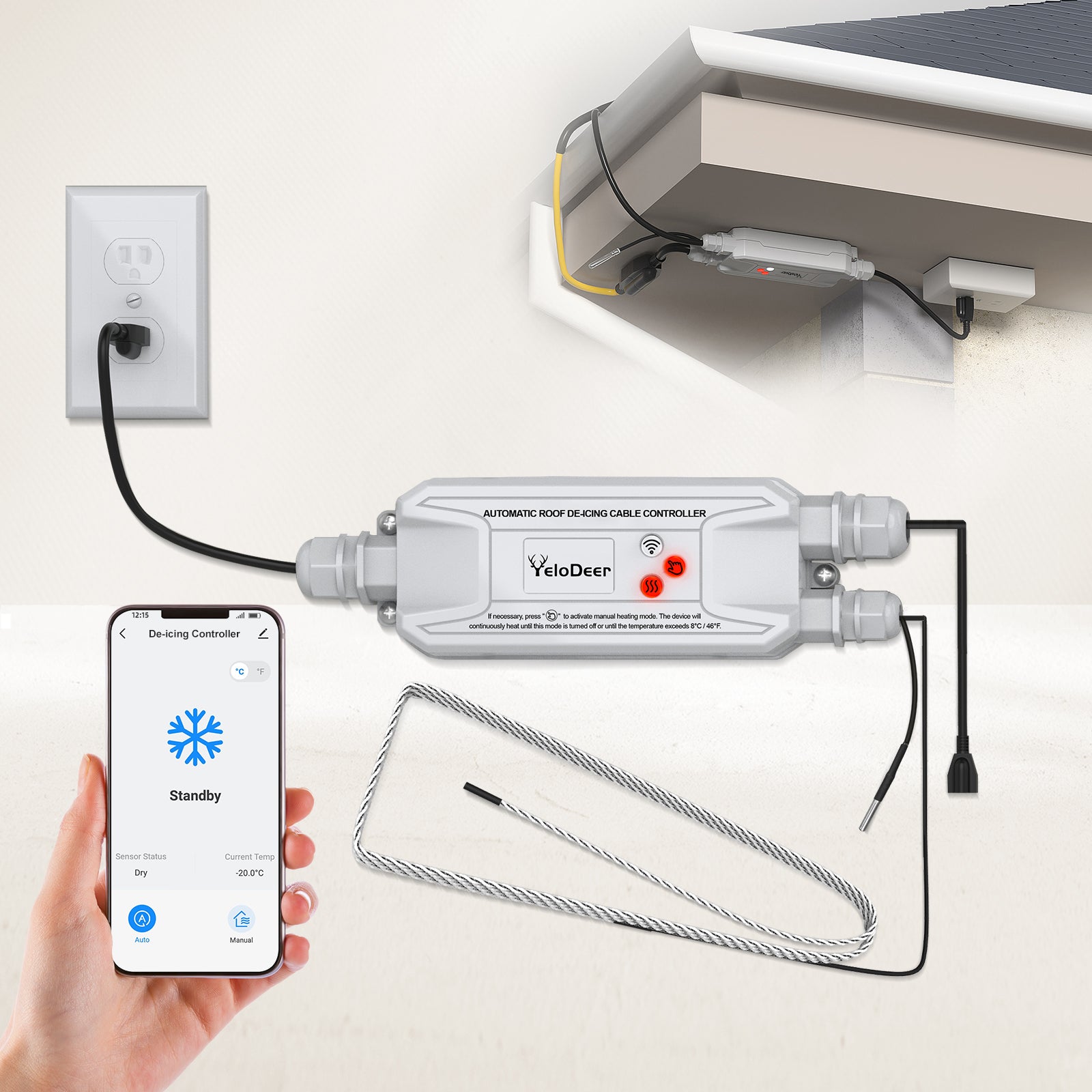
If you're shopping for a roof deicing cable or roof heating cable, one of the most common questions is:
Should I choose 5W/ft or 8W/ft?
Many homeowners assume higher wattage automatically means better performance. In reality, the best choice depends on your climate, roof design, snowfall levels, and installation goals.
Choosing the right heat cable for roof ice dam prevention can help protect your gutters, reduce ice buildup, and prevent costly winter water damage.
In this guide, we'll explain the difference between 5 watt vs 8 watt roof heat cable, when to choose each option, and which one is best for your home.
What Does 5W/ft or 8W/ft Mean on Roof Heating Cable?
The wattage rating refers to the cable's nominal heat output per foot.
For example:
5W/ft roof deicing cable = approximately 5 watts per foot under standard conditions
8W/ft roof deicing cable = approximately 8 watts per foot under standard conditions
However, for self-regulating roof heating cable, output is not fixed.
These cables automatically adjust heat production based on surrounding temperature. As temperatures drop, the cable increases heat output. As temperatures rise, it reduces output.
That means wattage is not a switch setting—it is the cable's designed operating range.
This is why many homeowners choose self regulating roof heat cable for energy-efficient winter protection.
Choose 5W/ft Roof Deicing Cable If:
A 5W roof heating cable is an excellent choice for many residential homes across the United States and southern Canada.
Best For Moderate Winter Climates
Choose 5W/ft if your winter temperatures are commonly between:
-
10°F to 30°F
-
Seasonal snow with periodic thawing cycles
-
Light to moderate ice dam concerns
Best For Standard Sloped Roofs
If your roof naturally sheds snow, a 5W cable is often enough to maintain drainage channels and help prevent ice buildup.
Best For Lower Operating Cost
Because it uses less electricity than 8W cable, 5W is a smart option for homeowners focused on seasonal energy savings.
Best For Long Cable Runs
If you need long roofline coverage, lower wattage often allows longer circuit lengths per breaker.
Common Regions Where 5W Works Well
-
Pennsylvania
-
Ohio
-
Virginia
-
Missouri
-
Kentucky
-
Lower elevation Colorado areas
For many homes, 5 watt roof heat cable provides reliable winter performance without overspending.
Choose 8W/ft Roof Deicing Cable If:
An 8W roof heating cable is ideal for more demanding winter environments.
Best For Severe Cold Climates
Choose 8W/ft if you regularly experience:
-
Sustained temperatures below 0°F
-
Extended periods below -10°F
-
Heavy snow accumulation
Best For Flat or Low-Slope Roofs
Roofs that do not naturally shed snow may hold moisture and create persistent ice buildup. Higher wattage helps maintain melt paths longer.
Best For Recurring Ice Dam Problems
If you've had repeated winter leaks, frozen gutters, or dangerous icicles, upgrading to 8 watt roof deicing cable can provide stronger performance.
Best For Cabins, Rentals, and Commercial Buildings
Properties left unattended during storms often benefit from additional heating margin.
Common Regions Where 8W Is Popular
-
Minnesota
-
Maine
-
Upstate New York
-
Alaska
-
Northern Wisconsin
-
Northern Canada
Why Many Customers Choose 8W Roof Heating Cable
In real-world sales, many homeowners choose 8W roof cable even when 5W may be sufficient.
Why?
Because winter roof protection is about more than efficiency—it's about confidence.
Many buyers want:
-
Extra performance during extreme cold
-
Faster channel melting after snowfall
-
Stronger ice dam prevention
-
Peace of mind during storms
When compared with the cost of roof leaks, ceiling damage, insulation repairs, or gutter replacement, many customers feel the upgrade is worth it.
Is 8W Always Better?
Not necessarily.
Higher wattage also comes with trade-offs:
-
Higher price per foot
-
Higher potential power draw
-
Shorter maximum circuit lengths in some installations
For many homes in moderate climates, 5W roof deicing cable performs very well.
The best roof heating cable is not always the strongest one—it is the one matched to your roof and weather conditions.
Quick Comparison: 5W vs 8W Roof Heat Cable
|
Feature |
5W/ft Cable |
8W/ft Cable |
|
Best Climate |
Moderate winter areas |
Severe cold regions |
|
Roof Type |
Standard pitched roofs |
Flat / low-slope roofs |
|
Energy Use |
Lower |
Higher |
|
Long Cable Runs |
Better |
Shorter max lengths |
|
Ice Dam History |
Good |
Better for recurring issues |
|
Upfront Cost |
Lower |
Higher |
Which Roof Deicing Cable Should You Buy?
Choose 5W/ft If You Want:
✔ Reliable residential protection
✔ Lower seasonal electricity cost
✔ Long cable coverage
✔ Moderate winter performance
Choose 8W/ft If You Want:
✔ Stronger heating in brutal winters
✔ Better performance on problem roofs
✔ Added safety margin
✔ Peace of mind during storms
Need Custom Length Roof Heating Cable?
YeloDeer offers cut-to-length self regulating roof deicing cable in both:
-
5W/ft
-
8W/ft
This allows you to choose the right wattage for your roof size, local weather, and winter protection needs.
Whether you need a roof heat cable for ice dams, gutter freeze prevention, or custom roofline coverage, selecting the right wattage can make all the difference.
Final Verdict
If you have a typical residential roof in a moderate winter climate, 5W/ft is often the smart and efficient choice.
If you face severe winters, snow-heavy roofs, or recurring ice dam problems, 8W/ft is often the better investment.
When in doubt: 5W for efficiency. 8W for maximum confidence.
FAQs
What is the best roof heating cable for ice dams?
A self-regulating roof heating cable sized correctly for your climate and roof type is often the best option.
Does 8W roof cable use more electricity?
Yes, it can draw more power than 5W cable under similar cold conditions.
Is 5W roof deicing cable enough?
For many homes in moderate climates, yes.
Should I buy self regulating roof heat cable?
Yes. Self-regulating cable adjusts output automatically, helping improve efficiency and safety.