Quick Answer
A winter roof leak can happen even when you do not see a large ice dam from the ground. Ice may be hidden under snow, behind gutters, inside valleys, around skylights, or near roof penetrations.
The leak location indoors may also be misleading because water can travel along roof sheathing, framing, insulation, or wall cavities before it appears on a ceiling or wall.
A winter roof leak is frustrating enough. It becomes even more confusing when you look outside and do not see a big ice dam.
No wall of ice. No dramatic icicles. No obvious frozen gutter. Just a water stain on the ceiling, damp trim near a window, or dripping along an exterior wall.
So what is going on?
The answer is that ice dam leaks are not always visible from the ground. Ice can hide under snow, behind gutters, in valleys, above skylights, or near roof penetrations. Water can also travel inside the roof or wall system before showing up indoors.
That means the leak you see may not be directly below the place where water entered.
Visible Ice Is Only Part of the Story
Many homeowners expect an ice dam to look like a thick ridge of ice at the front edge of the roof. Sometimes it does. But ice dams can also form in places that are difficult to see.
Common hidden ice dam locations include:
Key point: the visible ice may be small, but the water damage can still be real. Any area that interrupts water flow can allow meltwater to back up under shingles, seams, or flashing.
Water Does Not Always Leak Straight Down
Another reason winter roof leaks are hard to diagnose is that water moves.
Water may enter at the roof edge, travel along roof sheathing, follow framing, soak insulation, or run along a top plate before finally appearing inside. By the time you see a stain, the entry point may be several feet away.
The path of least resistance is not always vertical. A ceiling stain does not always identify the exact roof problem.
Roof Valleys Are a Common Trouble Spot
Roof valleys collect water from two roof slopes. During winter, they also collect snow and ice.
If a valley is shaded, poorly ventilated underneath, or warmed unevenly from the home, meltwater may refreeze before it can drain. Even a small blockage can create a backup because valleys carry more water than a simple roof edge.
If your winter leak appears near a complex roof area, do not inspect only the gutter line. Check the valley above it.
Skylights and Dormers Can Hide Ice Problems
Skylights and dormers interrupt the roof surface. They create edges, corners, flashing lines, and areas where snow can collect.
A skylight may have ice above it, below it, or along its side flashing. A dormer can create a valley where meltwater slows down. If water freezes in these areas, it may back up under roofing materials before the ice is visible from the ground.
Important distinction: not every skylight leak is an ice dam. Some leaks are caused by flashing, sealant, condensation, or roof age. But if the leak appears mainly after snow and freeze-thaw conditions, hidden ice should be considered.
Low-Slope Areas Need Extra Attention
Low-slope roof areas are more vulnerable because water moves more slowly. When water moves slowly, it has more time to refreeze or find small openings.
A small ice ridge on a steep roof may drain around itself. The same amount of ice on a low-slope section may trap water long enough to cause a leak.
This is why “I don’t see much ice” is not always reassuring. On a low-slope edge, a small amount of ice can be enough to create trouble.
It Might Not Be an Ice Dam
A winter roof leak without a visible ice dam may still be caused by something else.
Possible non-ice causes include:
The goal is not to guess. The goal is to separate a drainage problem from a waterproofing problem.
How to Inspect Without Climbing on an Icy Roof
Do not climb onto an icy roof to look for the problem. Winter roof inspection can be dangerous. Start from safe locations instead.
Safety notice: if the roof is steep, high, icy, or actively leaking, call a qualified professional. Do not climb onto an icy roof for inspection.
How Roof De-Icing Cable Can Help Hidden Ice Areas
Roof de-icing cable can help when the leak is related to repeated ice buildup at a specific drainage area.
For hidden ice problems, the cable layout should focus on water movement. It may need to protect not just the visible gutter, but the roof edge above it, the valley feeding it, and the downspout carrying water away.
Recommended YeloDeer Solution
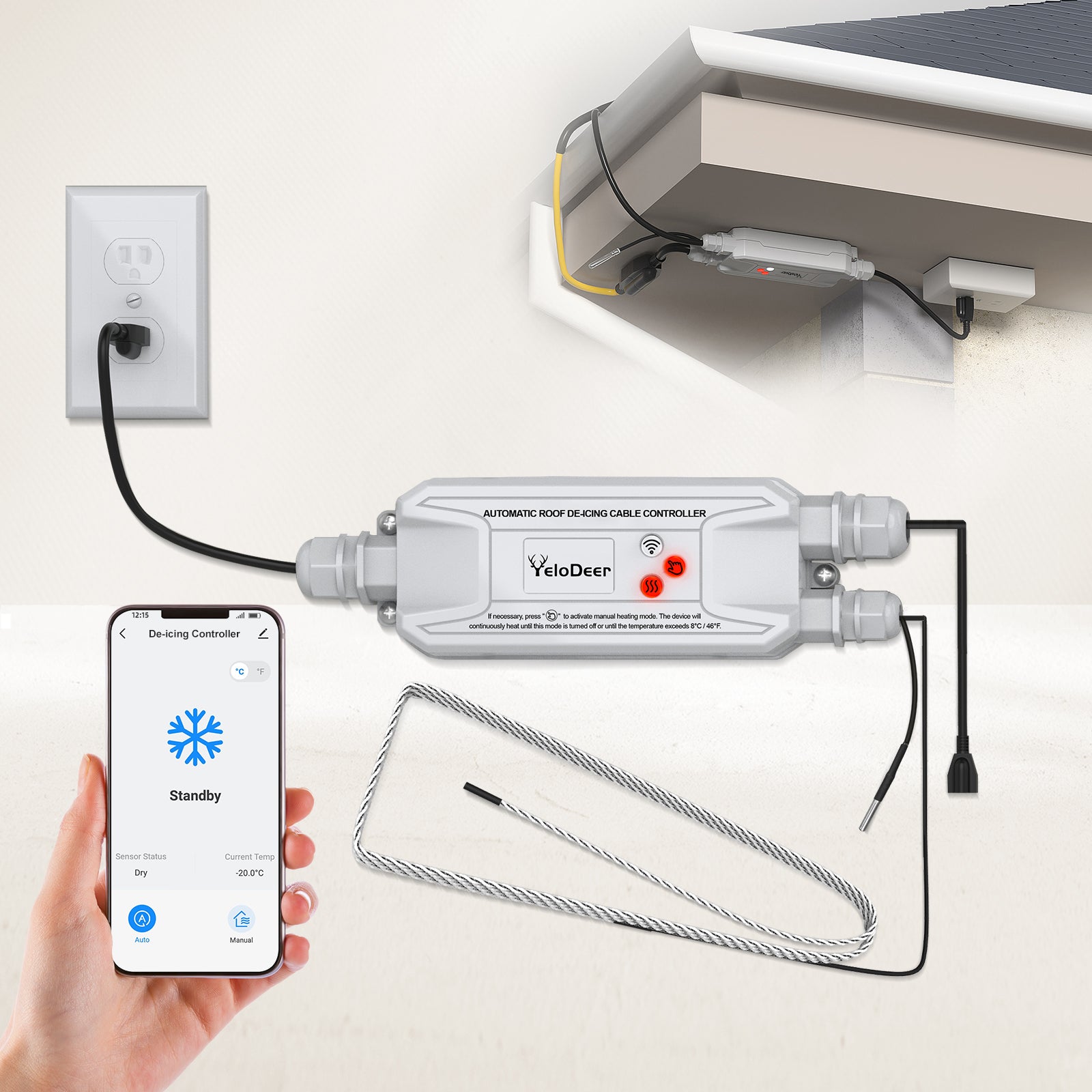
For recurring winter leaks related to ice buildup at roof edges, gutters, valleys, or downspouts, YeloDeer roof de-icing cable can help maintain a drainage path through vulnerable areas.
The goal is not to melt the entire roof. The goal is to keep water moving through the areas where it normally backs up and refreezes.
Explore YeloDeer Roof De-Icing CablesThe goal is to keep water moving through the most vulnerable areas before it backs up under roofing materials.
The Long-Term Fix Still Starts Inside the Home
If your roof leaks every winter in the same area, do not stop at the roof surface.
Look for heat loss and air leakage inside the home. Warm air leaking into the attic can warm the roof deck, melt snow unevenly, and feed the ice dam cycle again and again.
| Air Sealing | Helps reduce warm indoor air leakage into the attic. |
| Attic Insulation | Helps reduce unwanted heat transfer to the roof deck. |
| Soffit Vent Clearance | Helps maintain airflow and reduce uneven roof deck warming. |
| Attic Ventilation | Helps keep the roof deck closer to outdoor temperature. |
| Bathroom Fan Venting | Fans should vent outdoors, not into the attic. |
| Penetration Sealing | Areas around chimneys, plumbing, wiring, and vents may need sealing. |
| Flashing or Roof Detail Repair | May be needed when leaks occur during rain as well as snow. |
Roof de-icing cable can be part of the solution, especially at recurring drainage trouble spots. But it should work with the building, not replace basic roof and attic performance.
FAQ
Can an ice dam cause a leak if I cannot see the ice?
Yes. Ice can be hidden under snow, behind gutters, inside valleys, around skylights, or near roof penetrations. A visible ice ridge is not always present from the ground.
Why is the leak not directly under the ice problem?
Water can travel along roof sheathing, framing, insulation, or wall cavities before it appears indoors. The stain you see may be several feet away from the actual entry point.
How do I know if it is an ice dam or a normal roof leak?
Timing is an important clue. If the leak happens after snow and freeze-thaw weather, hidden ice damming may be involved. If it also leaks during rain, flashing, roof penetrations, or roofing materials may be the bigger issue.
Can roof de-icing cable help with hidden ice dams?
It can help when the issue is related to repeated ice buildup at a specific drainage area, such as roof edges, valleys, gutters, or downspouts. The cable layout should focus on maintaining a clear water path.
Should I climb on the roof to inspect a winter leak?
No. Do not climb onto an icy roof. Start from the ground, inside the home, or the attic if safe. If the roof is steep, high, icy, or actively leaking, call a qualified professional.
The Bottom Line
A roof can leak in winter even when no obvious ice dam is visible.
The ice may be hidden under snow, behind a gutter, inside a valley, near a skylight, or around a roof penetration. Water may also travel before it appears indoors, making the leak location misleading.
Start with safe inspection. Look for patterns. Pay attention to timing. If the leak follows snow and freeze-thaw cycles, hidden ice damming may be involved. If it also happens during rain, roof flashing or waterproofing may be the bigger issue.
Once you understand the path of the water, you can choose the right solution: snow removal, roof de-icing cable, gutter and downspout protection, attic improvements, flashing repair, or a combination of these steps.
Need Help Planning a Roof De-Icing Layout?
Send us photos of the roof edge, gutters, downspouts, valleys, skylights, and the area where the leak appears indoors. The YeloDeer team can help you review the drainage path and choose a suitable roof de-icing cable setup.
Contact YeloDeer