Quick Answer
Roof de-icing cables can help manage ice dam problems, but they should not be described as a permanent cure for every roof ice issue.
The right way to understand them is simple: roof de-icing cables help keep drainage paths open. They do not eliminate every reason snow melts on the roof.
Roof de-icing cables can be very useful, but they should not be described as a permanent cure for every ice dam problem.
If you expect a cable to make the entire roof ice-free, you may be disappointed. If you use it to protect specific drainage paths, it can be a practical and effective part of a winter roof protection plan.
What Roof De-Icing Cables Actually Do
Roof de-icing cables create warmed paths through snow and ice. These paths help meltwater move off the roof instead of collecting behind an ice ridge.
The cable does not need to melt all the snow on the roof. That is not the goal. The goal is to keep enough of a channel open so water has somewhere to go.
Layout matters: the cable should not be placed randomly. It should follow the path that water needs to take from the roof surface to the gutter, through the downspout, and away from the roof edge.
What Roof De-Icing Cables Do Not Do
Roof de-icing cables do not fix attic heat loss. If warm air is leaking from the living space into the attic, the roof deck may continue to warm from below and melt snow even when outdoor temperatures are below freezing.
Important distinction: roof de-icing cable helps manage drainage. It does not replace building improvements such as insulation, air sealing, ventilation, gutter cleaning, or roof repair.
This does not mean roof de-icing cable is not useful. It means it needs to be used for the right job.
When Roof De-Icing Cable Is the Right Tool
Roof de-icing cable is most useful when the problem is recurring and localized. These are situations where cable can help manage the water path instead of allowing meltwater to freeze wherever the roof becomes cold.
Why Cable Layout Matters More Than Just Cable Length
Buying enough cable is important. But placing it correctly is even more important.
A cable that warms only part of the eave may not help if the gutter below remains frozen. A cable in the gutter may not help if water refreezes before reaching the gutter. A downspout without cable may still block the entire drainage path.
Key point: if any section of the drainage route freezes shut, the system may not perform as expected.
Why Controllers Matter
A roof de-icing cable is only helpful when it runs during the right conditions.
If it is turned on too late, ice may already be blocking the drainage path. If it is left on continuously, energy use may be higher than necessary. If it is turned off during an important freeze-thaw cycle, water may refreeze.
Controller Recommendation
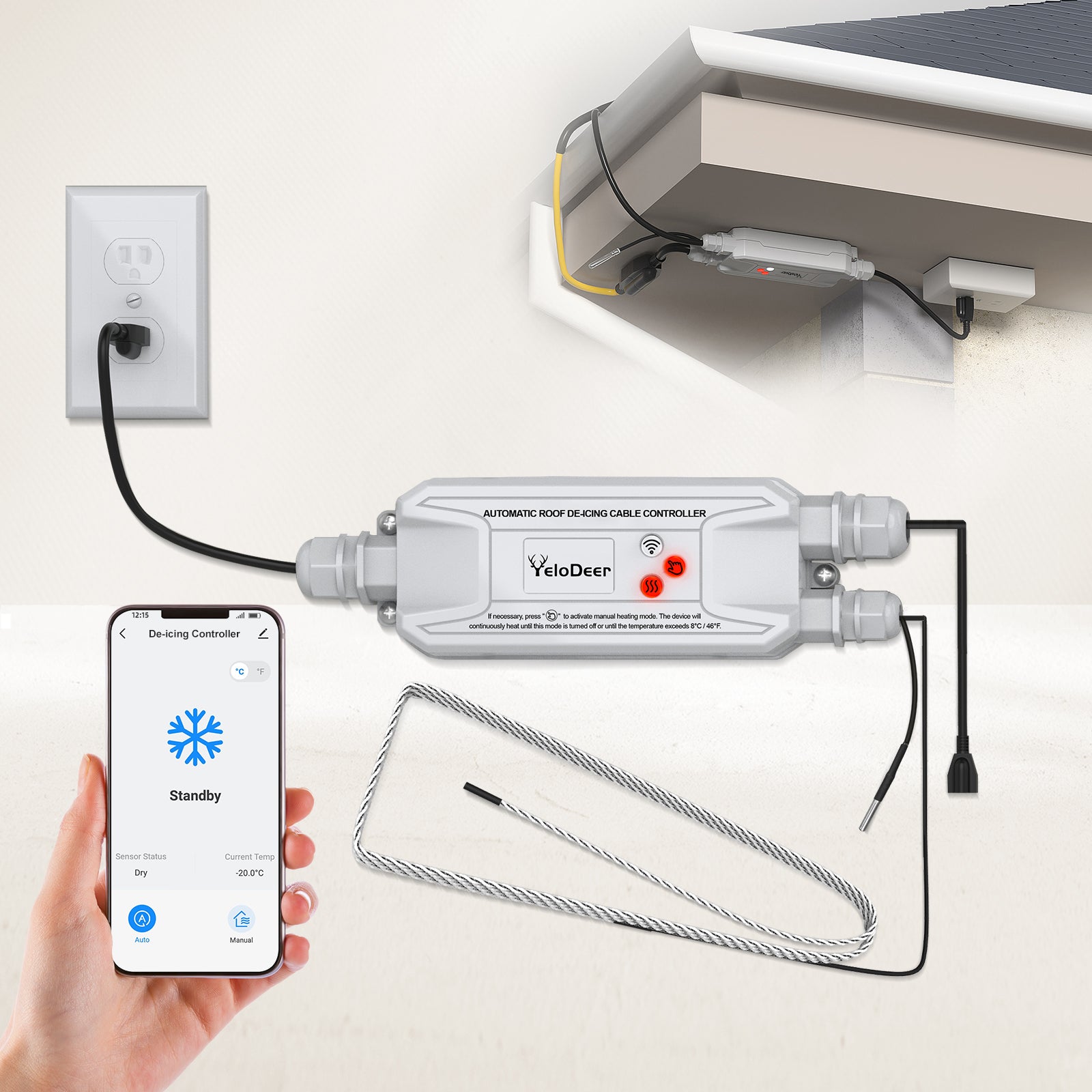
A controller can help improve timing by operating the cable when ice-forming conditions are more likely. Depending on the system, a controller may respond to temperature, moisture, or manual operation.
For many users, a controller makes the roof de-icing system easier to manage and more consistent through changing winter weather.
Explore YeloDeer ControllersThe Long-Term Solution Is Usually Layered
The most reliable ice dam strategy is layered. Ice dams are usually caused by a combination of roof temperature, snow, drainage, and building conditions.
| Air Sealing | Helps reduce warm indoor air leakage into the attic. |
| Attic Insulation | Helps reduce unwanted heat transfer to the roof deck. |
| Ventilation | Helps keep the roof deck closer to outdoor temperature. |
| Clean Gutters | Helps water move through the drainage system without blockage. |
| Roof De-Icing Cable | Helps maintain drainage paths at recurring winter trouble spots. |
| Safe Snow Removal | May help reduce heavy snow accumulation when conditions require it. |
| Roof Detail Repairs | May be needed if leaks happen during rain as well as snow. |
A cable helps with the drainage part. It should be part of the system, not the entire system.
The Bottom Line
Roof de-icing cables can help reduce repeated ice buildup at eaves, gutters, downspouts, valleys, and other vulnerable areas. They are especially useful when you need to maintain a drainage path through snow and ice.
But they should not be presented as a permanent cure for every ice dam. If the home has serious attic heat loss, poor insulation, blocked ventilation, or roof flashing problems, those issues still need attention.
Use roof de-icing cable where it makes sense: at known trouble spots, before winter weather becomes severe, and as part of a broader plan to keep meltwater moving safely off the roof.
Need Help Planning a Roof De-Icing Layout?
Send us photos of your roof edge, gutters, downspouts, valleys, and the areas where ice forms repeatedly. The YeloDeer team can help you review the drainage path and choose a suitable roof de-icing cable setup.
Contact YeloDeer