Quick Answer
A roof rake and roof heating cable are not the same type of solution. A roof rake helps remove snow from reachable roof edges after storms. Roof heating cable helps maintain drainage paths through snow and ice before meltwater backs up and refreezes.
For some homes, one option may be enough. For many homes with recurring ice dams, frozen gutters, or icy downspouts, the best winter roof strategy may use both.
When homeowners look for ways to prevent ice dams, two options come up again and again: roof rakes and roof heating cables.

At first, they may seem like competing solutions. One is a manual tool. The other is an electrical system. One removes snow. The other helps keep drainage paths open through snow and ice.
But the better question is not “Which one is better?” The better question is:
A roof rake helps remove snow from the roof. Less snow means less meltwater. Less meltwater can reduce the chance of ice building up at the eave.
A roof heating cable helps maintain drainage paths. It does not remove all snow from the roof, but it can help water move through vulnerable areas such as eaves, gutters, valleys, and downspouts.
They are different tools for different parts of the same winter roof problem.
How a Roof Rake Works
A roof rake is a long-handled tool used from the ground to pull snow off the lower part of the roof. The idea is simple: if snow is removed before it melts, there is less water available to refreeze at the roof edge.
This can be helpful after heavy snow, especially on simple rooflines with low eaves.
The Limits of a Roof Rake
A roof rake can be useful, but it is not a perfect solution.
First, it depends on timing. If snow melts and refreezes before you rake it, ice may already be forming. Second, it requires repeated effort. After each heavy snowfall, the process may need to be done again.
Third, not every roof can be safely raked. High eaves, complex rooflines, steep slopes, landscaping, decks, and frozen ground conditions can make access difficult.
Important: pulling too aggressively can damage shingles, gutters, or roof edges. Removing only the lower section of snow while leaving a heavy snowpack above may also allow a new ice ridge to form higher up the roof.
A roof rake is helpful when used carefully. It is not a set-it-and-forget-it solution.
How Roof Heating Cable Works
Roof heating cable, also called roof de-icing cable, is installed along selected roof edges and drainage areas. When powered, it creates warm paths that help meltwater move through snow and ice.
The purpose is not to heat the whole roof. It is to reduce ice blockage where drainage matters most.
A good roof heating cable layout should connect the problem area to a full drainage path. For example, cable may run from the roof edge into the gutter and down through the downspout.
The Limits of Heating Cable
Roof heating cable also has limits.
It is not designed to remove a large ice dam that has already formed. It is best used before ice becomes a major blockage. It also does not fix the root cause of heat loss from the home.
If warm indoor air is leaking into the attic, or if insulation is poor, the roof may continue to melt snow unevenly. Heating cable can help manage meltwater, but it does not replace air sealing, insulation, or proper ventilation.
Installation reminder: poor cable placement can leave drainage gaps. Running cable without a controller may waste energy. Installing cable without following product instructions can reduce performance or create safety problems.
Roof Rake vs Heating Cable: Side-by-Side Comparison
| Factor | Roof Rake | Roof Heating Cable |
| Main Purpose | Removes snow from the roof. | Maintains drainage paths through snow and ice. |
| Best Timing | Used after snowfall. | Installed before winter and used during winter conditions. |
| Best For | Low, simple, reachable roof edges. | Recurring ice areas, gutters, downspouts, valleys, and difficult-to-rake locations. |
| Main Advantage | Low cost and no power required. | More consistent protection in selected drainage areas. |
| Main Limitation | Manual, repetitive, and access-dependent. | Does not fix attic heat loss or remove existing large ice dams. |
| Maintenance | Requires use after storms. | Requires seasonal inspection and proper operation. |
| Best Long-Term Role | Reduces snow load and meltwater source. | Helps control meltwater drainage at recurring trouble spots. |
When a Roof Rake Makes More Sense
A roof rake may be the better first choice if your roof is simple, low, and safely reachable.
It is especially useful when the issue happens only after major snowfalls and you can remove snow before repeated melting and refreezing begins. For a single-story home with a straightforward roofline, roof raking can be a practical winter habit.
Safety should come first. If the roof is too high, too icy, too steep, or blocked by landscaping, trying to rake it from an awkward position may not be worth the risk.
When Heating Cable Makes More Sense
Heating cable may make more sense when the problem is repeated, localized, or hard to manage manually.
Recommended YeloDeer Solution
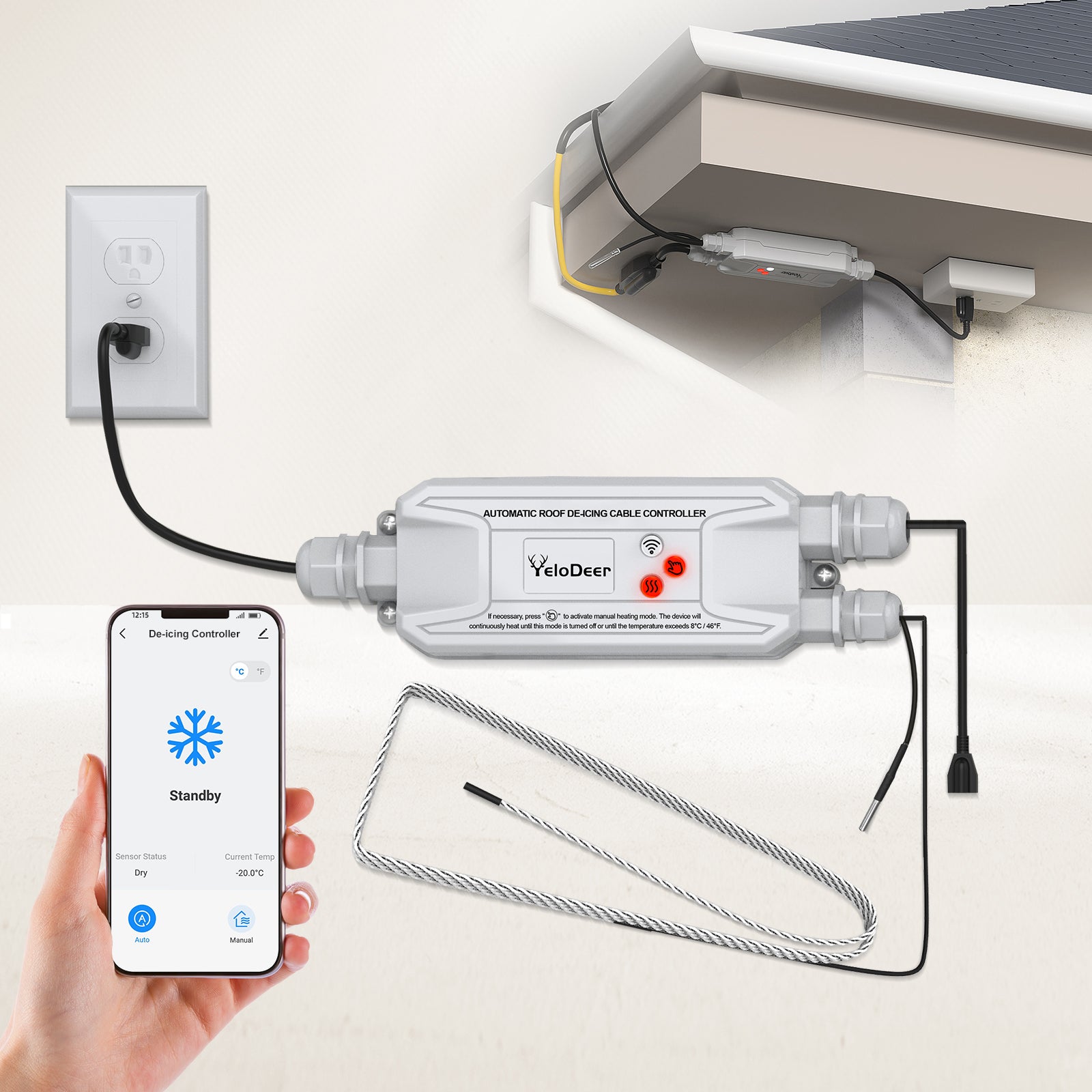
If your roof has recurring ice buildup at eaves, gutters, downspouts, valleys, or other drainage trouble spots, YeloDeer roof de-icing cable can help maintain a path for meltwater to move through snow and ice.
For easier winter operation, a compatible controller can also help run the cable when ice-forming conditions are more likely.
Explore YeloDeer Roof De-Icing CablesDo You Need Both?
Many homes benefit from a combined approach.
A roof rake can reduce the amount of snow available to melt. Heating cable can help protect the areas where meltwater is most likely to refreeze. Air sealing, insulation, and ventilation can reduce the underlying temperature imbalance that contributes to ice dams.

These are not competing solutions. They are layers. A layered approach is more realistic than expecting one product or one tool to solve every winter roof issue.
FAQ
Is a roof rake better than roof heating cable?
It depends on the problem. A roof rake is better for safely removing snow from reachable roof edges after storms. Roof heating cable is better for maintaining drainage paths at recurring ice-prone areas such as eaves, gutters, valleys, and downspouts.
Can roof heating cable replace roof raking?
Not always. Heating cable helps manage meltwater drainage, but it does not remove all snow from the roof. If the roof can be safely raked, removing excess snow may still be helpful after heavy storms.
Can a roof rake prevent ice dams?
A roof rake can help reduce ice dam risk by removing snow before it melts and refreezes. However, it depends on safe access, proper timing, and repeated use after snowfall.
Can roof heating cable remove an ice dam that already formed?
Roof heating cable is not designed to remove a large ice dam that has already formed. It works best when installed before winter and used to help keep selected drainage paths open.
Do roof heating cables fix attic heat loss?
No. Roof heating cables help manage meltwater drainage at selected areas. They do not replace attic air sealing, insulation, ventilation, or roof repairs when those issues are causing repeated snowmelt and ice buildup.
The Bottom Line
Choose a roof rake if your roof is easy to reach, your snow problem is occasional, and you can safely remove snow after storms.
Choose roof heating cable if the same eaves, valleys, gutters, or downspouts freeze repeatedly, or if manual snow removal is not practical.
For many homes, the best answer is both: remove snow when it is safe to do so, and use roof de-icing cable to protect the drainage paths that repeatedly cause problems.
The goal is simple: keep meltwater moving before it turns into damaging ice.
Need Help Choosing a Roof De-Icing Setup?
Send us photos of your roof edge, gutters, downspouts, valleys, and the areas where ice forms repeatedly. The YeloDeer team can help you review the drainage path and choose a suitable roof de-icing cable option.
Contact YeloDeer