
Food-Grade In-Pipe Heating Cable (CSA, 230 PSI, >3/4") | YeloDeer
Enjoy free shipping on orders over $30.
We ship orders within 48 hours for quick delivery.
1. Our website accepts Visa, MasterCard, and American Express. If you are using a card issued by another bank, please ensure it is enabled for international transactions.
2. During payment, you may be required to complete 3D Secure (3DS) verification. Please ensure that the cardholder completes the verification to avoid payment failure.
3. If your usual spending amounts are relatively low and you are making a larger purchase, your bank may flag the transaction as a potential risk. If your payment fails, please contact your bank to approve the transaction.
Enjoy exclusive technology designed to enhance performance and reliability, protected by YeloDeer's unique patent.
Food-Grade In-Pipe Heating Cable (CSA, 230 PSI, >3/4") | YeloDeer

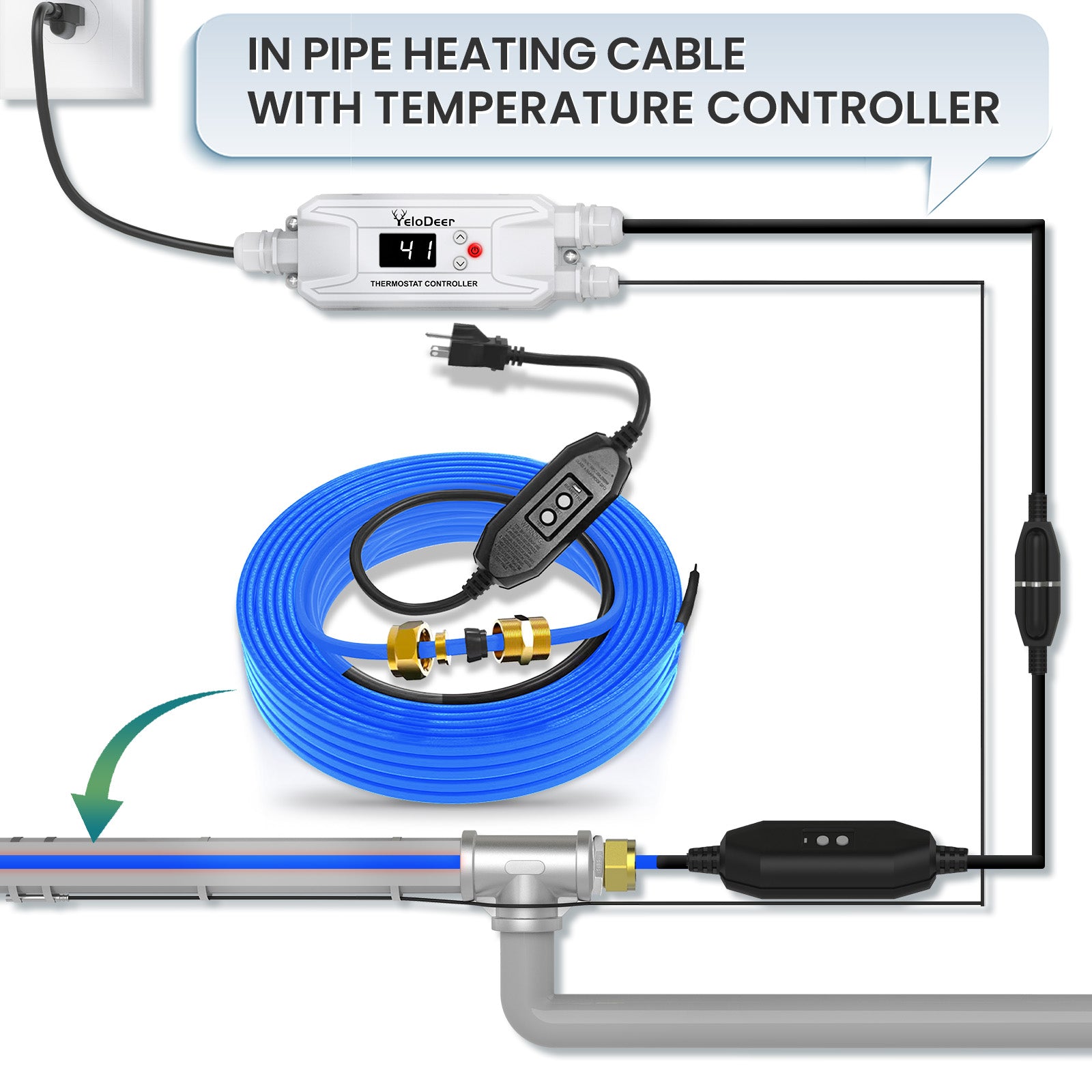


Does an In-Pipe Heating Cable Need a Thermostat? Cable Only vs Controller Kit Explained
Should you choose an in-pipe heating cable alone or a thermostat kit? This guide explains how self-regulating heat cable works, whether it turns off automatically, and when a controller can...
Read more
The 2026 Climate Challenge for Modern Agriculture
Ensure 24/7 water availability for your livestock with YeloDeer's professional internal pipe heating solutions. Designed for thermal efficiency and animal safety, our in-pipe cables offer a robust, energy-saving alternative to...
Read more
Why Your Walk-in Freezer Fan is Turning into an Ice Cube: A Guide to Preventative Maintenance
This article explores the common but disruptive issue of ice buildup on walk-in freezer evaporator fans. We delve into the mechanics of the defrost cycle, explain how a blocked drain...
Read more
How to Prevent Frozen Water Lines: A Complete Guide to YeloDeer Y-In-Pipe Heating Cable Installation
Learn how to install the YeloDeer Y-In-Pipe Heating Cable to protect your water lines from extreme freezing. Featuring a professional walkthrough by Josh Teshner of Teschner Homes, this guide covers...
Read more
Sump Pump Frozen Discharge Line? How to Stop Spring Basement Flooding Before It Starts
As temperatures rise, snowmelt and rain overwhelm sump pumps. However, a frozen discharge line remains a "silent killer" for basements. This blog explains how YeloDeer Sewer In-Pipe Heating Cables provide...
Read more
The Ultimate Guide to Well & Artesian Well Freeze Protection: Why "Internal" is the Only Solution
This guide explores how to achieve a permanent freeze proof water line for inaccessible buried pipes. Learn why an internal water line heater is the only logical choice to prevent...
Read more
Top 6 Reasons Your In-Pipe Heating Cable Might Leak (and How to Prevent It)
Six common causes of leaks in in-pipe heating cables, and provides response and prevention tips.
Read more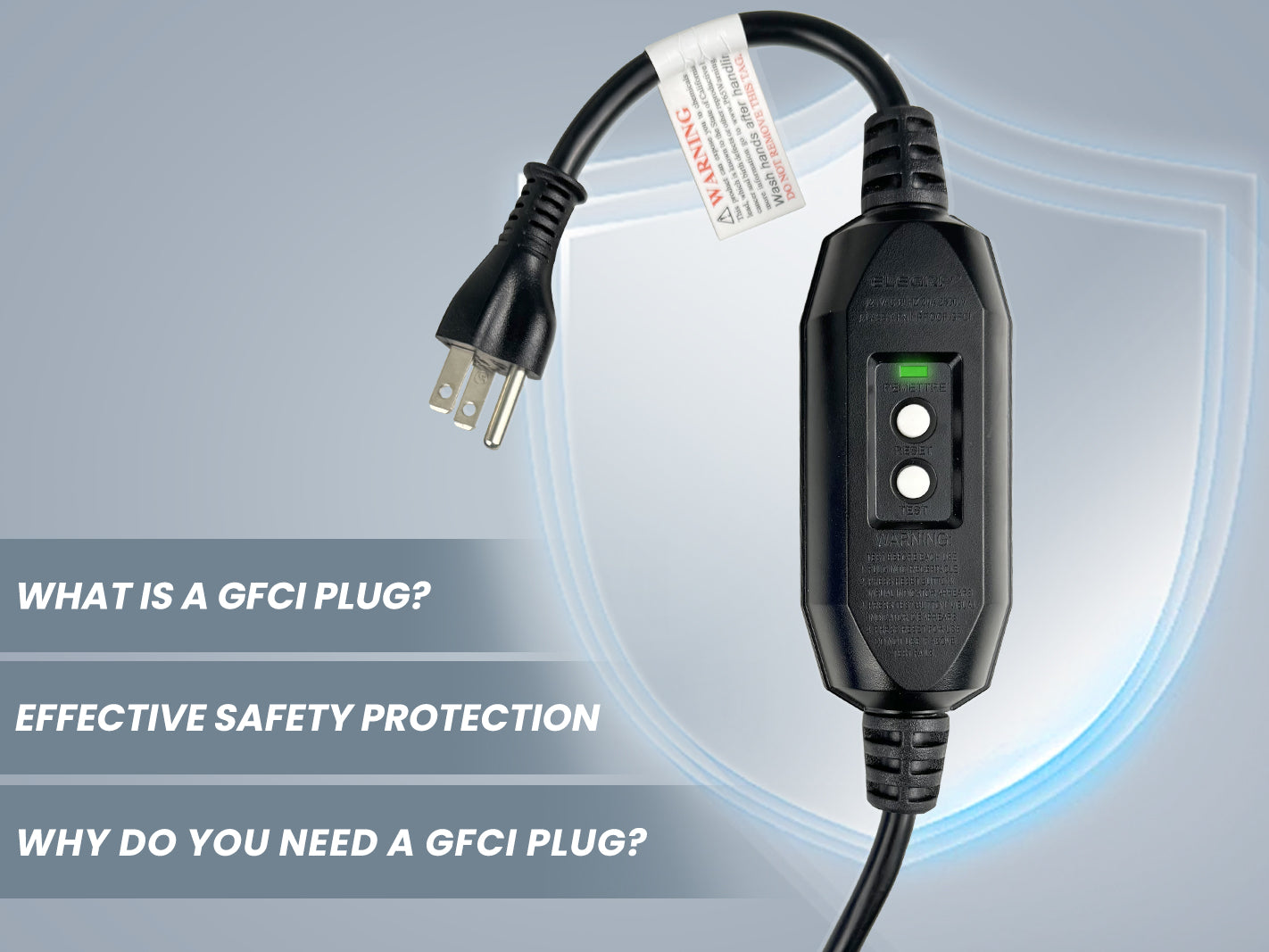
GFCI Plugs: Effective Safety Protection for In-Pipe Heating Cables
GFCI plugs are vital safety devices designed to prevent electrical shocks by interrupting power when they detect current leakage. These plugs are essential in wet areas, significantly reducing the risk...
Read more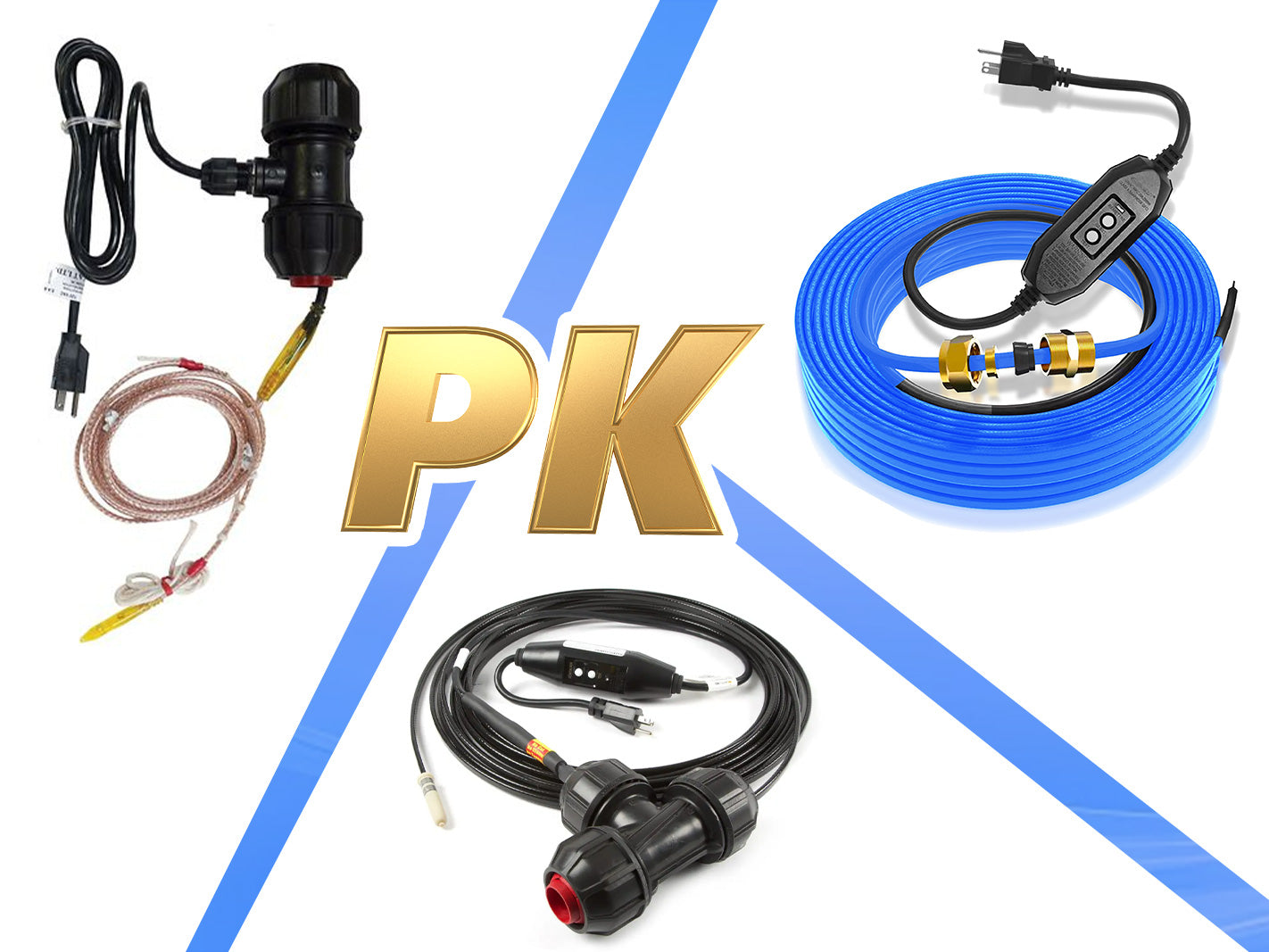
In-Pipe Heating Cable Comparison: YeloDeer vs. Retro-Line® vs. EasyHeat™ ILH
This review compares the YeloDeer in-pipe heating cable, Retro-Line®, and EasyHeat™ ILH. Key features, flexibility, and pricing are compared to guide informed decisions.
Read more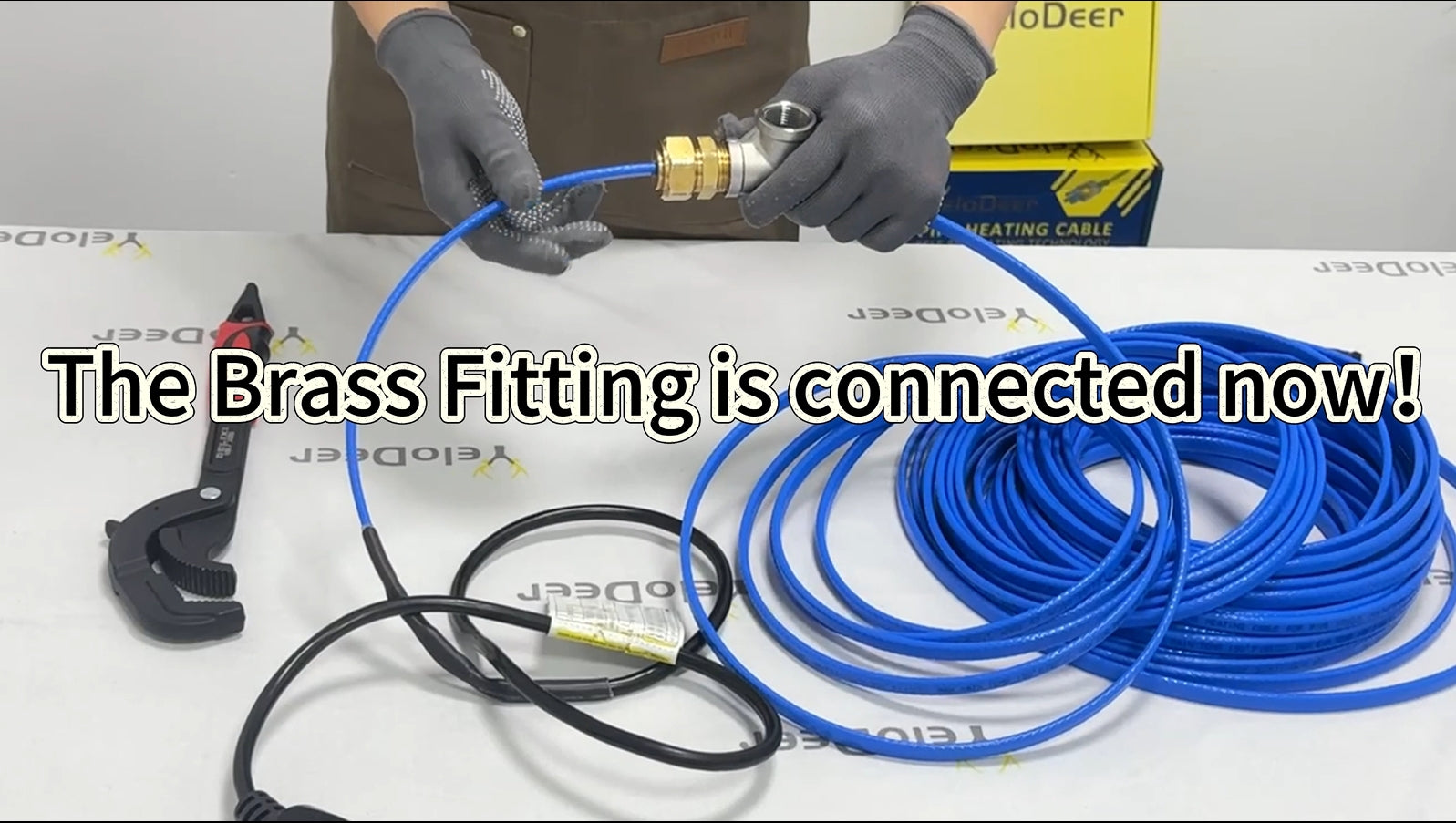

How to Connect the Brass Fitting to Your T-Fitting | In-Line Heating Cable Installation
Learn how to easily connect the brass fitting to your T-fitting for a seamless in-line heating cable installation in just 5 steps. Follow this guide for a secure and efficient...
Read moreQuestions & Answers
Have a Question?
-
I have approximately 40 feet of 1 1/2 inch pipe running between two buildings. The water line connection is pretty straight. The pipe runs underground and recently froze due to extreme cold. The plumbers thawed it out but now we are looking for a solution to keep it from happening again. Will this line dramatically (or materially) reduce the volume of water going to the second building? Second, the cold spot is in the middle of the "run" between the two buildings. Can the sensor be placed in the middle and the run continue on to the end of the run? Third, is there a "smart" feature that I can log on to and see what the water temp is? Finally, is it one end only, meaning I don't need to do anything at the other end?
Dear Mr. Drapeau,
Thank you for your questions regarding our Food-Grade In-Pipe Heating Cable. We are happy to provide the following clarifications:
Regarding water flow volume: A 1 1/2 inch pipe will not dramatically or materially reduce the volume of water going to the second building. We have not received any customer feedback indicating flow restrictions with this pipe size when using our heating cable.
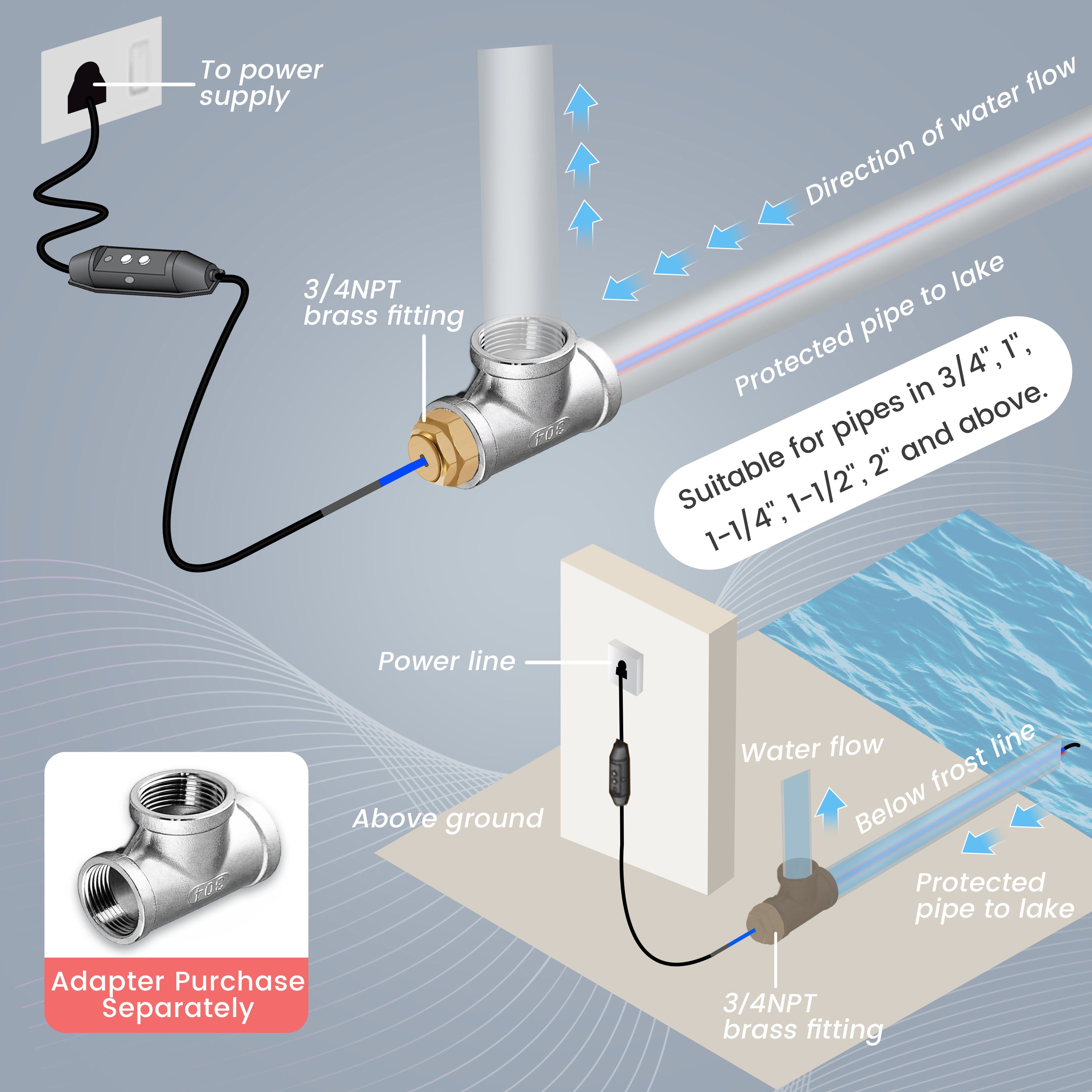
Regarding sensor placement: The sensor probe is designed to be placed at the coldest spot of the pipe run. It can absolutely be placed in the middle of the run between the two buildings, and the heating cable can continue to the end of the pipe as needed.
Regarding "smart" features: Our intelligent thermostat controls the heating cable based on the pipe or air temperature detected by the sensor, activating it when temperatures drop to a set threshold. While it effectively prevents freezing, it does not currently support direct logging or remote viewing of water temperature.
Regarding installation: Our heating cable is designed for single-end connection. This means all electrical connections and controls are at one end, and no additional work is required at the opposite end of the pipe run.
We hope this information helps you make an informed decision. Please let us know if you have any further questions or need additional details.
Best regards,
-
Hello can I leave my heating cable always plugged in Thank- you
Hello Floyd,
Thank you for reaching out.
You can keep the heating cable plugged in if you have anti-freezing requirements.
However, when the weather is warm and there is no need for pipe-freezing protection,
please unplug the cable to ensure safety and energy efficiency.
Thanks and regards,
Demi
-
What diameter is the heating cable?
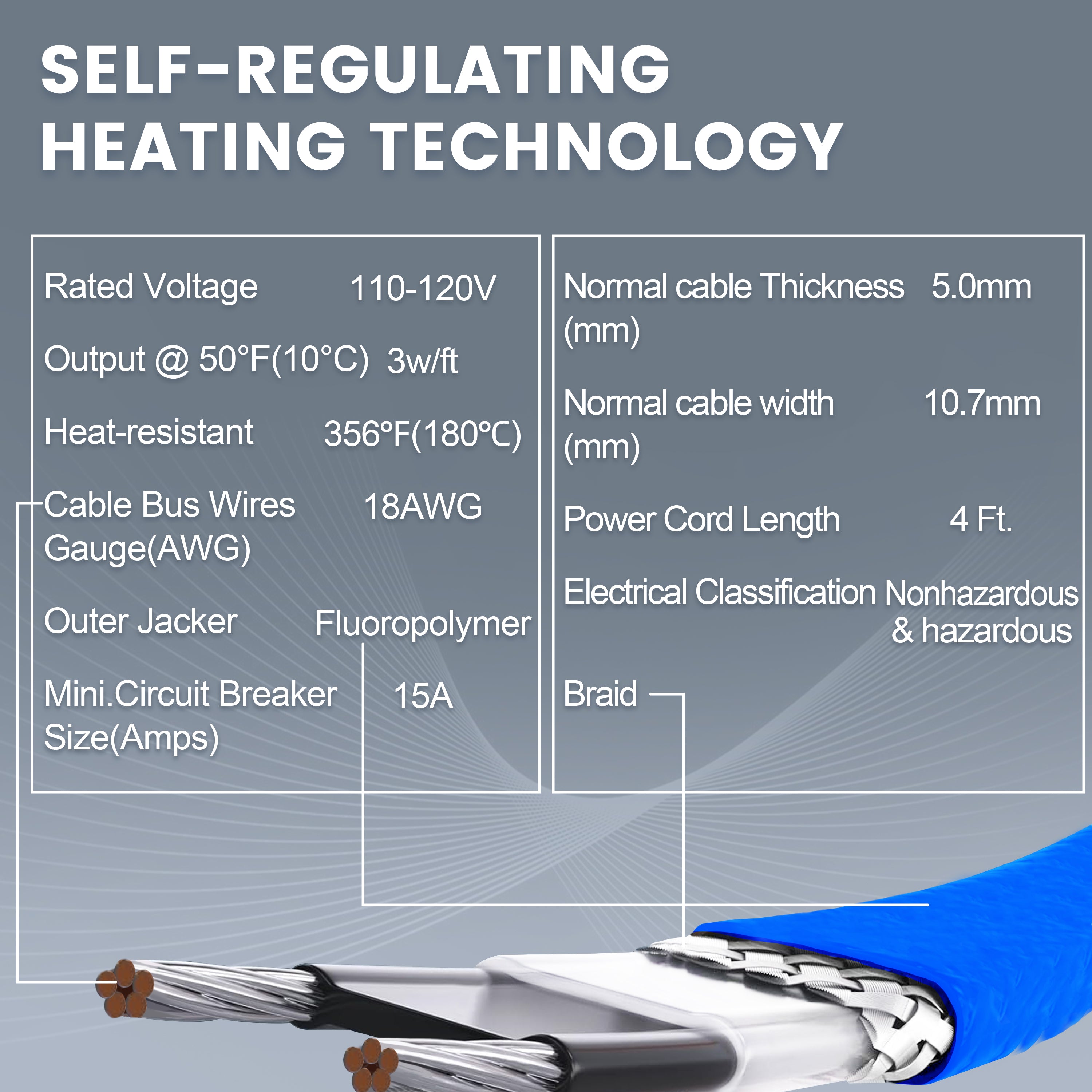
The heating cable diameter is 10.7*5.0mm (0.42*0.2in).
-
How flexible is the inline heating cable. Can I feed it through a 1" 90 degree fitting
Thanks for your question!
No, this in-pipe heating cable is not designed to bend around sharp 90-degree or 45-degree elbow fittings. If your pipe has abrupt elbows, they need to be replaced with sections that create sweeping bends to allow the cable to pass smoothly. Important Notice: Forcing the cable through sharp elbows can damage the end seal, potentially causing water leakage. Many leakage issues result from improper installation, so please ensure careful installation.
-
At what temp does the line kick in and heat up
Thank you for your question! Since this product does not have a built-in thermostat, it begins heating as soon as it’s plugged in, regardless of the external temperature. However, due to its self-regulating feature, it adjusts the output power based on the surrounding temperature—when the temperature is higher, the output is lower, though it’s still in a heating state.
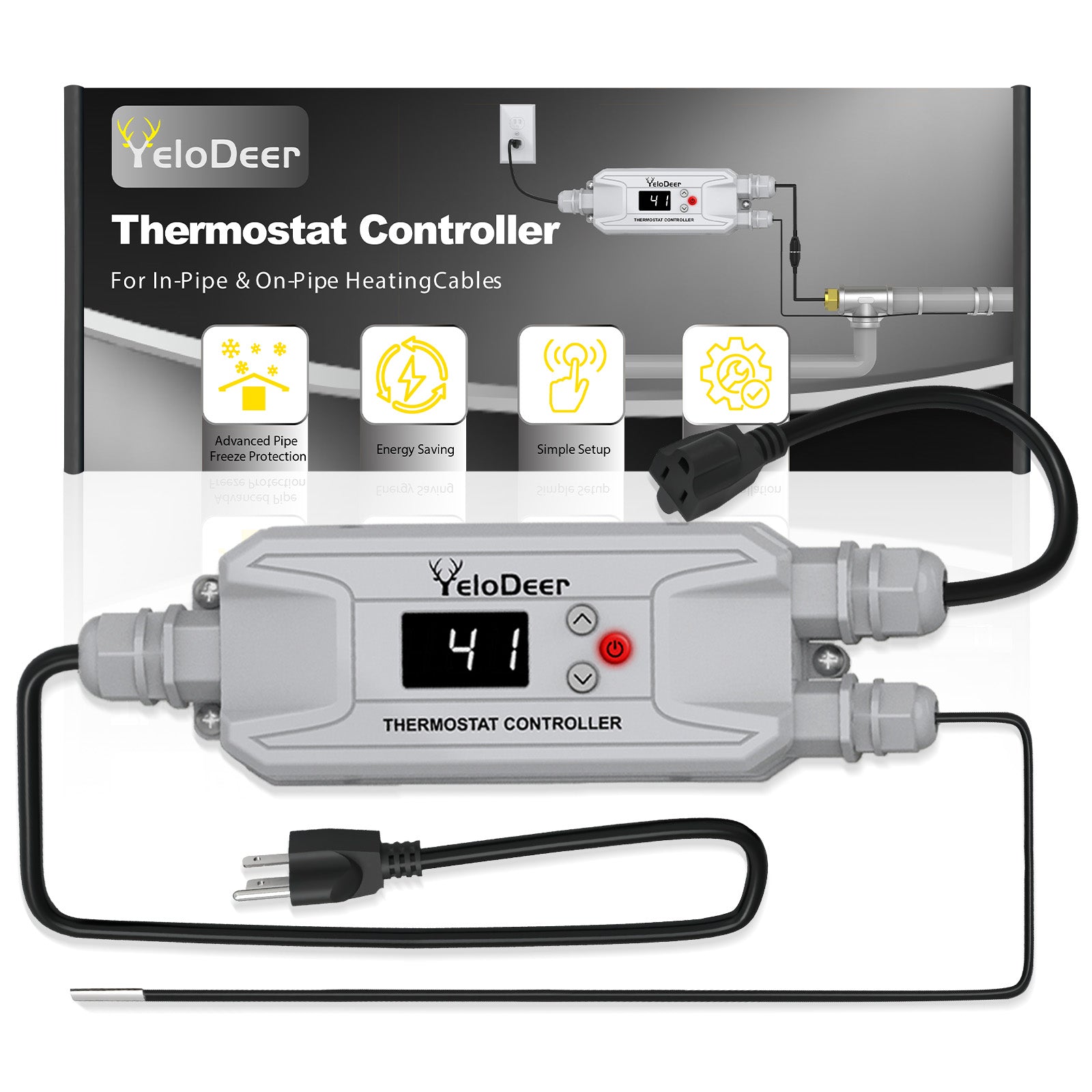
If you’d like more precise temperature control, we also offer a bundle that includes a Pipe Heat Tape Thermostat, allowing you to manually set the temperature at which it turns on and off.
-
Is the 6’ power cord in addition to the 15’ measurement of the actual heat cable, or included with the entire measurement(6’ power cord, 9’ heat cable)?
The length indicated on our product pages refers only to the length of the heating cable and does not include the power cord.
However, please note that for the in-pipe heating cable you inquired about, the power cord is actually 4 feet long.