Quick Answer
A post-winter spring audit helps property managers, contractors, and facility teams confirm that a roof and gutter heating system is still properly positioned, securely fastened, clean, and ready for the next freeze season.
After months of snow, ice, thaw cycles, spring rain, and debris buildup, inspect roof clips, cable alignment, gutters, downspouts, sensors, controllers, power connections, and any custom-assembled cable termination points.
Once winter conditions begin to fade, many building owners stop thinking about roof de-icing systems. But for commercial properties, the end of winter is one of the best times to inspect the system, document any wear, and plan repairs before the next season.
A roof and gutter heating system is not only a winter emergency tool. It is part of a building’s drainage and ice dam prevention strategy. Whether your property uses a plug-and-play roof heating cable kit or a custom bulk cable installation, a spring audit helps protect long-term performance.
Why a Spring Audit Matters
During winter, roof heating cables, clips, gutters, downspouts, sensors, and connection points may be exposed to shifting ice, sliding snow, rooftop maintenance, wind, and repeated temperature changes.
Even if the system worked well during the season, a post-winter inspection can help identify small issues before they become bigger problems next winter.
Key point: a spring audit is not just about checking whether the cable is still there. It is about confirming the full drainage path, cable placement, system controls, and electrical protection are still ready for winter operation.
1. Check Roof Clips, Spacers, and Stress Points
Roof heating cable performance depends heavily on correct placement. If clips loosen or the cable shifts out of its planned path, meltwater channels may not form where they are needed.
For custom bulk cable systems, pay special attention to power connection kits, end seals, splice points, and any areas where cable may have been pulled by snow or ice movement.
2. Inspect Cable Alignment and Routing
Sliding snow and ice can pull roof heating cable away from its intended thermal path. This is especially common near roof valleys, eaves, gutters, and downspouts.
When inspecting the system, confirm that the cable still follows the planned layout and that the drainage path remains continuous from the roof edge through the gutter and down the downspout.
Do not ignore cable movement. A shifted cable can leave gaps in the drainage path, reducing the system’s ability to help manage ice dams and refreezing next winter.
3. Clear Debris Around Gutters and Heating Cable
Spring rain often washes leaves, pollen, twigs, shingle granules, and sediment into gutters. If debris surrounds the heating cable, it can restrict drainage and create moisture-heavy pockets around the cable jacket.
Maintenance tip: remove debris carefully. Do not pull, twist, cut, or sharply bend the heating cable while cleaning gutters or roof edges.
4. Clean and Test Moisture Sensors
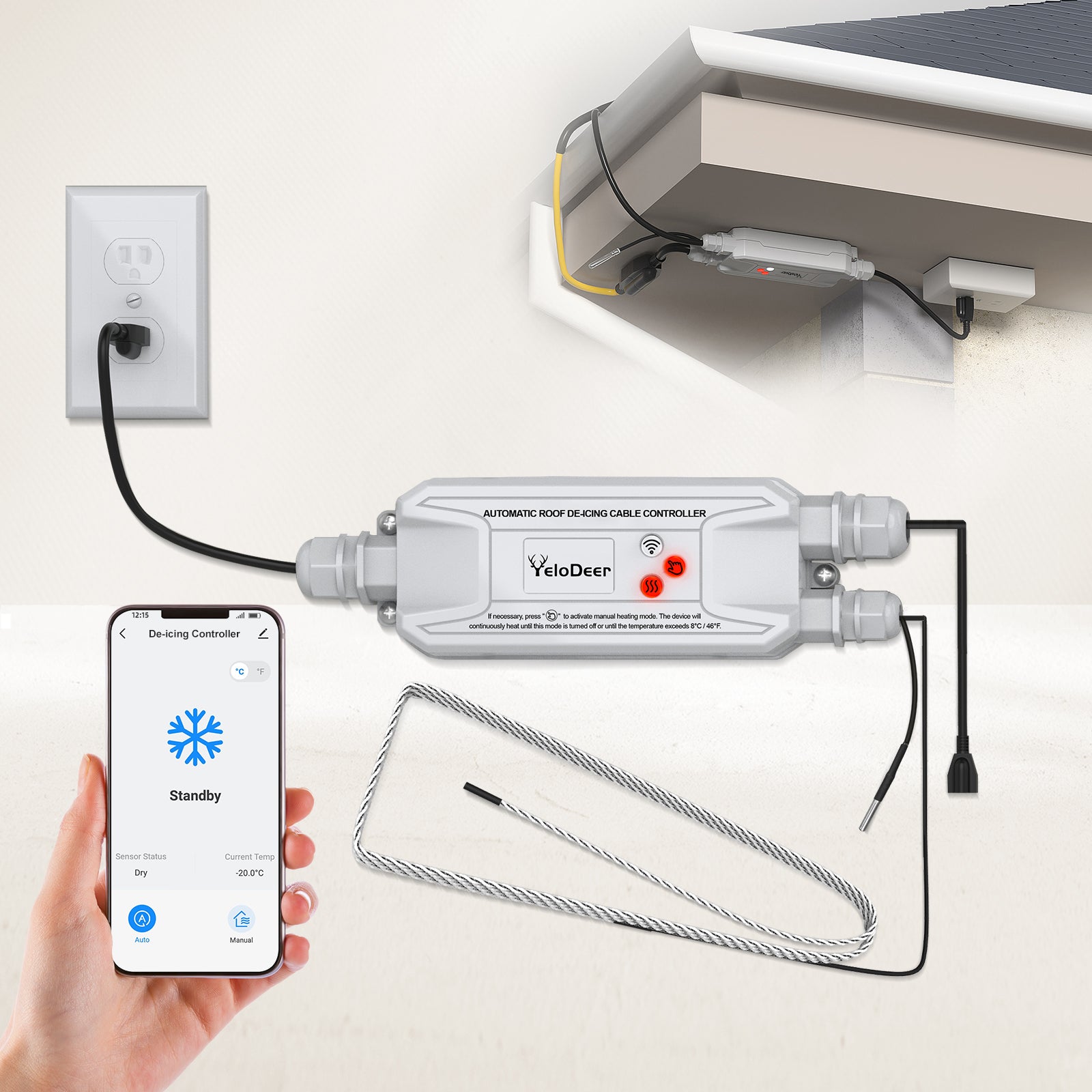
If your roof de-icing system uses a temperature and moisture controller, the sensor is one of the most important parts of the system. Dust, pollen, dirt, and debris can affect sensor readings and may cause unnecessary runtime or missed activation.
YeloDeer Roof Heating Controller
The YeloDeer roof heating controller is designed to help automate roof de-icing system operation based on environmental conditions.
For commercial roofs, facility teams should include sensor cleaning and control testing as part of the spring maintenance checklist.
Explore YeloDeer Roof Heating ControllerA clean sensor helps the controller make better on/off decisions. This can reduce unnecessary runtime and support more efficient system operation.
5. Verify Electrical Protection and Power Connections
Roof and gutter heating systems are outdoor electrical systems. Spring inspection should include a careful review of power connections, controllers, junction boxes, plugs, cords, and required ground-fault protection.
Safety reminder: do not energize a damaged heating cable system. If you see exposed conductors, damaged jacket, water inside connection boxes, or repeated breaker trips, have the system inspected by a qualified electrician or installer.
Plug-and-Play Kits vs. Bulk Cable Systems: What to Check
Different system types require different audit priorities. A pre-terminated plug-and-play kit is usually easier to inspect, while a bulk cable system may include more connection points and custom terminations.
| System Type | Spring Audit Focus | Best Fit |
| Plug-and-Play Roof Heating Kit | Check cable routing, clips, plug, power cord, GFCI outlet, gutter debris, and downspout position. | Residential roofs, smaller commercial areas, simple rooflines, and faster maintenance retrofits. |
| Bulk Cut-to-Length System | Inspect connection kits, end seals, splices, junction boxes, controls, voltage, circuit protection, and all custom cable runs. | Commercial roofs, long cable runs, complex rooflines, multi-zone systems, and contractor-installed projects. |
YeloDeer Roof De-Icing Solutions
YeloDeer offers roof de-icing solutions for both simpler maintenance needs and more complex professional installations, including pre-terminated options and bulk cut-to-length cable solutions.
Explore YeloDeer Roof De-Icing ProductsB2B Maintenance Planning for Commercial Properties
For property managers, contractors, and facility teams, a spring audit can also become a planning tool. It helps identify replacement parts, missed cold zones, system expansion needs, and maintenance priorities before winter demand returns.
For contractors: spring is a good time to collect roof measurements, photos, cable route notes, drain locations, gutter lengths, and downspout heights for next-season proposals.
Post-Winter Roof Heating System Checklist
Use this checklist as a practical starting point for seasonal maintenance.
FAQ
Why should I inspect roof heating cable after winter?
A post-winter inspection helps confirm that cable placement, clips, gutters, downspouts, sensors, and electrical connections are still in good condition after snow, ice, freeze-thaw cycles, and spring debris buildup.
What are the most common roof heat cable problems after winter?
Common issues include loose clips, shifted cable, cable sagging, clogged gutters, blocked downspouts, dirty moisture sensors, damaged power cords, loose connections, and debris around cable runs.
Should I clean gutters around roof de-icing cable?
Yes. Debris can restrict drainage, hold moisture, and interfere with normal heat transfer. Clean gutters carefully without pulling, cutting, twisting, or sharply bending the heating cable.
Do moisture sensors need maintenance?
Yes. Moisture sensors can collect dust, pollen, and debris. Cleaning the sensor surface and testing controller response can help reduce unnecessary activation and improve system readiness.
Can I test the system myself?
Basic visual inspection may be done by property maintenance teams, but electrical testing, damaged cable assessment, connection repair, hardwired system checks, and repeated breaker trip issues should be handled by qualified professionals.
When should I replace roof heating cable accessories?
Replace accessories if clips are broken, spacers are missing, end seals are damaged, connection kits show moisture intrusion, or the cable can no longer be held securely in the intended path.
Can a spring audit help plan a larger roof de-icing system?
Yes. Spring inspection can reveal cold zones, recurring ice areas, gutter problems, or downspouts that need additional cable coverage before the next winter season.
The Bottom Line
A roof and gutter heating system should be inspected after winter, not forgotten until the first freeze of next season.
Spring is the right time to check clips, cable alignment, debris buildup, sensors, controllers, connection kits, ground-fault protection, and any custom bulk cable terminations.
For facility managers, contractors, and property owners, a post-winter audit helps protect the system investment, plan replacement parts, identify cold zones, and improve winter readiness before demand returns.
Plan Your Post-Winter Roof Heating Audit
Need replacement parts, bulk cable specifications, controller support, or help reviewing a commercial roof de-icing layout? Tell us your roof type, system type, cable length, number of zones, controller setup, and inspection findings. The YeloDeer team can help you plan the next step.
Explore YeloDeer Roof De-Icing Solutions Contact Our Technical Team