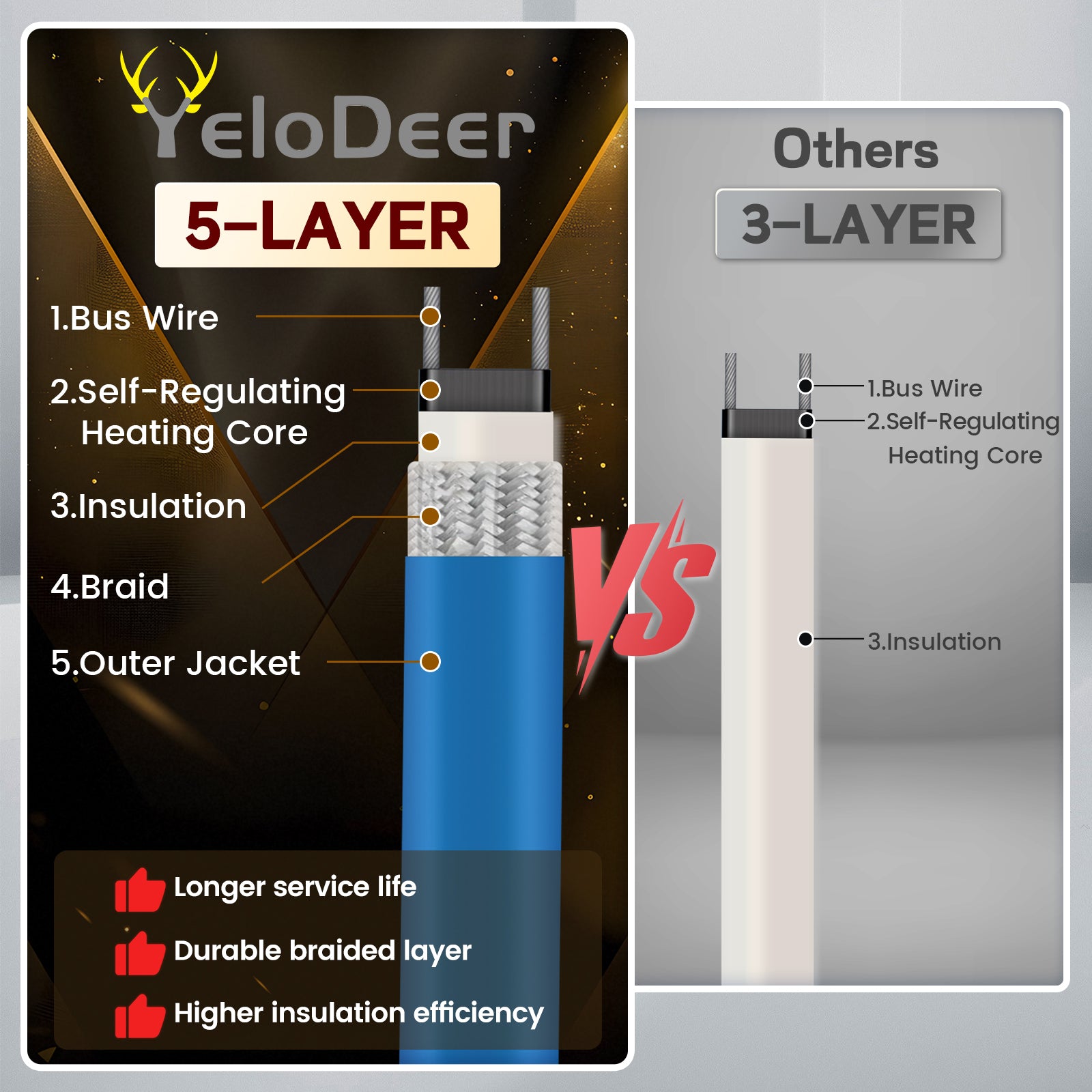
12V DC Self-Regulating Heat Tape for RV, Camper & Off-Grid Pipe Freeze Protection
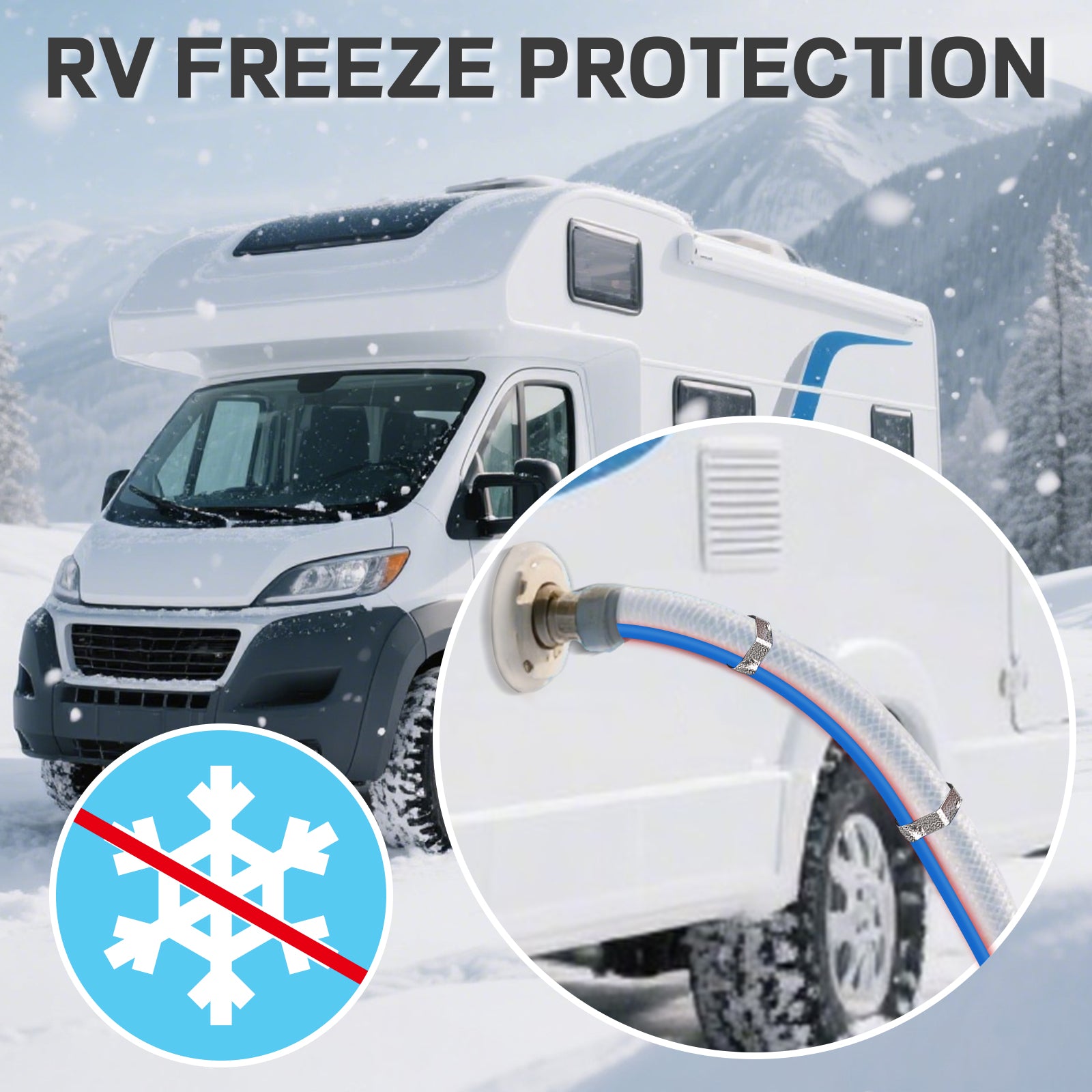
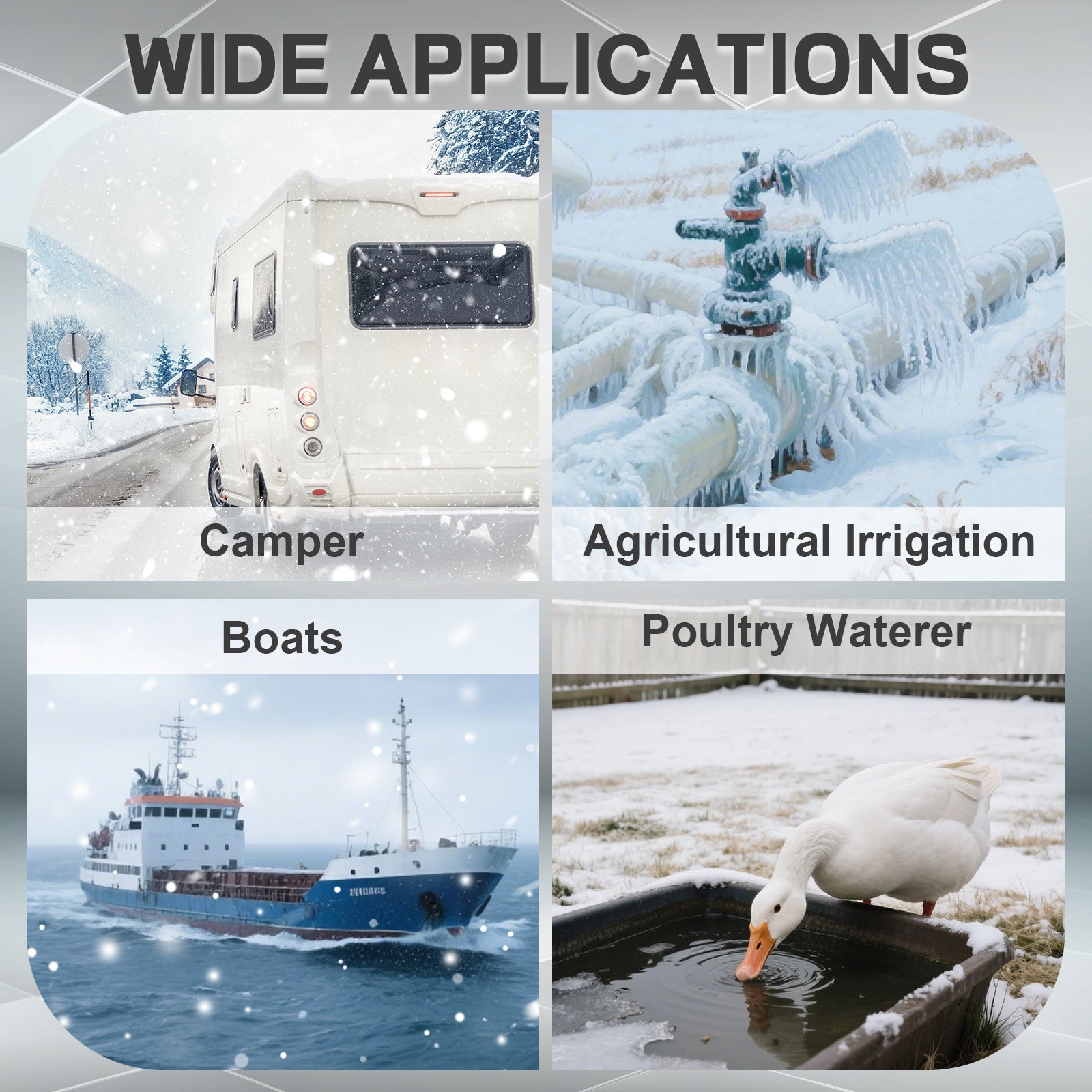
 YeloDeer 12V self-regulating heat tape is designed for external pipe and hose freeze protection where a 12V DC power system is available instead of a standard household outlet. It is well suited to RVs, campers, trailers, boats, off-grid cabins, solar-battery systems, and other mobile or remote water lines.
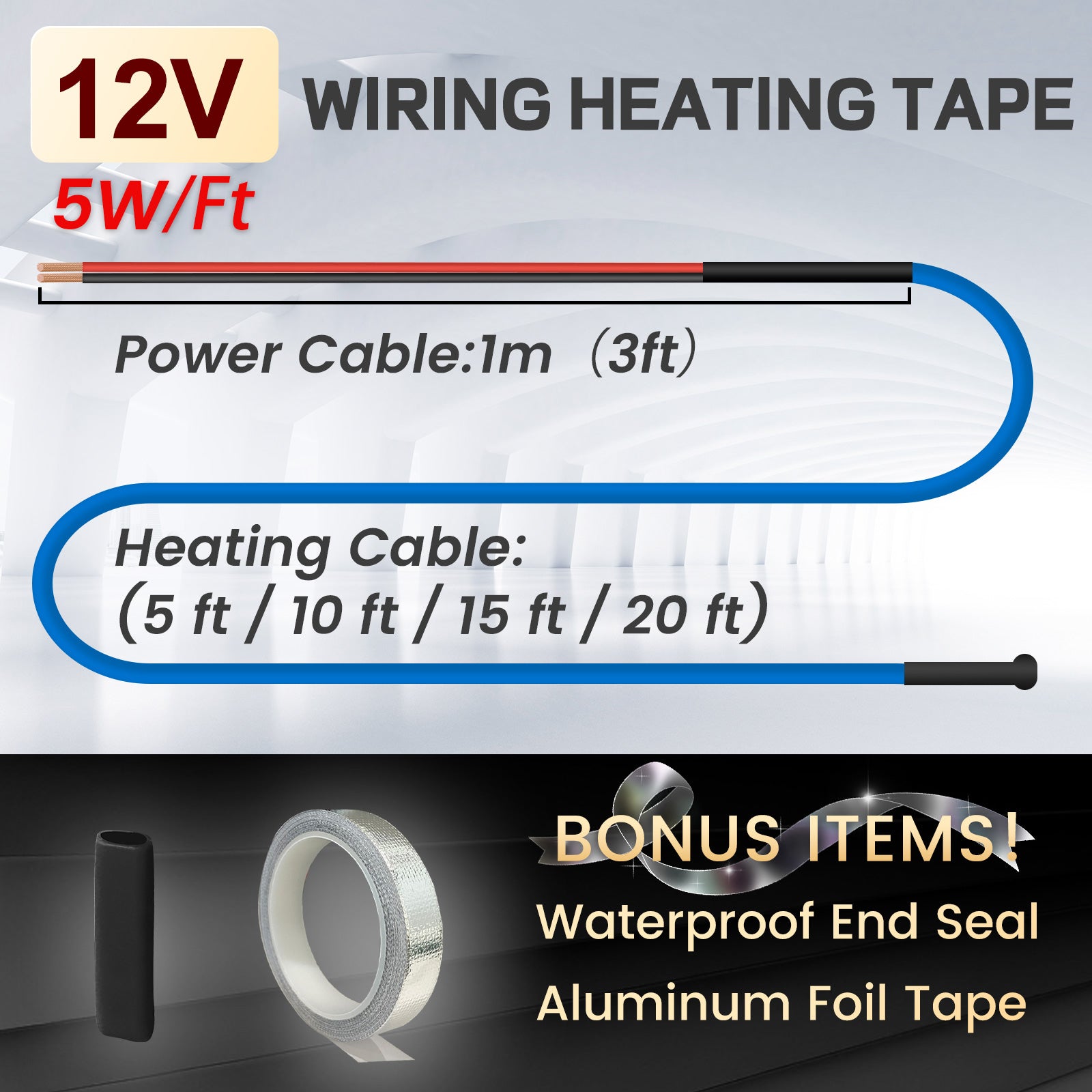
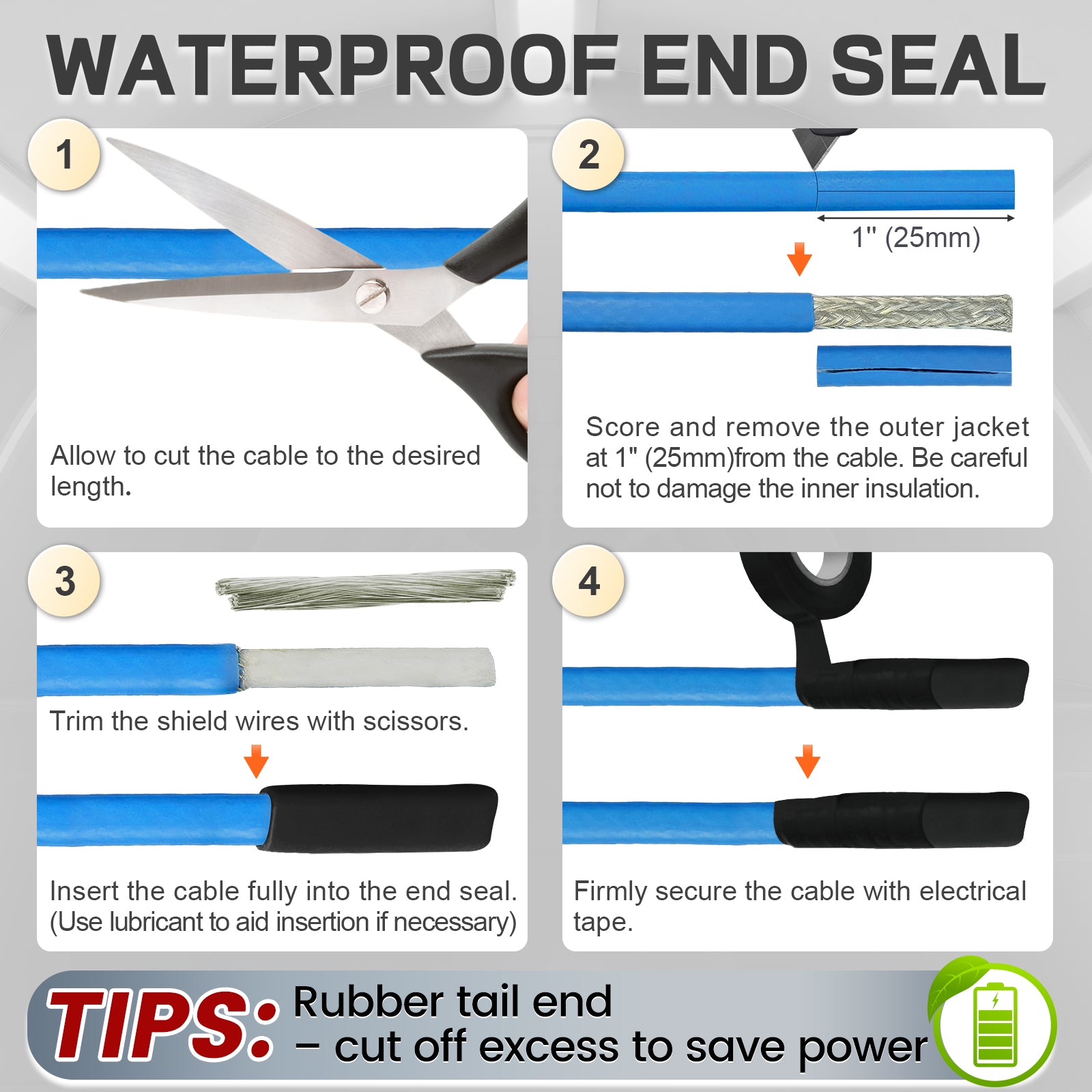
The cable is rated at 5W/ft at 50°F / 10°C and can be shortened when needed. After cutting, the cable end must be correctly sealed with the included end seal before power is connected.
12V DC Only Connect to a properly sized 12V DC battery or power supply. Never connect directly to 120V AC or 240V power.
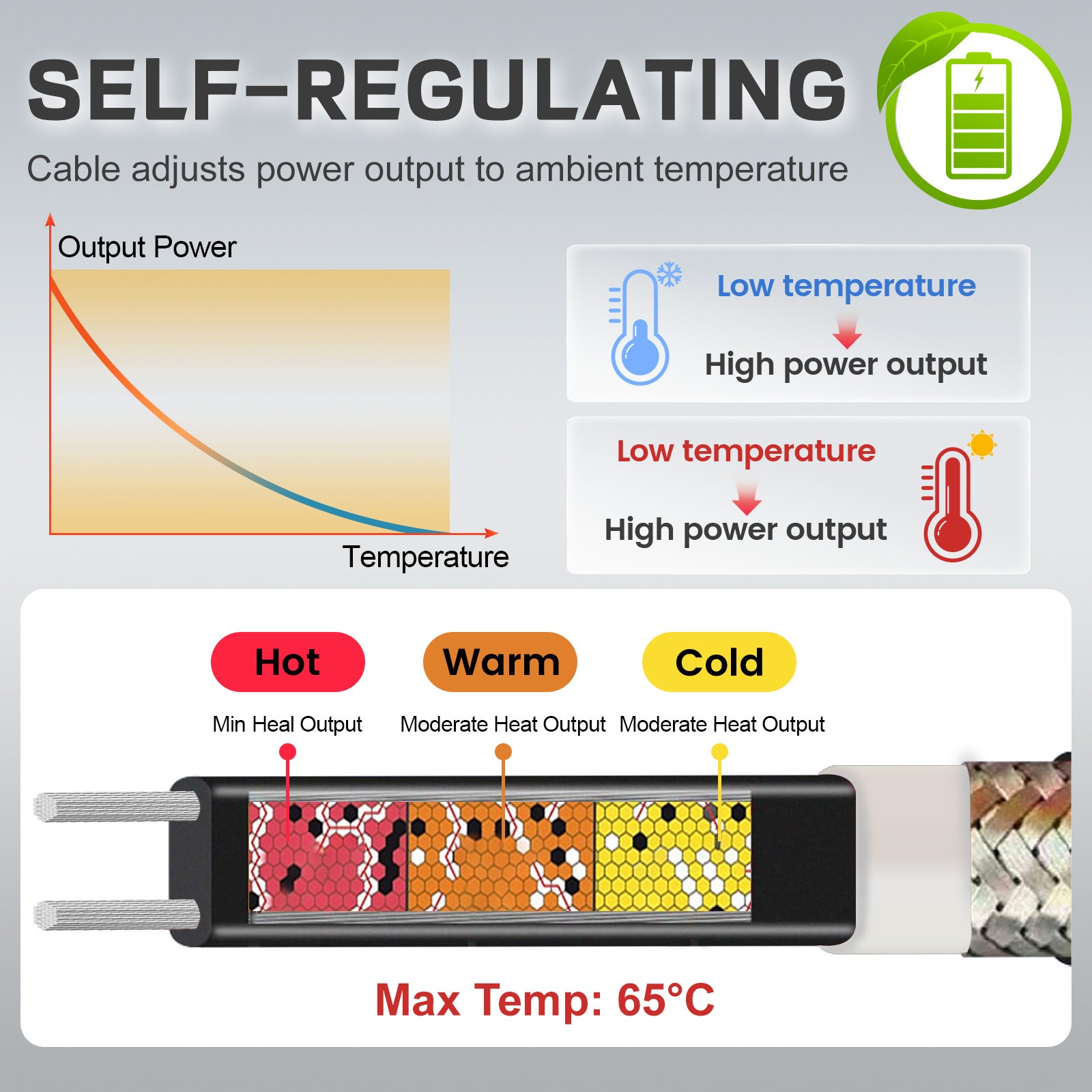
5W/ft Self-Regulating Heat output changes as cable temperature changes. Self-regulating does not mean automatic shutoff.
5–20 ft Lengths Available in 5 ft, 10 ft, 15 ft, and 20 ft heating lengths.
External Use Only Install on the outside of suitable pipes and hoses. Do not insert the cable inside a pipe or hose.
What Is Included?
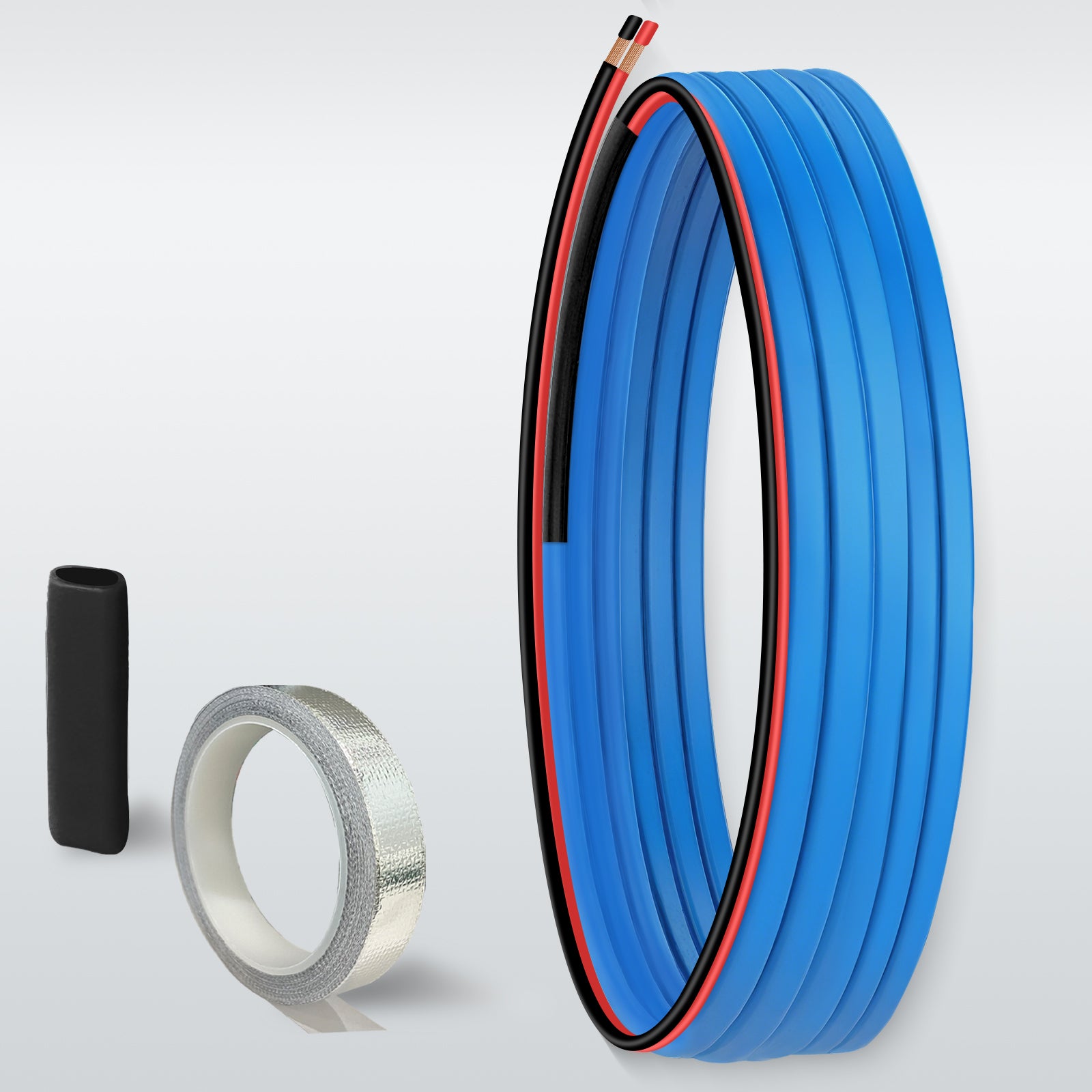
Included with the Cable Selected 12V heating cable, 3 ft power lead, end seal kit, aluminum foil tape, zip ties, and basic installation accessories.
Plan These Separately 12V DC battery or power supply, fuse and fuse holder, properly sized wiring and connectors, compatible 12V DC switch or thermostat if desired, pipe insulation, and additional weather protection where required.
This product does not have a household plug.
The included 3 ft power lead is intended for connection to a properly protected 12V DC power system. Do not connect the cable directly to a 120V household receptacle.
Is This the Right Version for You?

Choose This 12V Cable Choose 12V when your pipe or hose is powered from an RV, camper, trailer, boat, battery, solar-battery system, off-grid cabin, or another properly sized 12V DC source.
Choose a 120V Pipe Heat Cable Choose 120V when a standard household outlet is available and you prefer a plug-in pipe heating cable for residential plumbing.
Using household AC power instead? Compare the 120V Self-Regulating Pipe Heat Tape with Built-In Thermostat →
Important: No Built-In Thermostat
Self-regulating does not mean automatic ON/OFF. The cable adjusts its heat output as temperature changes, but it may continue drawing power whenever it remains connected to the 12V source.
For battery-powered installations, consider a switch or thermostat that is specifically rated and wired for the project's 12V DC system. A thermostat is not included with this product.
Do not connect this 12V cable through a 120V or 208–240V AC thermostat controller. Controller voltage must match the 12V DC heating system.
Battery & Power Planning
Heating cable can place a meaningful load on an RV or off-grid battery. Choose the shortest heating length that properly covers the freeze-prone pipe or hose section, then confirm that the battery, wiring, fuse protection, and charging system can support the load.
| 5 ft Cable |
Approx. 25W / 2.1A at 12V |
| 10 ft Cable |
Approx. 50W / 4.2A at 12V |
| 15 ft Cable |
Approx. 75W / 6.3A at 12V |
| 20 ft Cable |
Approx. 100W / 8.3A at 12V |
These figures are based on the rated 5W/ft output at 50°F / 10°C. Actual power draw can change because the cable is self-regulating.
Before You Order
Your power source is 12V DC Your battery or power supply can support the heating load You can provide suitable fuse protection Wiring and connectors are properly sized for the installation Electrical connections can stay dry and protected You have measured the actual freeze-prone section
Cut-to-Length for Short or Irregular Runs
A 12V heat cable can be useful when only a short section of RV plumbing, hose, valve, fitting, or outdoor pipe needs freeze protection. If the selected cable is longer than the required heated section, it may be shortened and the newly cut end must be sealed with the included end seal kit before energizing.
External pipe and hose use only. This product is not an in-pipe cable, direct-burial heating cable, submersible heater, sewer heater, or roof de-icing cable.
Need to place the heating cable inside a water line? Choose the appropriate product from the YeloDeer In-Pipe Heating Cable Collection →
Recommended Applications

This 12V heat tape is designed for external freeze protection where a properly sized low-voltage DC power source is already available or is practical to install.
RV, Camper & Trailer Plumbing
Fresh Water Lines Underbody Pipes Hose Sections Valves & Fittings
Off-Grid Water Systems
Remote Cabins 12V Battery Systems Solar Battery Systems Backup Water Lines
Boat & Mobile Water Lines
Onboard Plumbing Exposed Water Lines 12V DC Systems
Outdoor Pipe & Hose Protection
Small Pipes Garden Hoses Animal Water Lines Outdoor Water Systems
Compatible Pipe & Hose Materials
PEX pipe PVC pipe Copper pipe Steel pipe Galvanized pipe Suitable plastic water lines Suitable rubber hoses RV and garden water hoses
Before installation, make sure the pipe or hose is clean, dry, undamaged, and suitable for heating. Install pipe insulation over the completed heating cable installation whenever practical to reduce heat loss.
When Not to Use This Product
- Direct connection to a 120V AC household outlet
- 208–240V AC systems
- Inside drinking-water pipes or other internal pipe installations
- Inside sewer or drain pipes
- Inside tanks or hoses
- Long-term submersion or standing-water installations
- Direct burial applications requiring a certified direct-burial heating cable
- Roof, gutter, downspout, or ice-dam heating
- Locations where power connections cannot be protected from moisture
- Battery systems that cannot support the required electrical load
Before Installation
Confirm 12V DC power Measure the freeze-prone pipe or hose Confirm battery or power-supply capacity Plan suitable fuse protection Use properly sized wiring and connectors Keep connections protected from moisture Plan straight or spiral installation Prepare pipe insulation

Basic Installation Sequence
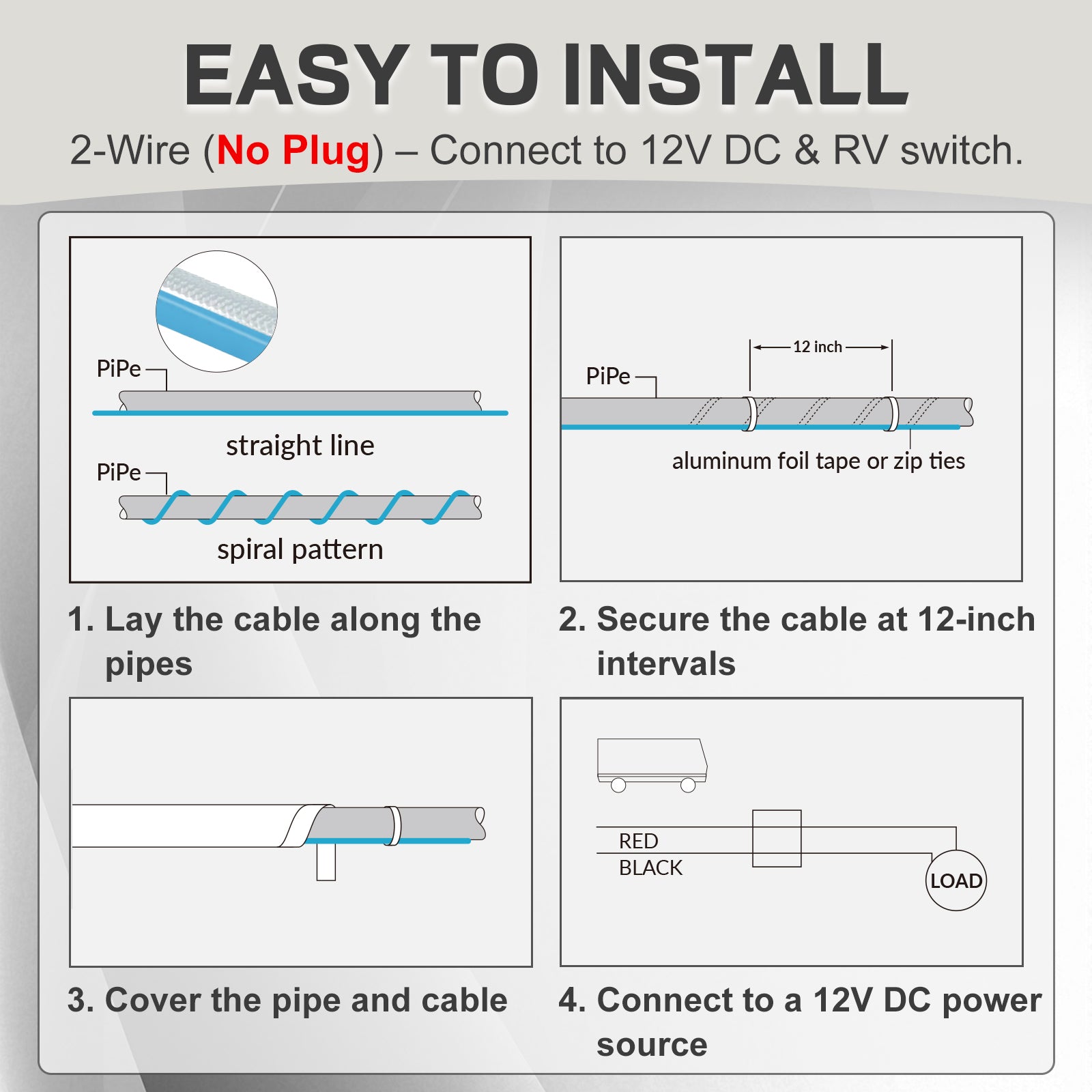
- Confirm that the available power system is 12V DC.
- Measure only the pipe, hose, valve, fitting, or other section that requires freeze protection.
- Inspect the heating cable, power lead, end seal, and mounting accessories before installation.
- Clean and dry the outside of the pipe or hose.
- Install the heating cable straight along the surface or use a suitable spiral layout.
- Secure the cable with the included aluminum foil tape or zip ties without crushing or damaging the cable.
- If the heating cable must be shortened, cut it to the required length and correctly install the included end seal.
- Add suitable pipe insulation over the installed cable and pipe or hose.
- Connect the power lead to a properly sized and fused 12V DC power system using suitable wiring and connectors.
- Protect the power connection from rain, snow, road spray, condensation, vibration, and abrasion.
- Test the completed heating system before freezing weather.
Mobile & RV Installation Checks
Protect from Road Spray Keep wiring, terminals, connectors, and control components dry and protected.
Protect from Movement Secure the cable so vibration and vehicle movement cannot rub it against sharp edges or moving parts.
Fuse the Circuit Use suitable circuit protection for the selected 12V power system and installation.
Check Battery Capacity Confirm that the battery and charging system can support the planned cable length and operating time.
Insulate After Installation Insulation helps reduce heat loss and can reduce unnecessary battery consumption.
Inspect Before Winter Check the heating cable, connections, insulation, wiring, and mounting before severe cold weather.
Do Not Damage the Cable
Do not crush, puncture, staple, nail, tightly kink, or secure the cable with hardware that can damage its outer jacket. Do not energize a shortened cable until the cut end has been properly sealed.
12V or 120V?
Choose the cable voltage based on the actual available power system rather than assuming lower voltage is always the better choice. RVs, campers, boats, battery systems, and off-grid installations often favor 12V DC, while residential pipes near household power are usually better suited to a 120V plug-in cable.
Read: 12V vs 120V Heat Tape for Pipes →
Plan RV Battery Load Before Ordering
For RV and battery-powered installations, cable length affects total wattage, current draw, and expected battery runtime. Measure the actual freeze-prone water line first and include insulation in the winterization plan.
Read: 12V Heat Tape for RV Water Lines – Power Draw & Battery Runtime →
Need help checking your setup? Email yelodeer@yelodeer.com with the pipe or hose length and diameter, application photos, 12V power-source type, battery capacity, planned cable length, straight or spiral layout, and insulation plan.