Overview
Digital Honey Warmer for Controlled Bucket Heating
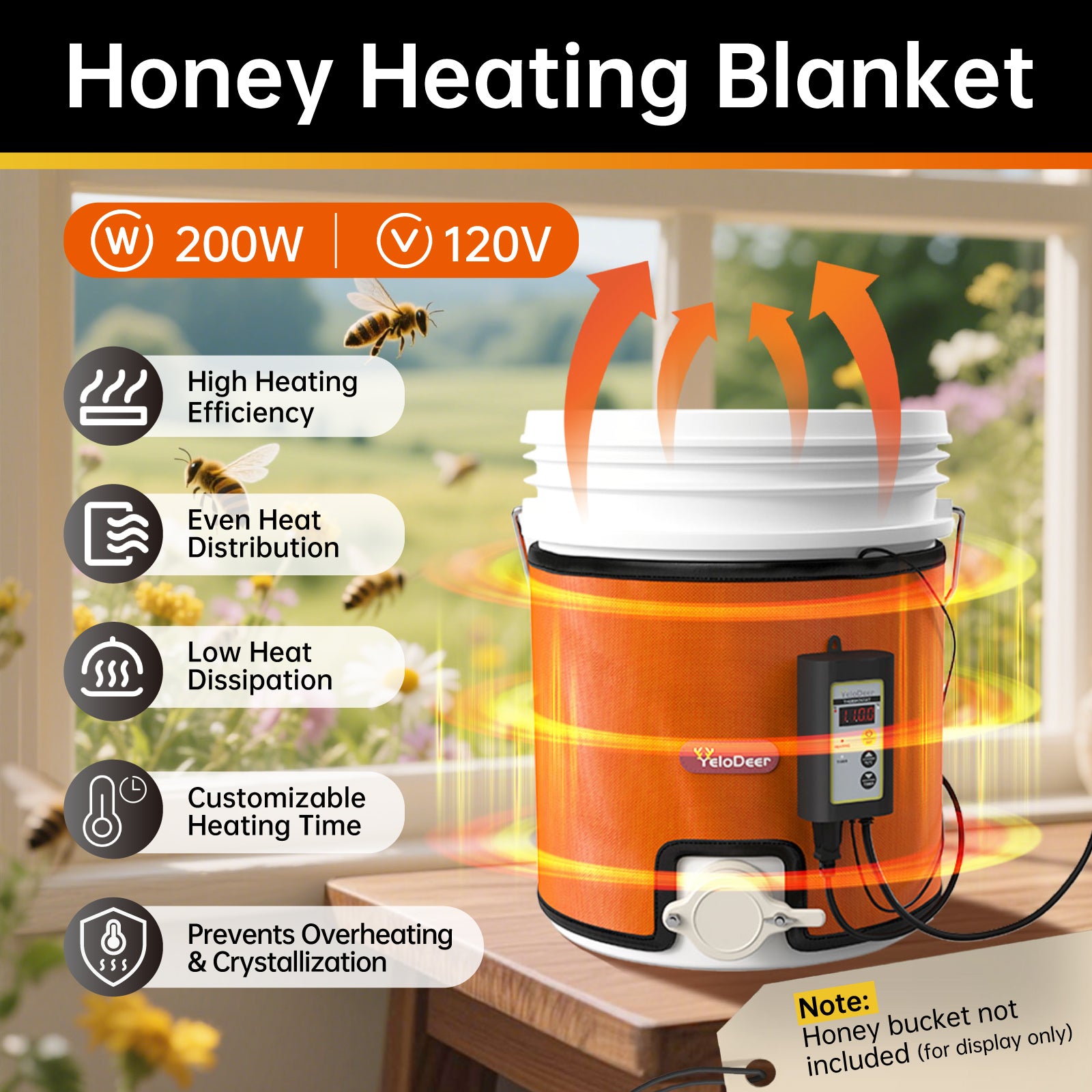
A 200W honey bucket warmer with adjustable temperature, timer control, and a dedicated sensor pocket. Designed for gradual warming when honey becomes thick or crystallized and needs to flow more easily for filtering, bottling, or dispensing.
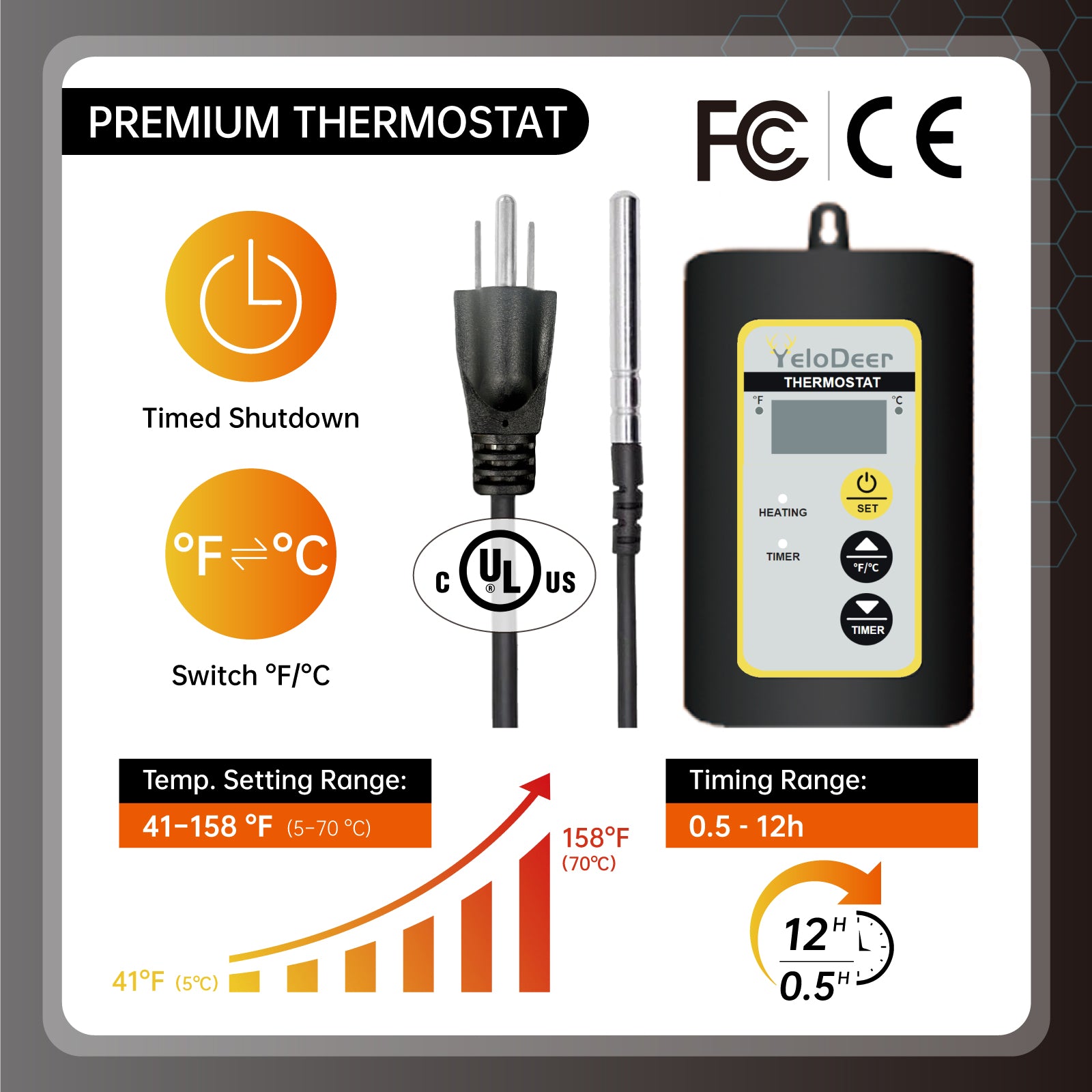
41–158°F Control Set the temperature from 5°C to 70°C.
0.5–12 Hour Timer Set a timed warming cycle with automatic shutdown at the end.
Constant-Temperature Mode Run without a timer and let the thermostat cycle around the selected temperature.
200W Output Controlled warming rather than rapid high-temperature heating.
Before You Order
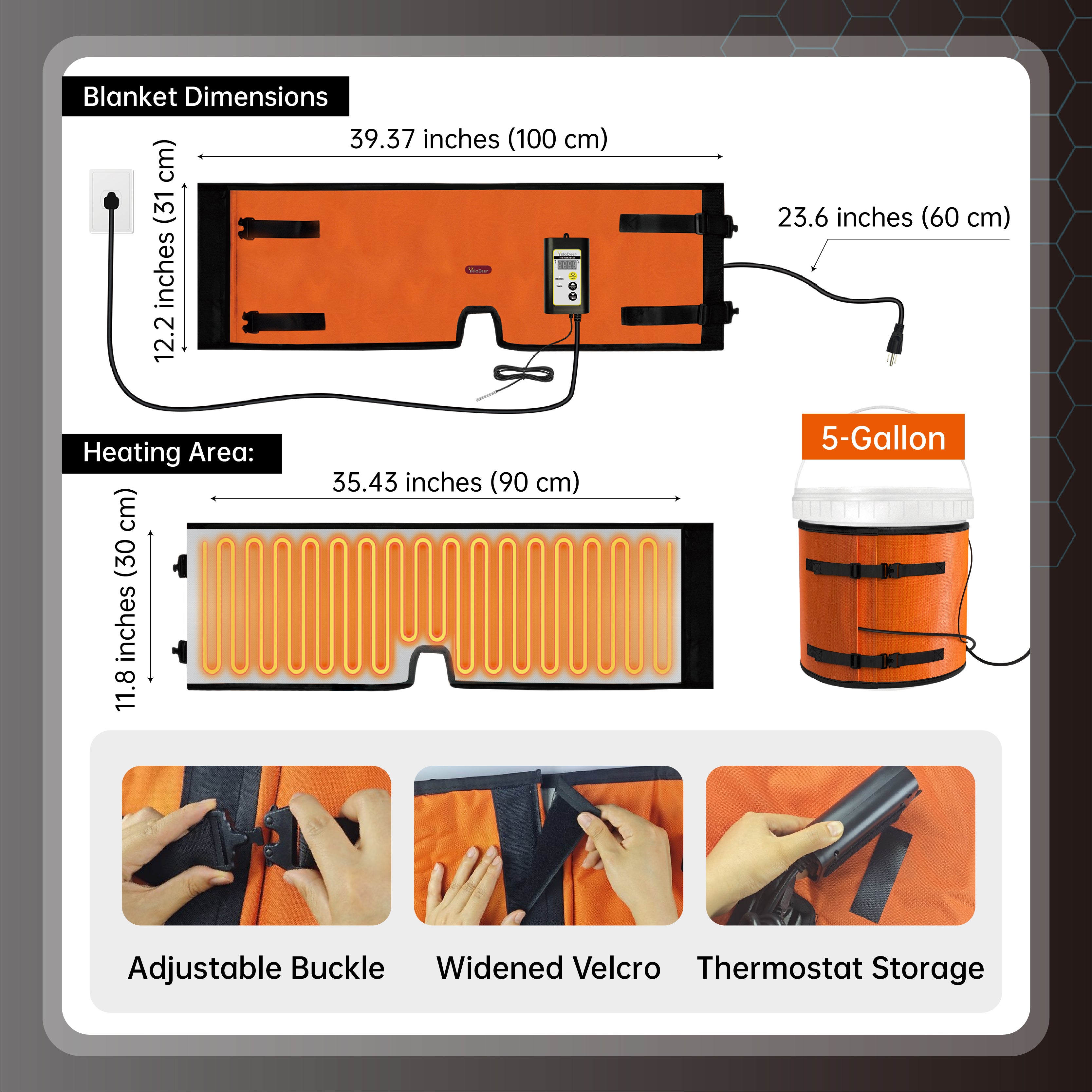
Container: Designed around standard 5-gallon honey buckets and compatible pails Power: 120V AC Probe: Must be placed in the dedicated sensor pocket Fit: Adjustable Velcro straps secure the blanket around the container Dispensing buckets: Reserved faucet opening is built into the blanket Heating goal: Gentle warming and temperature maintenance Electrical parts: Controller and plug must remain dry Hazardous materials: Not for explosive or highly flammable applications
Sensor placement is critical. Always insert the temperature probe into the dedicated sensor pocket before heating. If the probe hangs in colder open air, the controller may continue calling for heat longer than intended.
Which YeloDeer Bucket Warmer Should You Choose?
Choose This Digital Honey Warmer Choose it when temperature control matters: honey decrystallizing, filtering, bottling, dispensing, or other materials that need an adjustable setpoint and timer.
Choose the 72W Insulated Foil Warmer Choose it when you mainly need simple low-power warming, freeze protection, or heat retention and do not need an adjustable thermostat or timer.
Need the simpler low-power version? Compare the YeloDeer 5-Gallon Insulated Bucket Warmer →
This is not a rapid industrial heater. A full bucket of cold or heavily crystallized honey can require several hours or multiple warming cycles. Heating time depends on starting temperature, crystallization, bucket material, ambient temperature, volume, and selected temperature.


Applications
Honey Processing

Crystallized Honey
Decrystallizing Gentle Warming Flow Improvement
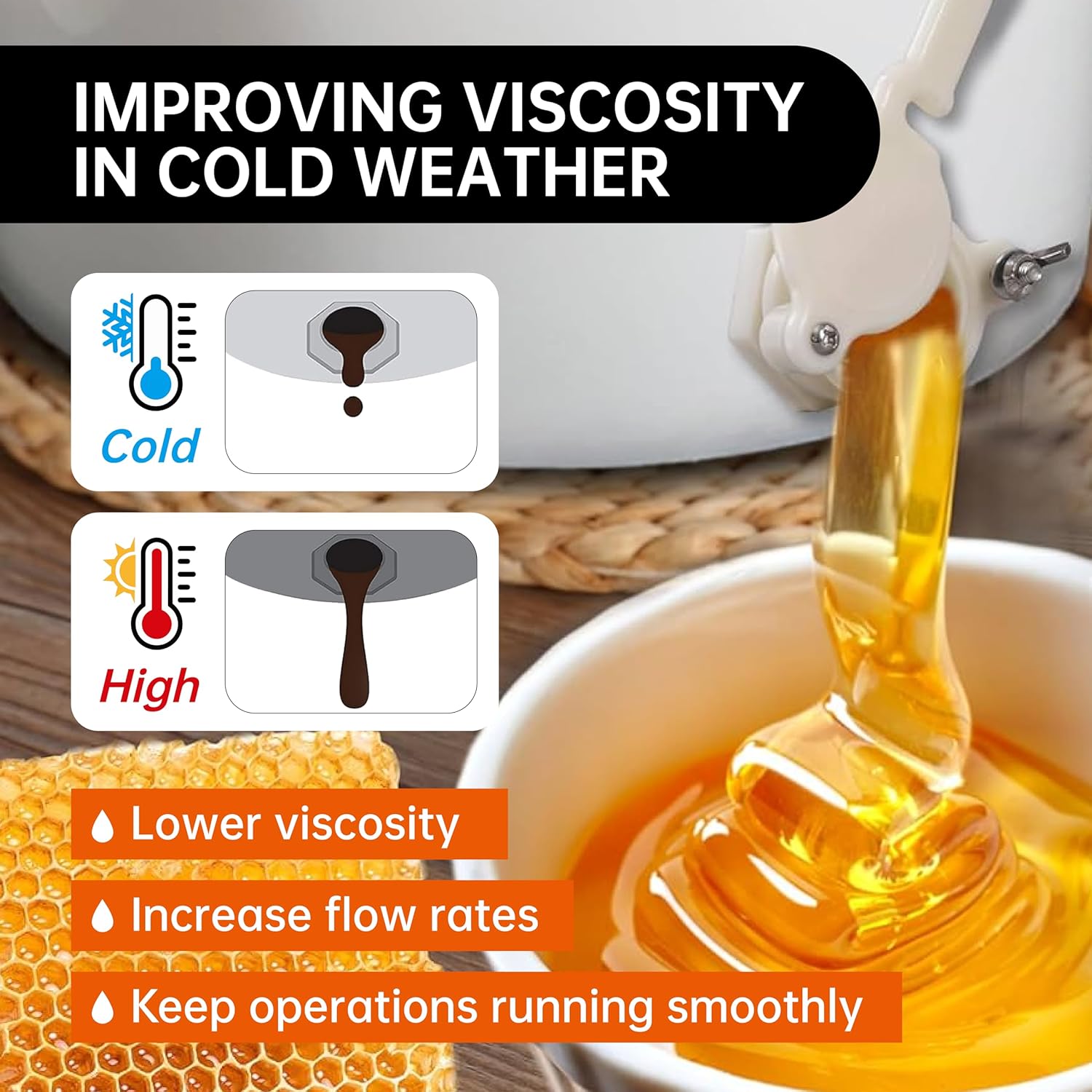
Gradually warms crystallized or thick honey so it can become easier to handle without relying on rapid high-temperature heating.
Filtering & Bottling
Filtering Bottling Dispensing
Helps maintain a more workable honey viscosity before filtering, filling jars, or dispensing from compatible pails.
Beekeeping & Small Processing
Apiaries Honey Farms Farmers Markets Home Beekeepers
A practical electric honey warmer for small-batch processing and seasonal honey preparation.
Compatible Food Materials
Syrup Chocolate Edible Oils Molasses
May also be used for compatible temperature-sensitive materials when the material and container are approved for the selected temperature.
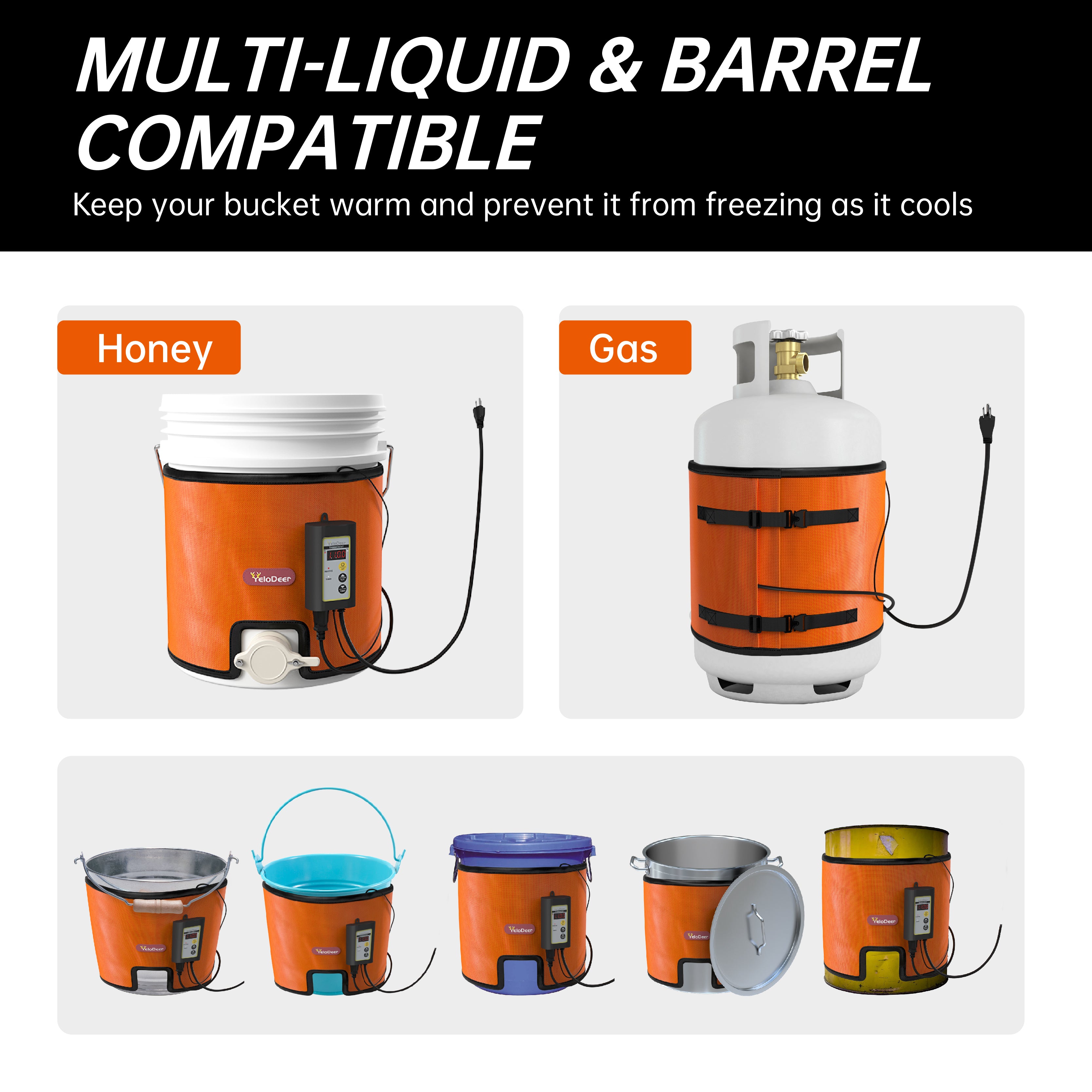
Compatible Containers

Standard honey buckets Compatible plastic buckets Compatible metal pails Dispensing buckets with aligned faucet position Similar containers that the blanket can wrap securely
Container size alone does not determine compatibility. Confirm that the container material is safe at the selected temperature and that the blanket can sit evenly without folding or bunching.
Not Recommended For
- Explosive or highly flammable materials
- Hazardous areas requiring explosion-proof equipment
- Pressurized containers not approved for external heating
- Containers that may soften or deform at the selected temperature
- Materials with unknown safe heating limits
- Leaking, cracked, or damaged containers
- Immersion or submerged use
- Rapid high-temperature industrial heating
Specifications
| Product Type |
Digital honey bucket warmer / bee blanket heating wrap |
| Primary Application |
Honey warming, decrystallizing, viscosity management, filtering, bottling, and dispensing preparation |
| Voltage |
120V AC |
| Power |
200W |
| Temperature Range |
41°F to 158°F / 5°C to 70°C |
| Timer Range |
0.5 to 12 hours |
| Operating Modes |
Timer mode and constant-temperature mode |
| Controller |
Digital thermostat |
| Temperature Units |
°F / °C switchable |
| Temperature Sensor |
Probe with dedicated blanket sensor pocket |
| Container Fit |
Designed around standard 5-gallon buckets and compatible pails |
| Fastening |
Adjustable Velcro straps |
| Dispensing Bucket Feature |
Reserved faucet opening |
| Outer Material |
Waterproof Oxford fabric |
| Insulation |
Insulated blanket construction |
| Recommended Materials |
Honey, syrup, chocolate, edible oils, molasses, and other compatible temperature-sensitive contents |
Timer vs Constant-Temperature Mode
| Timer Mode |
Maintains the selected temperature during the programmed 0.5–12 hour period, then shuts off when the timer ends. |
| Constant-Temperature Mode |
When no timer is selected, the thermostat cycles heating on and off according to the sensor reading until the heater is turned off. |
Honey temperature guidance: YeloDeer recommends approximately 95°F–113°F / 35°C–45°C for typical gentle honey warming. Start lower when possible and allow time for heat to move from the bucket wall toward the center.
Installation
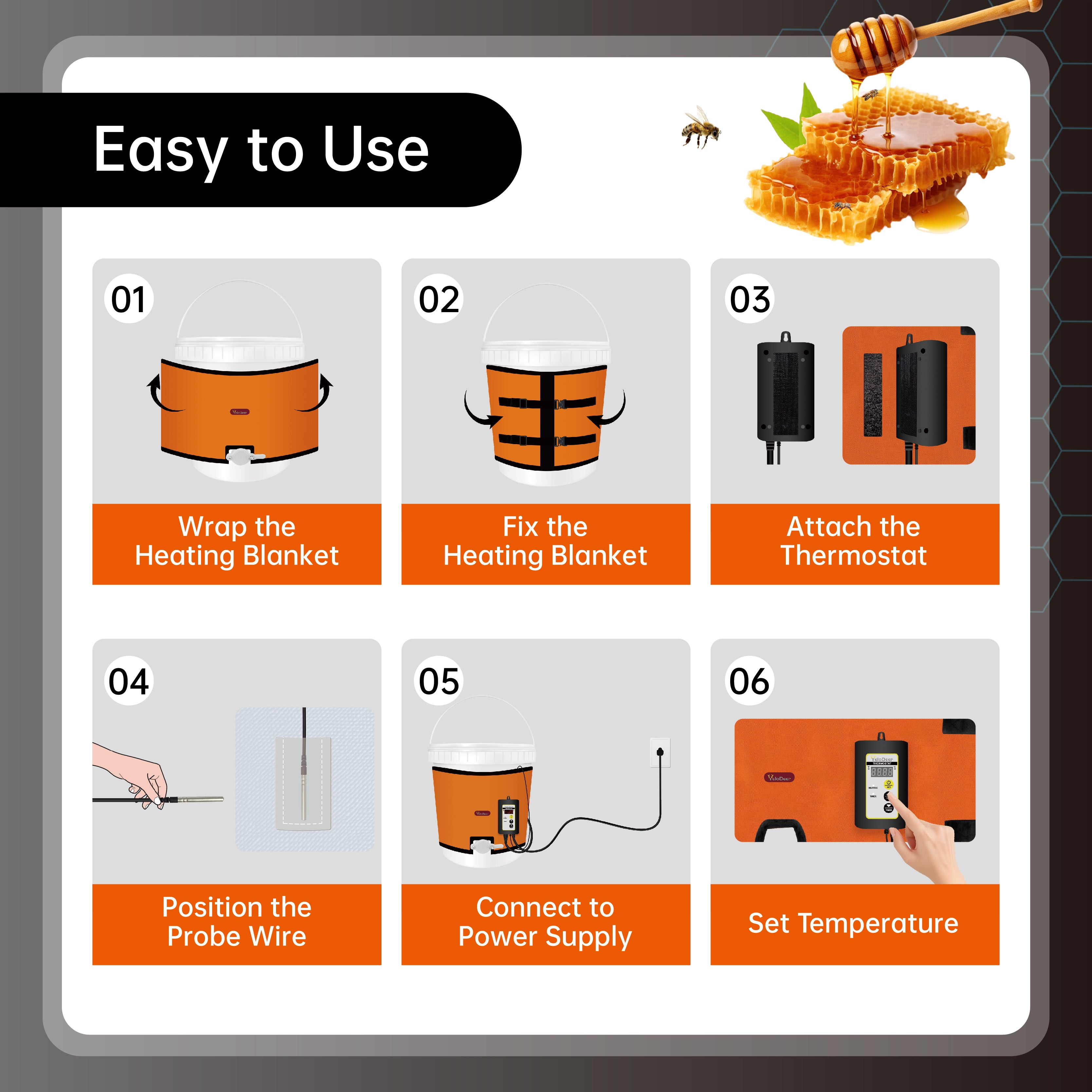
Basic Setup
- Place the bucket on a stable, dry surface.
- Confirm the bucket and contents are safe to heat.
- Wrap the blanket evenly around the container.
- Align the faucet opening if the bucket has a dispensing valve.
- Tighten the Velcro straps for close, even contact.
- Insert the temperature probe into the dedicated sensor pocket.
- Plug the heater into a properly grounded 120V outlet.
- Select the desired temperature.
- Set the 0.5–12 hour timer if timed operation is preferred.
- Monitor the first heating cycle to learn how quickly your material warms.

Important Operating Checks
Probe is fully positioned in the sensor pocket Blanket is flat and evenly wrapped Bucket is stable and undamaged Selected temperature is safe for the container Selected temperature is safe for the contents Controller and electrical connection remain dry
Do not fold or bunch the heating blanket during operation. Do not immerse the heater, controller, probe connection, cord, or plug in water.

For More Consistent Honey Warming
- Use a lid when appropriate for the process.
- Keep the bucket away from very cold floors and strong drafts.
- Start with a moderate temperature rather than maximum heat.
- Allow sufficient time for the center of a full bucket to warm.
- Stir only when appropriate and safe for your process.
- Check the honey periodically instead of relying only on the container-surface reading.
Cleaning & Storage
Unplug the heater and allow it to cool before cleaning. Wipe the exterior with a damp cloth; do not immerse it. Store clean and dry, roll the blanket loosely, and avoid sharp folds that could damage the heating area.
FAQ
Will this honey warmer completely decrystallize a full bucket?
It can gradually soften and decrystallize honey, but heating time varies with starting temperature, crystallization level, bucket material, honey volume, ambient temperature, and selected setting. A full cold bucket may require several hours or multiple warming cycles.
What temperature should I use for honey?
YeloDeer recommends approximately 95°F–113°F / 35°C–45°C for typical gentle honey warming. Start at the lower end when possible and increase only as needed for your process.
Should I use the timer or constant-temperature mode?
Use timer mode when you want automatic shutdown after a known warming period. Use constant-temperature mode when you need the thermostat to cycle around the selected setting until you manually turn the heater off.
Why must the temperature probe stay in the sensor pocket?
The thermostat relies on the probe reading. If the probe hangs in colder open air, it may not represent the bucket temperature correctly and the controller may continue calling for heat longer than intended.
Is this the same as the YeloDeer insulated 5-gallon bucket warmer?
No. This 200W honey heater adds adjustable 41–158°F temperature control, a 0.5–12 hour timer, constant-temperature operation, and a dedicated sensor pocket. The 72W Insulated Bucket Warmer is a simpler non-adjustable heater intended mainly for low-temperature warming, freeze protection, and heat retention.
Can this electric honey warmer be used on plastic buckets?
Only when the specific plastic container is suitable for the selected heating temperature. Confirm the container manufacturer's temperature limit before use and never set the controller above a temperature the bucket can safely tolerate.
Can I use it for syrup, chocolate, oils, or other materials?
Yes, for compatible materials with known safe heating limits. Confirm the material's recommended temperature, container compatibility, and any applicable safety requirements before heating.
Is this a high-temperature industrial pail heater?
No. It is a controlled 200W bucket heating blanket designed for gradual warming and temperature maintenance. It is not intended as a rapid, high-temperature industrial drum heater.
Guides
Real Beekeeper Project: Honey Moisture Management
See how a beekeeper used stable bucket warming together with airflow and dehumidification during a high-moisture honey project. Moisture results still need to be verified with appropriate honey testing equipment.
Read the Honey Warming & Moisture Management Case Study →
Choosing the Right Container Heater
For applications beyond honey, compare controlled bucket warming with higher-output drum and pail heating options based on temperature range, container size, and required heating speed.
Read the Container Heating Selection Guide →
Need compatibility help? Email yelodeer@yelodeer.com with the container dimensions and material, contents, starting temperature, desired temperature, whether the bucket has a faucet, and application photos.
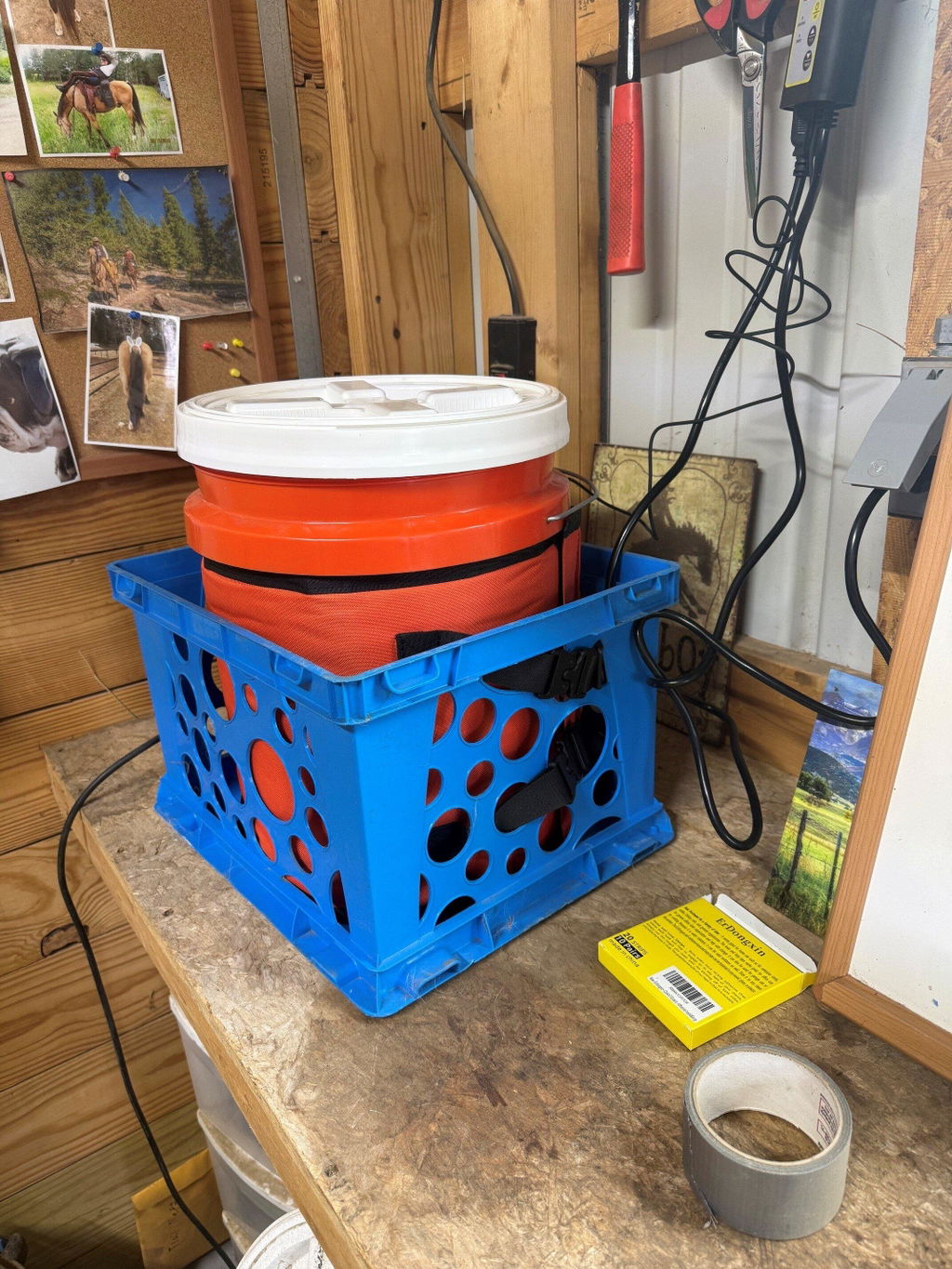
The installation photos below show how customers use YeloDeer Digital Honey Heater & Bee Blanket for honey warming, decrystallization, filtering, bottling, dispensing, and other 5-gallon bucket applications.
Every setup is different. Honey type, starting temperature, crystallization level, bucket material, room temperature, and heating time can all affect performance.