Quick Answer
Spring is the right time to inspect your roof and gutter heating system before you forget about it for the season. After winter, check whether the heating cable is still aligned, securely clipped, free from visible damage, properly positioned in gutters and downspouts, and safely connected to a working GFCI outlet.
If your roof heat cable is still plugged in after freezing conditions have passed, unplug it unless your system is managed by a suitable automatic controller. Self-regulating cable reduces heat output as temperatures rise, but it may still draw power while energized.
When spring arrives, most homeowners focus on yard cleanup, garage organization, and home maintenance projects. But one important item is often forgotten: the roof and gutter heating system that protected the home from winter ice dams.
Roof heating cables work hard during the cold season. Snow movement, ice buildup, roof edge runoff, gutter debris, UV exposure, rodents, and spring rain can all affect system condition and long-term performance.
A short spring roof audit helps you reduce unnecessary electricity use, identify damaged cable, reset loose clips, inspect downspouts, and prepare the system before the next freezing season.
1. Unplug Roof Heating Cable When Freeze Risk Is Over
One common misunderstanding is that self-regulating heating cable fully turns itself off when the weather warms up. That is not how the technology works.
Self-regulating cable reduces heat output as surrounding temperature rises, but if the cable stays powered, it may still draw some energy. For roof and gutter systems, this can create unnecessary runtime after ice dam risk has passed.
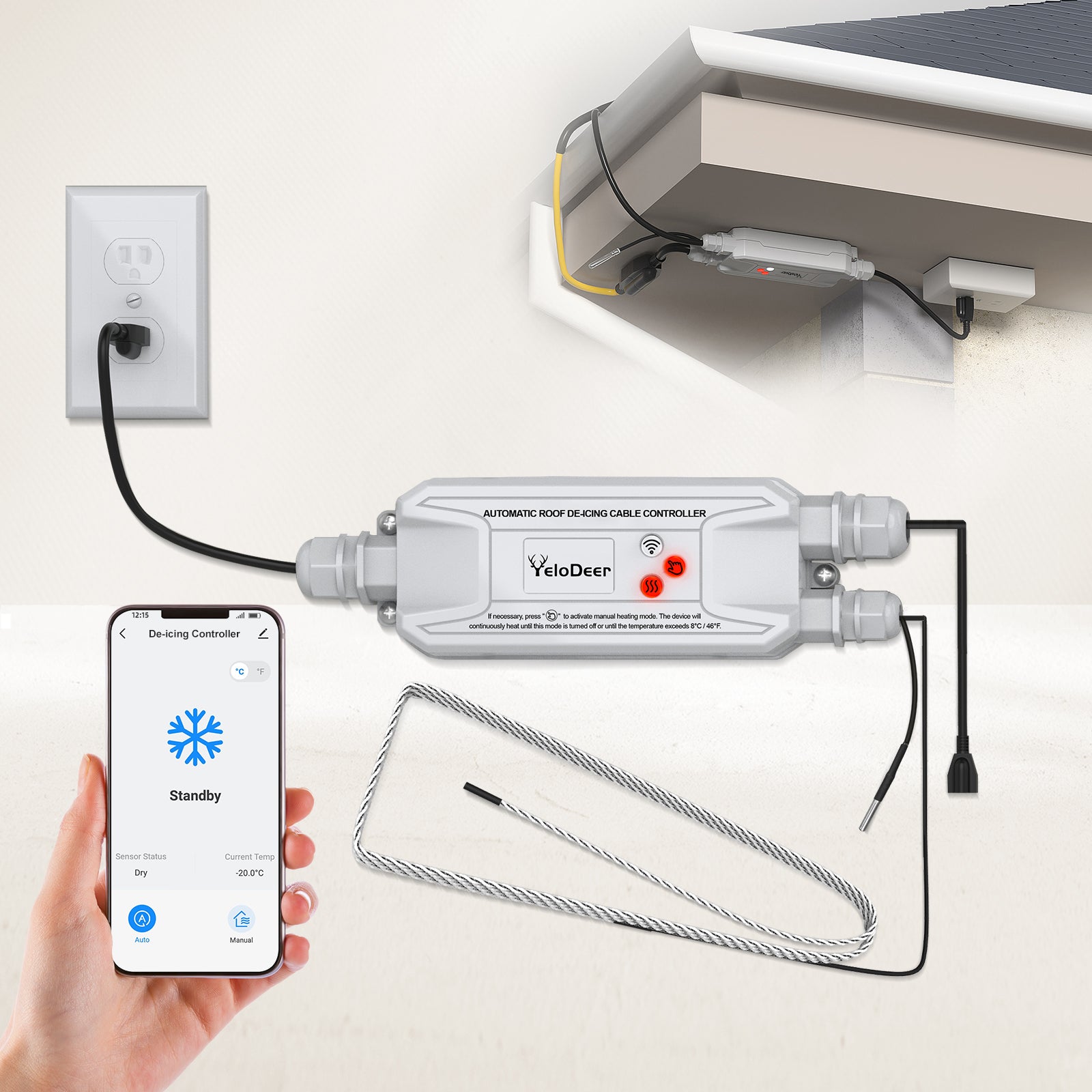
YeloDeer Roof Heating Controller
A roof heating controller can help manage roof de-icing cable operation based on temperature and moisture conditions, reducing the need for manual switching during winter weather.
Explore YeloDeer Roof Heating ControllerEnergy note: actual energy use depends on cable length, wattage, runtime, controller settings, outdoor temperature, and local electricity rates.
2. Inspect Cable Jacket for Winter Damage
Winter can be hard on outdoor electrical equipment. Ice movement, sliding snow, gutter debris, UV exposure, and animals can all damage a roof heating cable over time.
Safety warning: do not energize or patch a cable with exposed conductors, deep cuts, cracked jacket, crushed sections, or damaged plugs. Replace damaged cable or contact a qualified installer.
3. Reset Gutter Clips and Roof Edge Alignment
As snow and ice slide down the roof, they can pull roof heating cable out of position. If the cable no longer follows the correct roof edge pattern, it may not create a continuous melt path when winter returns.
Proper alignment matters. A roof heating cable should help create a drainage path from the roof edge through the gutter and downspout, not sit loose or disconnected from the meltwater route.
YeloDeer Roof De-Icing Solutions
YeloDeer roof de-icing products help protect roof edges, gutters, valleys, and downspouts when properly selected, installed, and maintained.
Explore YeloDeer Roof De-Icing Products4. Audit the Outdoor Electrical Outlet
Spring rain, melting snow, and outdoor moisture can affect electrical connections. Before next winter, inspect the outlet, plug, cord, controller, and any visible connection points.
Electrical safety reminder: if a GFCI will not reset, trips repeatedly, shows burn marks, or feels loose, stop using the system and have the outlet inspected by a qualified electrician.
5. Check Shingles, Flashing, and Roof Surfaces
Roof heating cable is attached near the areas most affected by snow, ice, and meltwater. Spring is a good time to check whether winter ice has loosened clips, lifted shingles, damaged flashing, or created weak spots around roof edges.
A heating cable can help manage ice and meltwater, but it does not replace roof repair. Fix damaged shingles, flashing, and gutter issues before relying on the system next winter.
Spring Roof Heating System Checklist
Use this quick checklist after the last freeze risk has passed.
Why Spring Is a Better Time to Repair or Upgrade
If your roof heating system did not survive the winter, do not wait until the first snowstorm to repair it. Spring and summer usually offer safer access, better visibility, and more time to plan the correct cable length and layout.
Need Help Planning a Roof De-Icing System?
Tell us your roof edge length, gutter length, downspout height, voltage needs, winter conditions, and whether you need a pre-cut kit or bulk cable solution. YeloDeer can help review a suitable roof de-icing setup.
Contact Our Technical TeamFAQ
Should I unplug roof heating cable in spring?
Yes, if the system is manually powered and consistent freezing conditions are over. Self-regulating cable may still draw power while plugged in. If you use a compatible automatic controller, follow the controller settings and product instructions.
Does self-regulating roof heat cable turn off by itself?
No. Self-regulating cable adjusts heat output based on temperature, but it does not fully disconnect power by itself. A thermostat or roof heating controller is needed to cut power automatically based on conditions.
What roof heating cable damage should I look for after winter?
Look for cracked jacket, brittleness, cuts, chew marks, deep gouges, crushed sections, loose clips, pulled cable, damaged plugs, corrosion, or any exposed conductor.
Why is roof heat cable alignment important?
Roof de-icing cable needs to stay in the planned roof edge, gutter, and downspout path. If it shifts out of position, it may not help maintain a continuous drainage channel during freeze-thaw conditions.
Should I test the outdoor GFCI outlet?
Yes. Test the GFCI outlet after winter and before the next freeze season. If it will not reset, trips repeatedly, or shows signs of corrosion or heat damage, have it inspected by a qualified electrician.
Can damaged roof heating cable be repaired?
Do not patch cable with exposed conductors, deep cuts, or damaged insulation unless the manufacturer provides an approved repair method. In many cases, damaged cable should be replaced.
When is the best time to install roof de-icing cable?
Spring, summer, and early fall are usually better than winter because the roof is easier to access, gutters are clear, and installers can work in safer conditions.
The Bottom Line
A roof and gutter heating system should not be forgotten once winter ends. Spring is the best time to unplug manual systems, inspect cable condition, reset clips, clear gutters, test GFCI protection, and check shingles or flashing around the roof edge.
If the cable is damaged, misaligned, or unreliable, plan replacement or repair before the next freezing season. Waiting until snow and ice return makes inspection, installation, and troubleshooting harder.
For the best performance, combine a properly installed roof heating cable with correct gutter routing, downspout coverage, electrical protection, seasonal maintenance, and a suitable controller when automatic operation is needed.
Prepare Your Roof De-Icing System for Next Winter
Need help replacing roof heating cable, choosing a controller, or planning a bulk roof de-icing project? Share your roof measurements, gutter layout, downspout height, voltage, and winter conditions. The YeloDeer team can help you review the right option.
Explore YeloDeer Roof De-Icing Products Contact Our Technical Team