Overview
Pipe Heat Tape Thermostat with 15ft Remote Sensor
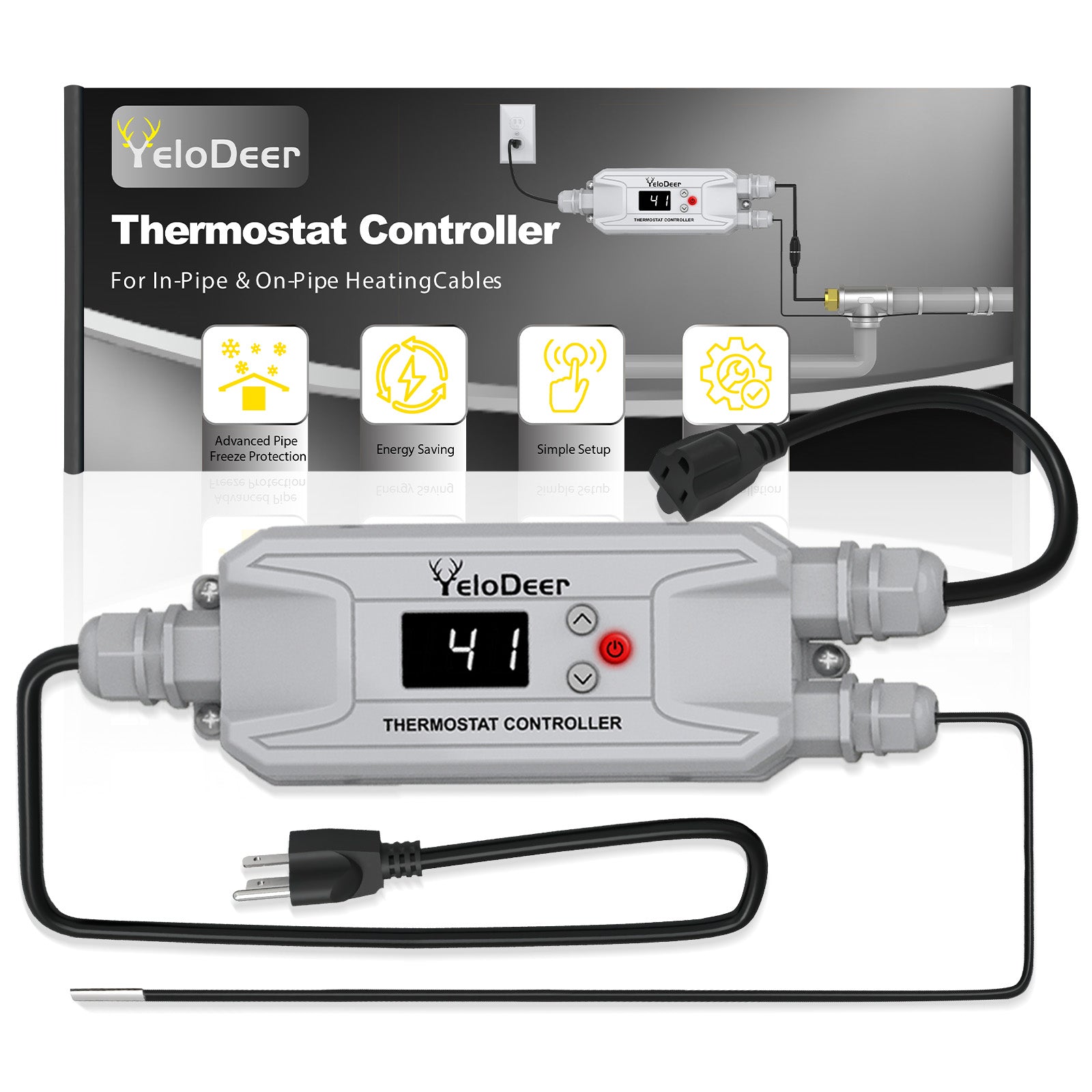
YeloDeer Pipe Heat Tape Thermostat is designed to control 120V pipe heating cables and compatible small heating devices based on temperature. It helps turn connected heating equipment on and off automatically, so the heating cable does not need to run continuously all winter.
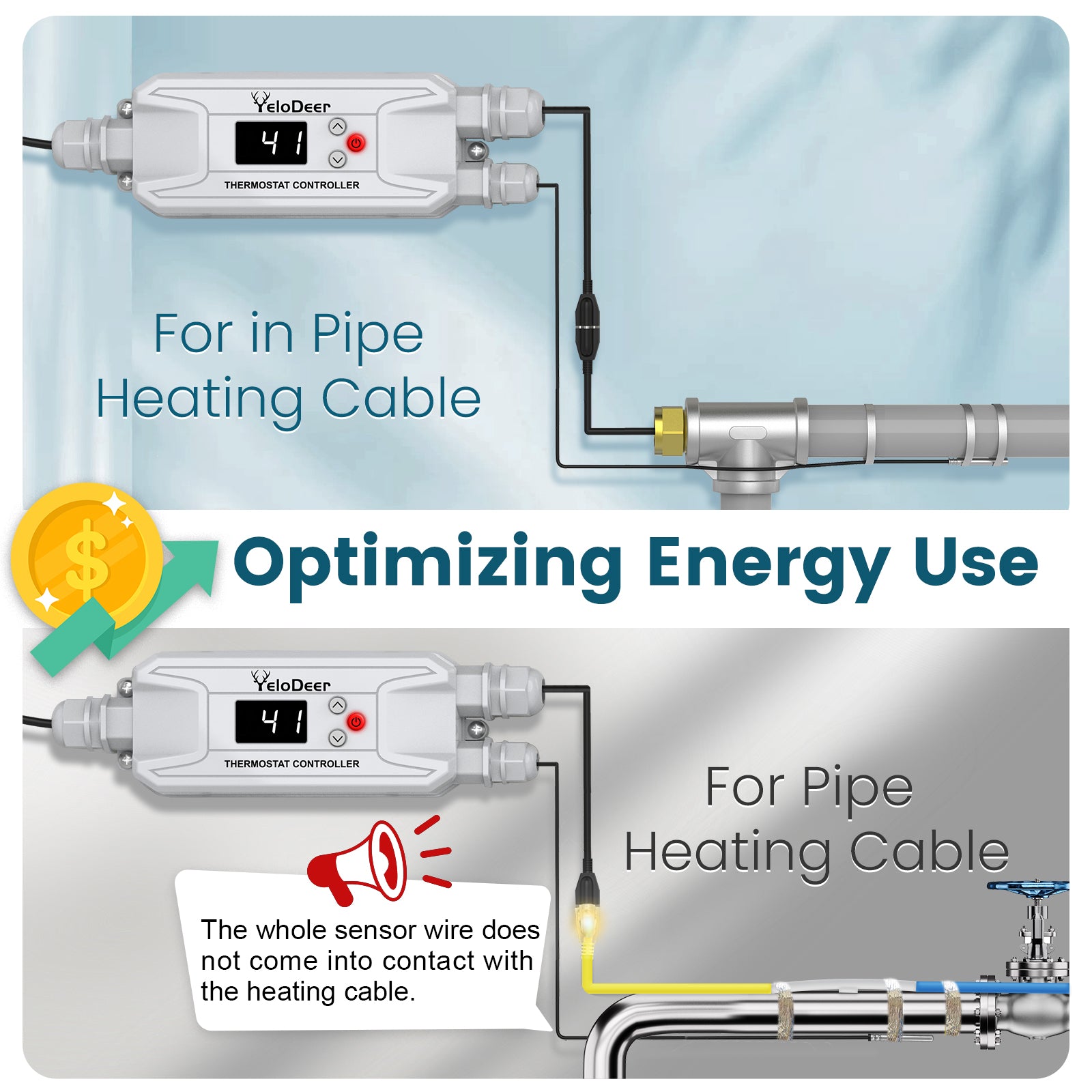
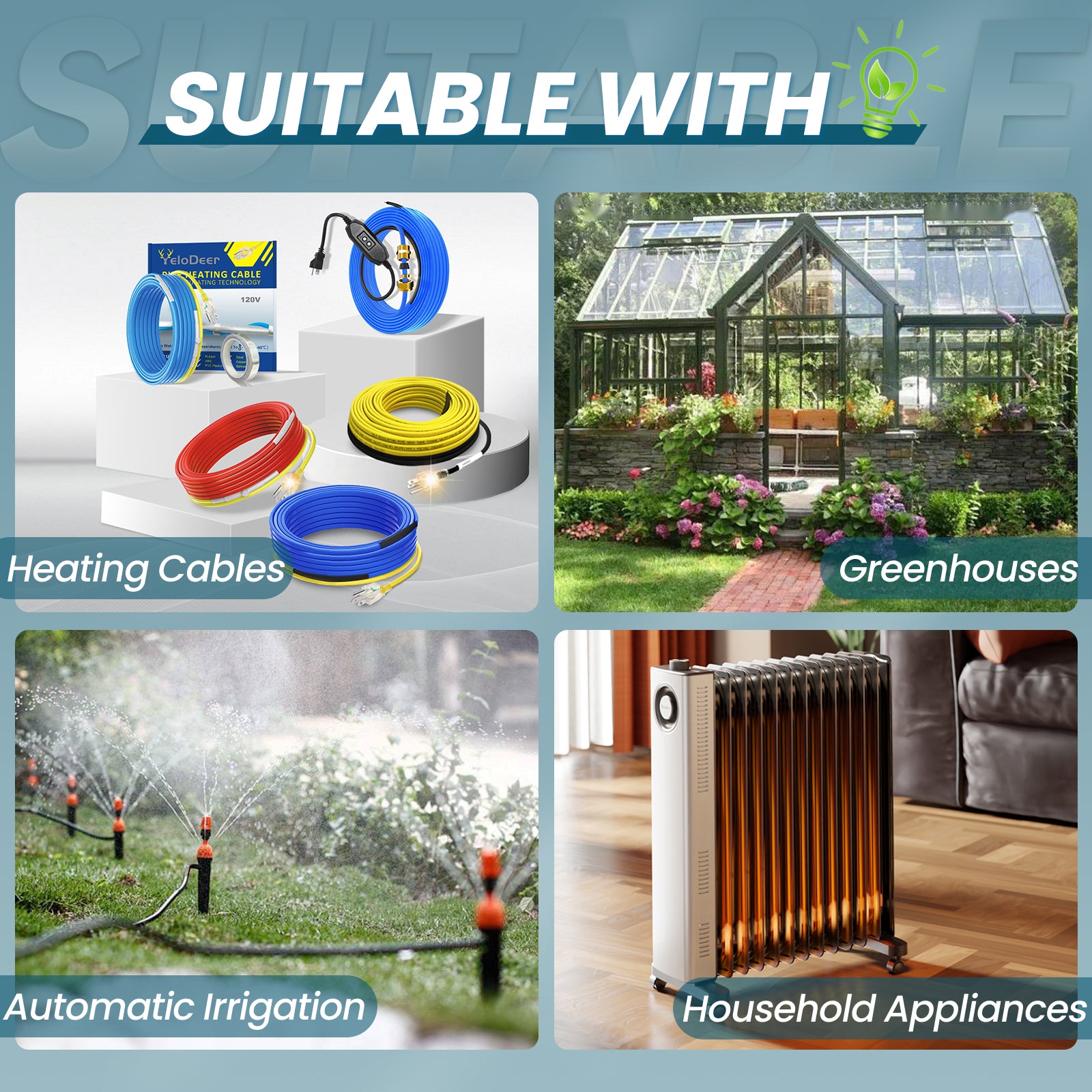
This thermostat is especially useful for pipe freeze protection systems, including external pipe heat tape, selected in-pipe heating cable setups, heating cables without built-in thermostat control, and other compatible 120V heating devices within the rated load.
The 15 ft remote sensor allows you to place the temperature probe near the coldest point of the pipe, while keeping the controller itself in a more protected location.
Key Benefits
• Designed for pipe heat tape and heating cable control
• Works with most compatible 120V heating cables within rated load
• 15 ft remote sensor for flexible probe placement
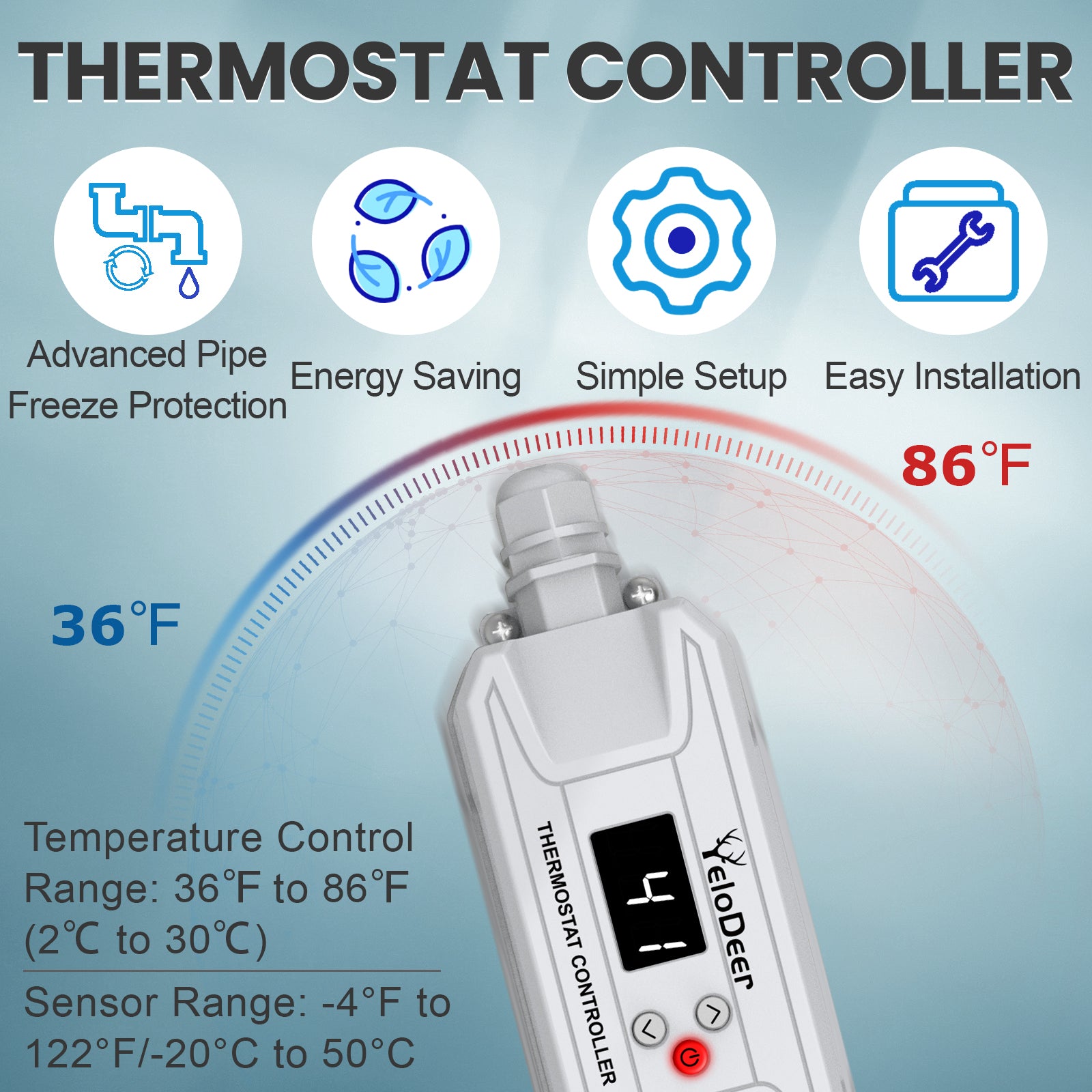
• Adjustable temperature control from 35.6°F to 86°F
• Helps heating cables run only when needed
• Reduces manual plugging and unplugging during winter
• Helps reduce unnecessary electricity use
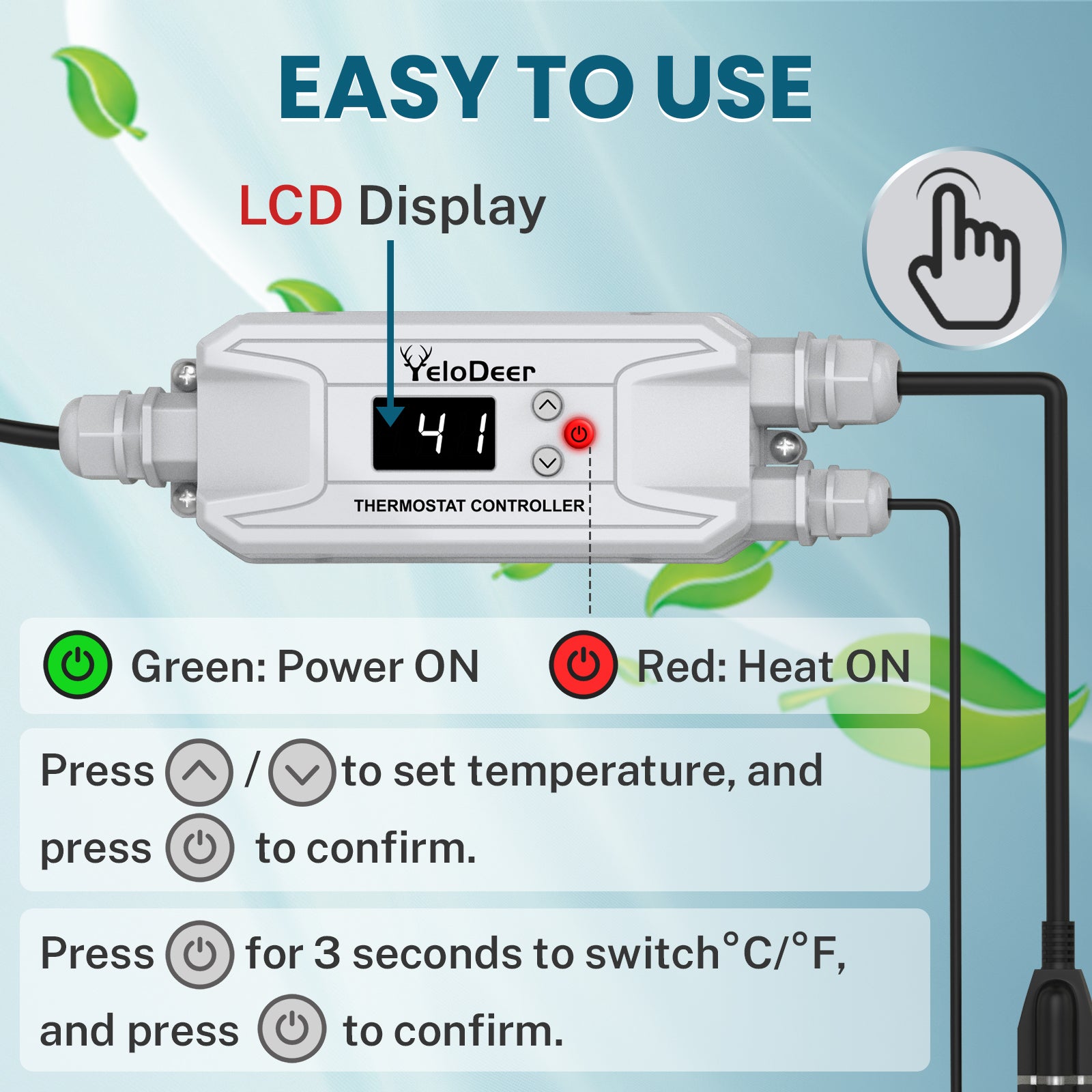
• Simple interface for temperature adjustment
• °F / °C display switch
• Power outage memory restores previous working status
• Grounded plug design
• Suitable for self-regulating and constant-wattage heating cables when used correctly
• Can also control compatible small 120V heaters, heating pads, and barn heating devices within 15A
Best For
• Pipe freeze protection
• External pipe heat tape control
• Heating cables without built-in thermostat control
• Pipe heating systems in crawl spaces, garages, barns, basements, and outdoor sheltered areas
• Livestock and barn heating equipment
• Greenhouse heating control
• Fermentation and small heating projects
• Customers who want automatic temperature-based control instead of continuous heating
Important Before You Order
This product is a heating controller. It turns on connected heating equipment when the sensed temperature drops below your setting and turns it off when temperature rises according to the control range.
It is not designed for cooling fans, attic fans, roof de-icing cables, electric floor heating systems, baseboard heaters, HVAC systems, air conditioners, refrigerators, or compressor-based equipment.
Before ordering, confirm:
• Your heating device is 120V
• Total current is within 15A
• The device can safely be controlled by an external thermostat
• The sensor can be placed at the coldest pipe location
• The controller and plug connection can stay dry and protected
• The heating cable installation follows the cable manufacturer’s instructions
Best Pairing with YeloDeer Products
This thermostat is a good match for YeloDeer heating cables or heating products that do not already have their own automatic thermostat
Sensor Placement Matters
For pipe freeze protection, the sensor should be placed at the coldest area that represents the freeze risk.
The sensor should usually be attached directly to the pipe and placed under insulation, not left hanging in open air far away from the pipe.
Poor sensor placement may cause the heating cable to turn on too late, turn off too early, or run unnecessarily.


Applications & Compatibility
Recommended Applications
YeloDeer Pipe Heat Tape Thermostat is designed for 120V heating control applications where temperature-based on/off operation is needed.
Common applications include:
• External pipe heat tape
• Pipe freeze protection systems
• Heating cables without built-in thermostat control
• Self-regulating pipe heating cables
• Constant-wattage heating cables within rated load
• Crawl space pipe heating
• Basement pipe heating
• Garage pipe heating
• Barn and livestock water line heating
• Greenhouse heating
• Seedling and plant heating
• Brewing and fermentation heating
• Small 120V heaters and heating pads within rated load
Pipe Freeze Protection Use
For pipe freeze protection, this thermostat can help:
• Turn the heating cable on before the pipe freezes
• Turn the heating cable off when heating is not needed
• Reduce winter energy waste
• Reduce manual operation
• Improve seasonal convenience
• Help extend heating cable service life by reducing unnecessary runtime
Compatible Heating Devices
This thermostat may be used with compatible 120V heating devices within the rated load, including:
• Pipe heat tape
• Self-regulating heating cable
• Constant-wattage heating cable
• Small heaters
• Heating pads
• Barn heating equipment
• Greenhouse heating devices
• Fermentation heating devices
Always confirm the device voltage, wattage, and amperage before use.
When Not to Use This Product
This product is not recommended for:
• Roof and gutter de-icing control
• Attic fan or cooling fan control
• Air conditioners
• Refrigerators or freezers
• Compressor-based equipment
• Electric radiant floor heating
• Electric baseboard heaters
• HVAC furnace control
• Heat pump control
• 240V heating systems
• Devices above 15A
• Outdoor exposed plug connections in rain or standing water
If you need roof de-icing control, choose YeloDeer Smart Roof De-icing Controller.
If you need cooling or fan control, choose YeloDeer Digital Cooling Thermostat Outlet.
Specifications & Sizing
Product Specifications
Product Type: Pipe heat tape thermostat / heating controller
Application: 120V pipe heating cable and compatible heating device control
Control Mode: Heating mode
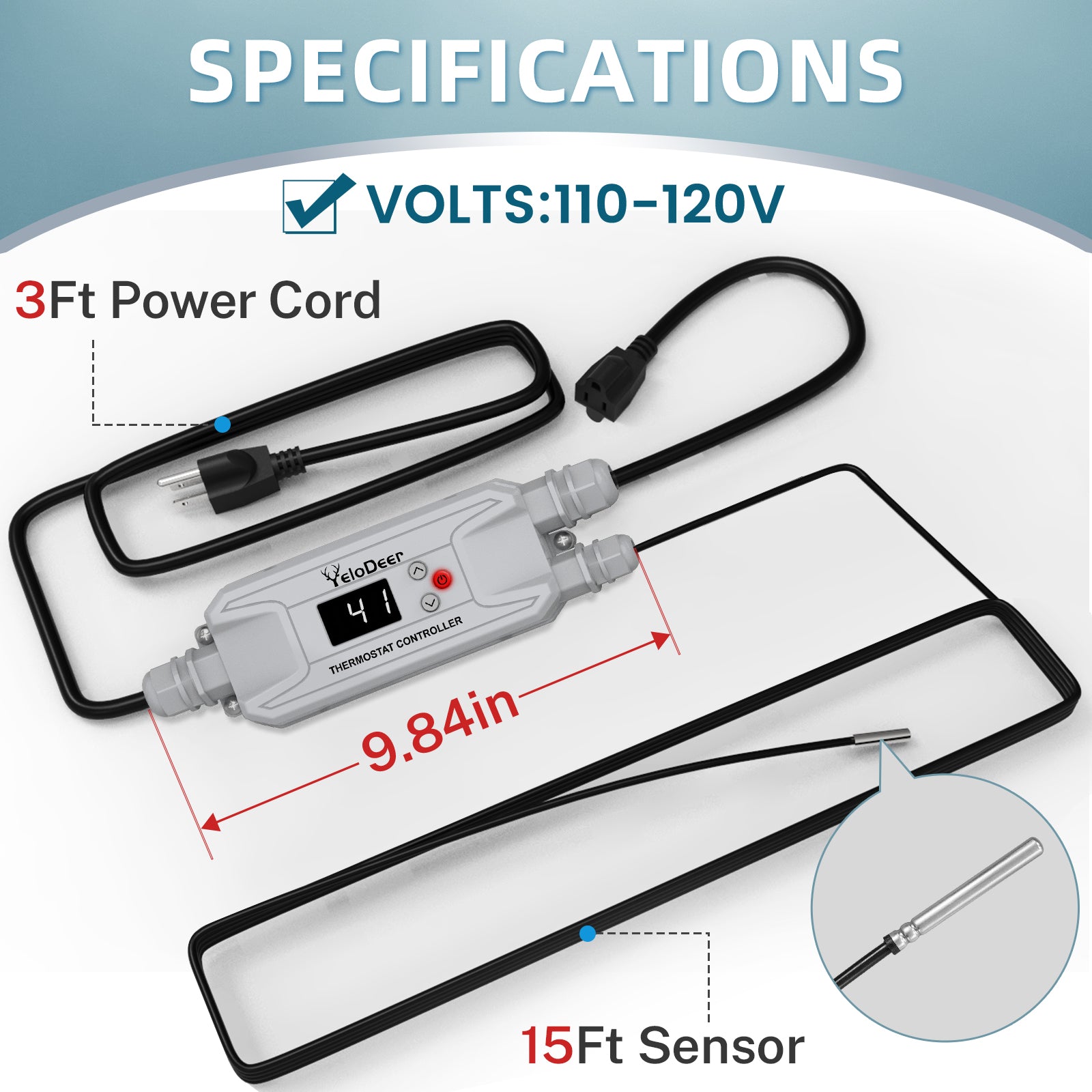
Voltage: 120V AC
Maximum Load: 15A
Temperature Control Range: 35.6°F to 86°F
Sensor Probe Length: 15 ft
Display: Digital temperature display
Unit Switch: °F / °C
Power Outage Memory: Supported
Plug Type: Grounded plug
Recommended Use: Pipe heat tape, heating cables, and compatible 120V heating devices within rated load
How It Works
The thermostat reads temperature from the 15 ft remote sensor.
When the sensor temperature drops below your set temperature, the thermostat powers the connected heating cable or heating device.
When the temperature rises above the control point, the thermostat stops powering the connected device.
This helps avoid continuous heating when freeze protection is not needed.
How to Choose the Temperature Setting
For pipe freeze protection, set the thermostat based on the pipe area you want to protect.
Common winter freeze protection settings are usually above freezing, so the heating cable can activate before the pipe reaches freezing temperature.
The best setting depends on:
• Pipe location
• Pipe material
• Insulation
• Wind exposure
• Local winter temperature
• Whether the pipe contains standing water
• How quickly the pipe area cools down
Sensor Placement Guide
For pipe heating, the sensor should be placed:
• On or near the pipe surface
• At the coldest section of the protected pipe
• Under insulation if the heating cable is insulated
• Away from direct heater output that may cause false readings
• Away from warm indoor air if the pipe itself is colder
• In a position that reflects the real freeze risk
If the sensor is not placed correctly, the thermostat may not control the heating cable as expected.
Load Check Reminder
Before plugging in a heating device, check its wattage and amperage.
Do not exceed 15A total load.
If multiple heating cables or devices are connected, add the total current or wattage together and make sure the combined load is within the thermostat rating.
Installation & Accessories
Basic Setup Overview
YeloDeer Pipe Heat Tape Thermostat is designed for simple plug-in installation.
Typical setup steps:
- Install the pipe heat cable according to the heating cable instructions.
- Place the 15 ft sensor at the coldest pipe location that needs monitoring.
- Secure the sensor so it stays in contact with the pipe area.
- Add pipe insulation if required for your heating cable installation.
- Plug the thermostat into a properly protected 120V outlet.
- Plug the heating cable into the thermostat outlet.
- Set the desired temperature.
- Confirm that the heating cable turns on and off as expected.
- Check the system before severe winter weather.
Important Installation Notes
• Use only with compatible 120V heating devices.
• Do not exceed 15A total load.
• Keep the thermostat body, plug, and outlet connection dry.
• The sensor can be placed near the pipe, but electrical plug connections must be protected from water.
• Do not allow the plug or outlet connection to sit in standing water.
• Place the sensor at the coldest pipe location.
• Do not place the sensor too close to a heat source unless that is the area you want to control.
• Use pipe insulation when recommended by the heating cable manufacturer.
• Follow the heating cable instructions and local electrical safety requirements.
Using with Pipe Insulation
For pipe freeze protection, insulation is strongly recommended in many installations.
Install the heating cable first, place the sensor at the correct location, then cover the pipe, heating cable, and sensor area with suitable pipe insulation when appropriate.
Insulation helps:
• Reduce heat loss
• Improve freeze protection
• Lower energy use
• Stabilize temperature readings
• Protect the pipe from wind exposure
Outdoor or Sheltered Use
The thermostat should be installed in a sheltered location where the controller, plug, and outlet connection are protected from rain, snow, and standing water.
The sensor can be routed to the pipe location, but electrical connections should stay dry.
For outdoor-related installations, use an outdoor-rated outlet, GFCI protection where required, and a weatherproof in-use cover.
Power Outage Memory
This thermostat includes power outage memory.
If the thermostat was ON before power loss, it will turn back ON when power returns.
If it was OFF before the power loss, it will remain OFF after power returns.
This is useful for winter freeze protection because the system can resume operation after a temporary outage without needing to reset all settings.
FAQ & Resources
Practical Questions About This Pipe Heat Tape Thermostat
1. Do I need this thermostat if my heating cable already has a built-in thermostat?
Usually no. If your heating cable already has a built-in thermostat, it may already turn on and off automatically. This thermostat is most useful for heating cables without built-in thermostat control, or when you want to place the sensor at a more specific cold spot.
If two thermostats are used together, the heating cable will only run when both control conditions allow power.
2. Where should I place the sensor for pipe freeze protection?
Place the sensor at the coldest section of the pipe that represents the freeze risk.
For best results, attach it to the pipe surface and place it under insulation, especially if the heating cable is installed under insulation.
Do not leave the sensor hanging in warm air if the pipe itself may be colder.
3. Can this thermostat be used outdoors?
The sensor can be placed in a cold or damp pipe area, but the thermostat body, plug, and outlet connection should be kept dry and protected.
For outdoor pipe applications, install the controller in a sheltered location or weather-protected area. Do not let the plug or socket sit in rain, snow, or standing water.
4. Will it turn back on after a power outage?
Yes. The thermostat has memory function. If it was ON before the outage, it will turn ON again after power returns. If it was OFF before the outage, it will stay OFF. This helps the system resume winter protection without manual reset.
5. Can it control any brand of heat tape?
It can work with many 120V heat tapes or heating cables, as long as the total load is within 15A and the heating cable is safe to control with an external thermostat. Always check the heating cable’s voltage, wattage, amperage, and installation instructions.
6. Does it save electricity?
Yes, compared with leaving a heating cable powered continuously.
The thermostat supplies power only when the sensor temperature is below your setting, helping reduce unnecessary runtime.
Actual savings depend on cable wattage, outdoor temperature, insulation, and how often the system runs.
7. Why is my heating cable not turning on?
Common reasons include:
• The sensed temperature is above the set point
• The thermostat is switched off
• The outlet has no power
• The GFCI or breaker has tripped
• The sensor is placed in a warmer area than the pipe
• The connected heating cable has its own thermostat and is not calling for heat
• The heating device exceeds the rated load or has a fault
Check power, set temperature, sensor location, and heating cable status before assuming the thermostat is defective.
8. What should I send if I need help checking compatibility?
Please email yelodeer@yelodeer.com with:
• Heating cable brand and model if available
• Heating cable voltage and wattage
• Pipe location and photos
• Pipe material and diameter
• Whether the cable has a built-in thermostat
• Where you plan to place the sensor
• Whether the controller will be indoors, outdoors, or sheltered
Our team can help review your setup before you order.
Real Customer Installations
The installation photos below show how customers use YeloDeer Pipe Heat Tape Thermostat to control heating cables and pipe freeze protection systems in real winter applications.
Common examples include crawl space pipes, outdoor water lines, barn water systems, garage pipes, greenhouse heating, and heating cables without built-in thermostat control.
Every installation is different. Pipe location, insulation, sensor placement, cable wattage, wind exposure, and winter temperature can all affect performance.

Before ordering, please check:
• Heating cable voltage
• Total amperage or wattage
• Whether the heating cable already has a thermostat
• Pipe location and exposure level
• Sensor placement location
• Whether insulation will be used
• Whether the controller and plug can stay dry
• Whether GFCI protection or weatherproof outlet protection is needed
Important Reminder
For pipe freeze protection, sensor placement is critical. The sensor should be placed at the coldest pipe location, not in a warm indoor area away from the pipe.
If you are unsure whether this thermostat is suitable for your setup, send photos and heating cable details to yelodeer@yelodeer.com. Our team can help review your application before you order.