Enjoy free shipping on orders over $30.
We ship orders within 48 hours for quick delivery.
1. Our website accepts Visa, MasterCard, and American Express. If you are using a card issued by another bank, please ensure it is enabled for international transactions.
2. During payment, you may be required to complete 3D Secure (3DS) verification. Please ensure that the cardholder completes the verification to avoid payment failure.
3. If your usual spending amounts are relatively low and you are making a larger purchase, your bank may flag the transaction as a potential risk. If your payment fails, please contact your bank to approve the transaction.
12V RV Self-Regulating Heating Cable | YeloDeer
Overview
12V DC Self-Regulating Heating Cable for RV, Camper, Trailer & Off-Grid Pipe Freeze Protection
YeloDeer 12V DC Self-Regulating Heating Cable is a low-voltage external pipe and hose heating cable designed for freeze protection where standard 120V household power is not available or not convenient.
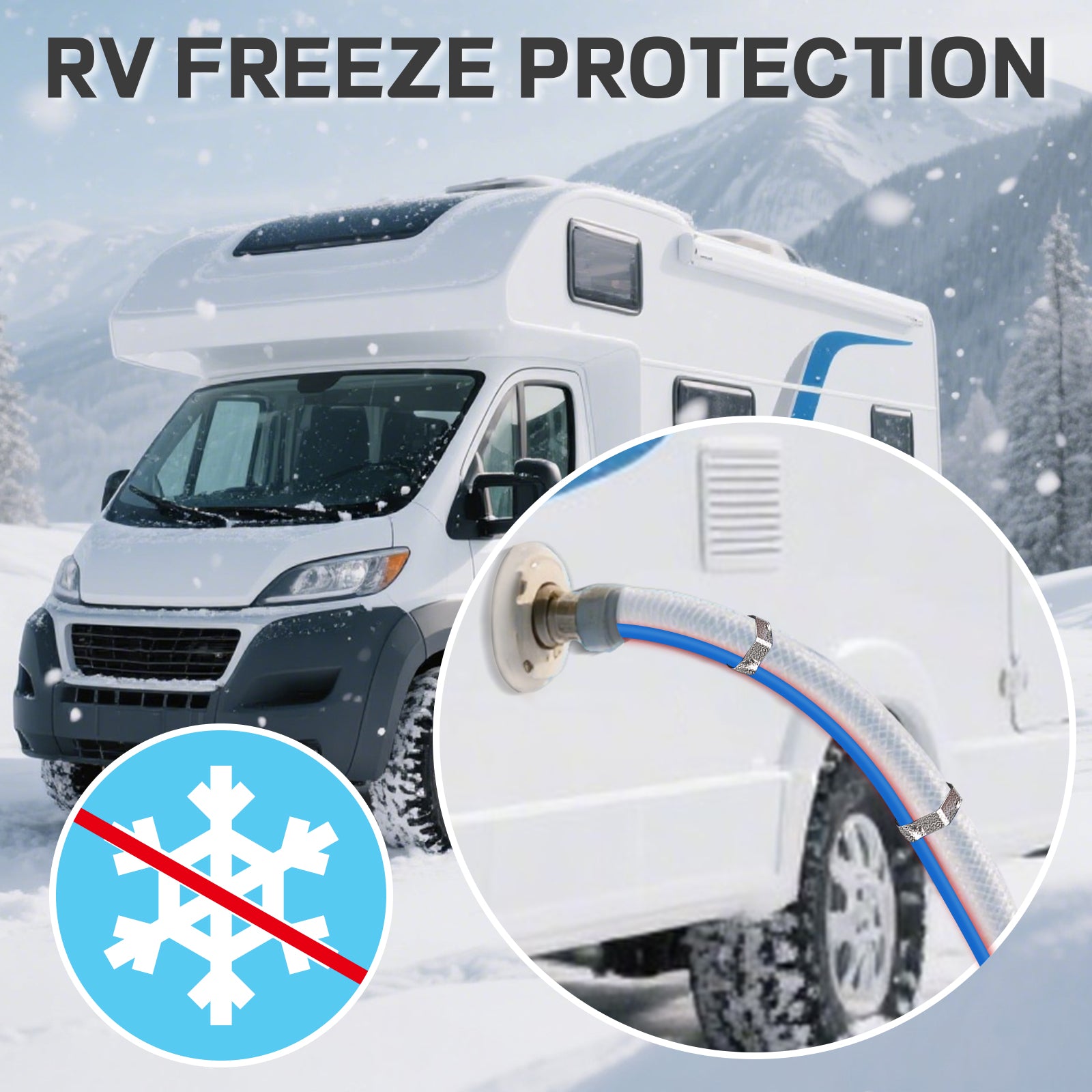
It is made for 12V DC power systems commonly used in RVs, campers, trailers, boats, off-grid cabins, solar battery systems, emergency water setups, and small outdoor water lines. It helps protect exposed pipes, hoses, fittings, and short vulnerable water-line sections from freezing when properly installed and insulated.
Unlike standard 120V pipe heat tape, this cable does not plug directly into a household outlet. It runs on 12V DC power and should be connected only to a properly sized 12V DC power source with suitable fuse protection, correct wire gauge, and moisture-protected electrical connections.
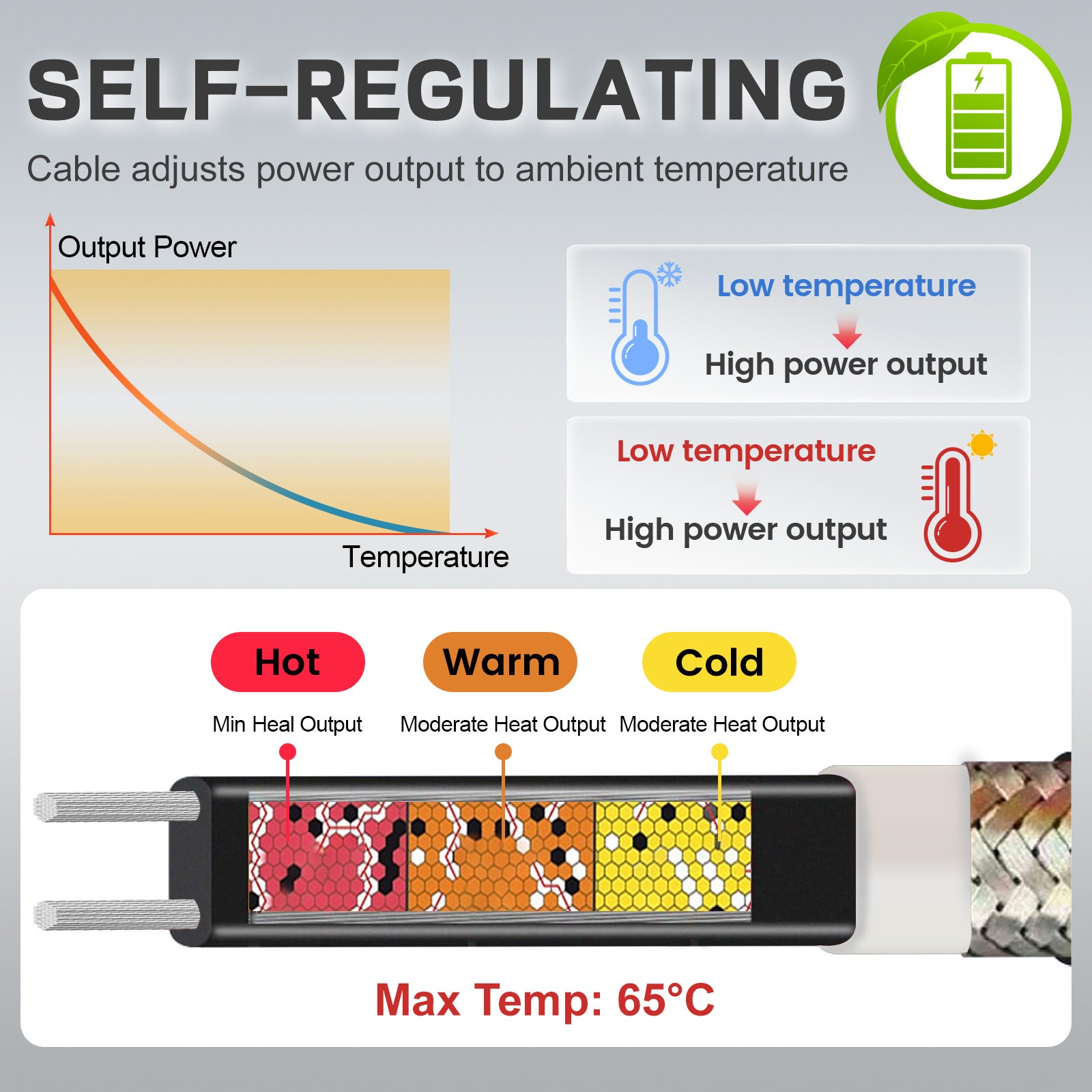
The cable uses self-regulating heating technology. It produces more heat in colder areas and reduces output as the pipe or cable warms. This helps support safer and more energy-conscious operation, especially on compact RV, mobile, and battery-powered installations.
12V Power Snapshot
Key Benefits
Best For
Why Cut-to-Length Matters
Many freeze problems happen on short or irregular sections: a few feet of exposed RV plumbing, a hose connection, a valve area, an elbow, or a small outdoor water line. A fixed-length cable may leave too much extra cable or be difficult to route neatly.
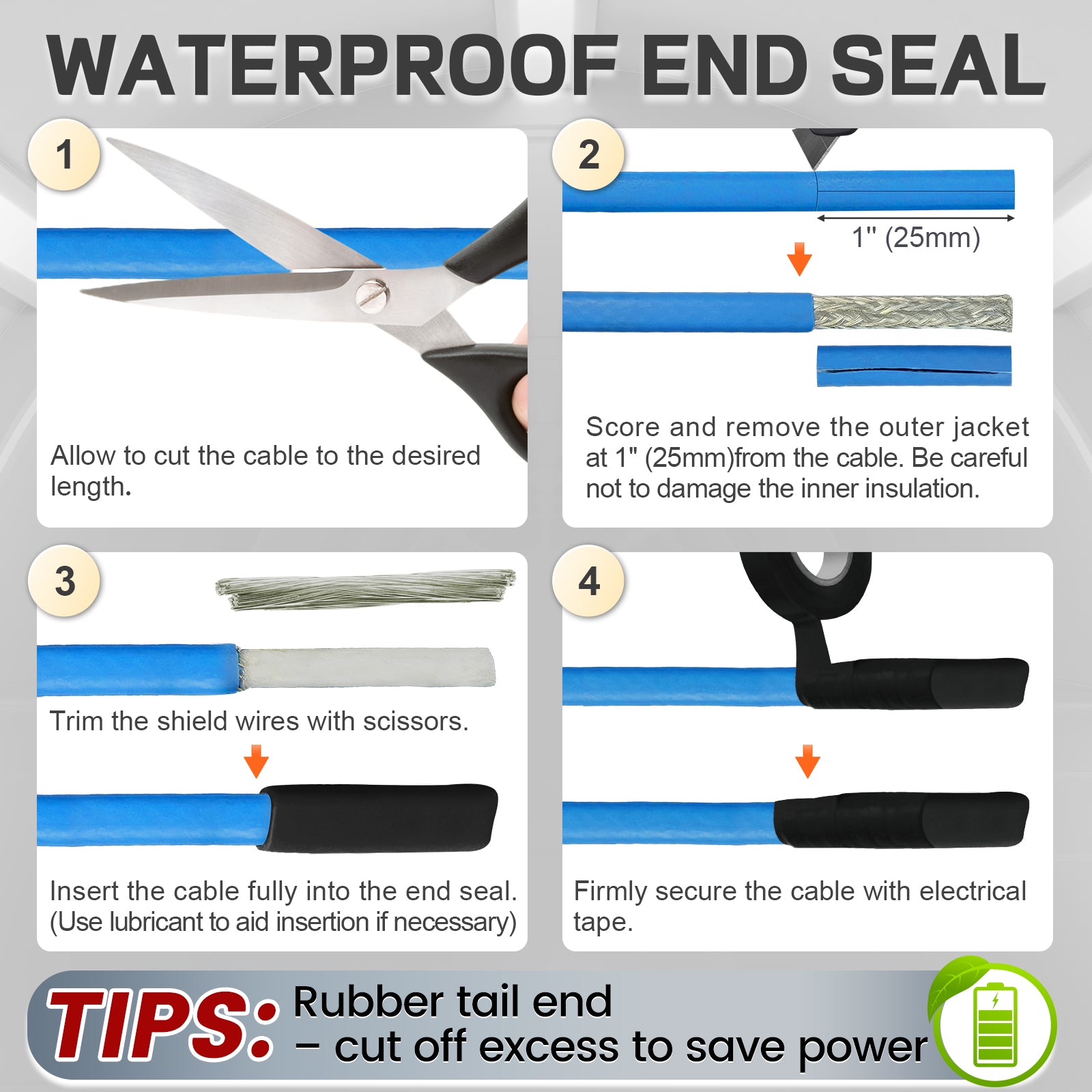
This cable can be cut shorter to better fit the actual pipe or hose layout. After cutting, the cut end must be sealed correctly with the included end seal kit before the cable is powered. For general setup guidance, review the YeloDeer Installation Guide.
Important Before You Order
This product requires 12V DC power. It is not a 120V plug-in pipe heat cable. Do not connect it directly to a household 120V AC outlet.
External Pipe Use Only
Self-Regulating Does Not Mean Auto-Off
Self-regulating means the cable changes heat output as temperature changes. It produces more heat when colder and reduces heat output as the pipe warms.
It does not fully shut off by itself. If connected to 12V DC power, it may continue to draw power. For battery-powered systems, a thermostat, switch, fuse, or power management method is recommended.
Low-Voltage Safety Note
This product operates on 12V DC low-voltage power, which helps reduce electric shock risk compared with household-voltage AC heating cables. However, low voltage does not remove the need for proper installation. Always use suitable fuse protection, correct wire gauge, moisture-protected connections, and a properly sized 12V DC power source.

Applications
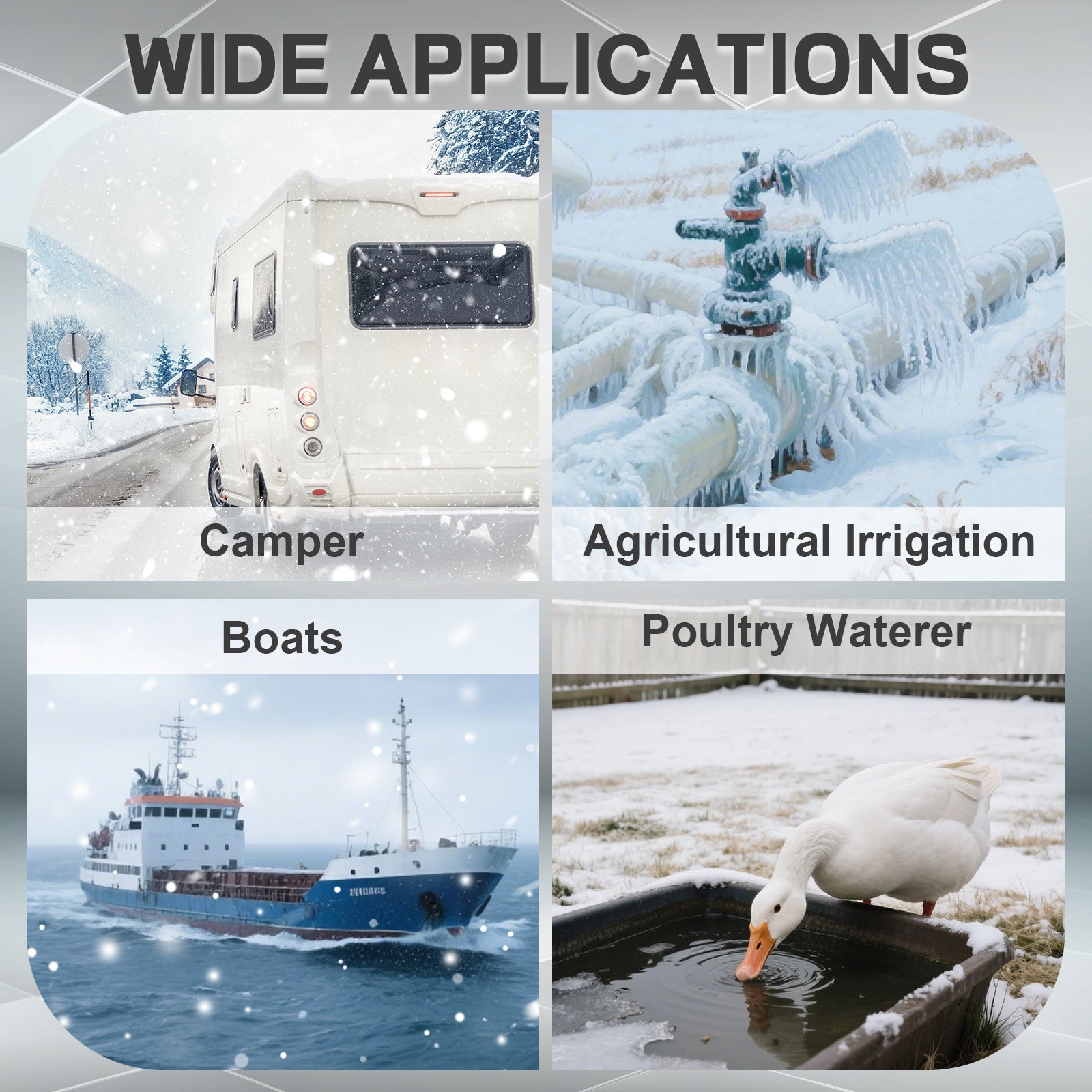
Recommended Applications
YeloDeer 12V Self-Regulating Heating Cable is designed for external freeze protection where 12V DC power is available and 120V AC power is not practical.
Mobile & Off-Grid Use Cases
Compatible Pipe and Hose Materials
Before installation, make sure the pipe or hose is clean, dry, undamaged, and safe to heat. Add insulation over the heating cable and pipe whenever possible to improve freeze protection and reduce battery consumption.
When Not to Use This Product
- 120V AC household outlet connection
- 240V systems
- In-pipe installation
- Internal drinking water installation
- Sewer or drain pipe internal heating
- Long-term submersion
- Roof and gutter de-icing
- Large high-power pipe heating projects requiring 120V cables
- Applications without proper fuse protection
- Systems where electrical connections may sit in water
- Battery systems that cannot support the required current
- Applications requiring certified wet-location or direct-burial heating cable
If you need standard household pipe freeze protection, choose a 120V pipe heat cable. If you need internal pipe freeze protection, choose a YeloDeer in-pipe heating cable or in-water heating cable.
Specifications
Product Specifications
| Product Type | 12V DC self-regulating external heating cable |
| Application | Low-voltage pipe, hose, RV, camper, trailer, boat, and off-grid freeze protection |
| Voltage | 12V DC |
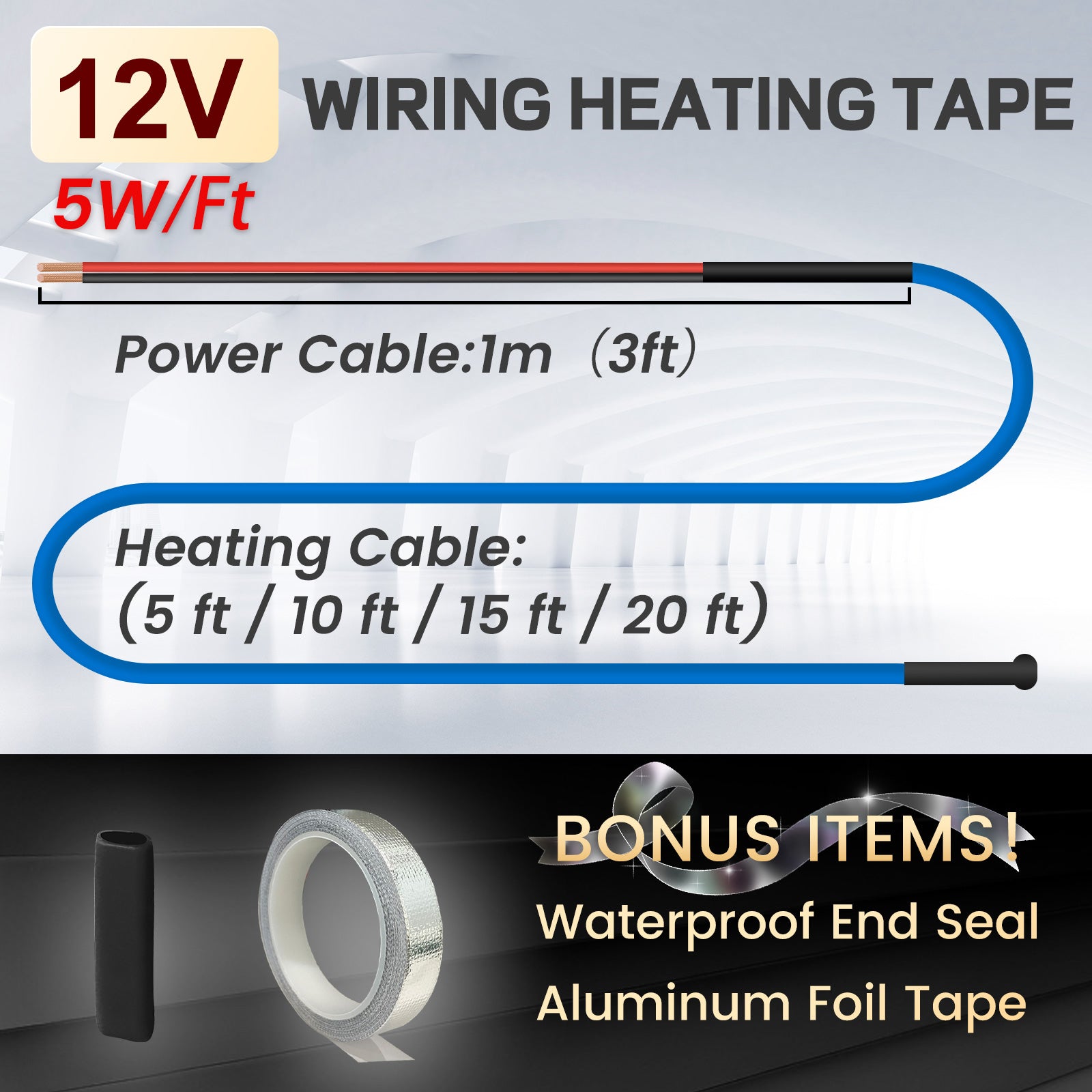
| Heating Output | 5W/ft at 50°F / 10°C |
| Cable Type | Self-regulating heating cable |
| Maximum Stable Cable Temperature | Approx. 140°F / 60°C |
| Power Cord Length | 3 ft |
| Installation Methods | Straight, spiral, or properly overlapped installation |
| Cut-to-Length | Yes, when properly sealed with the included end seal kit |
| End Seal | End seal kit included for sealing the cut end after shortening |
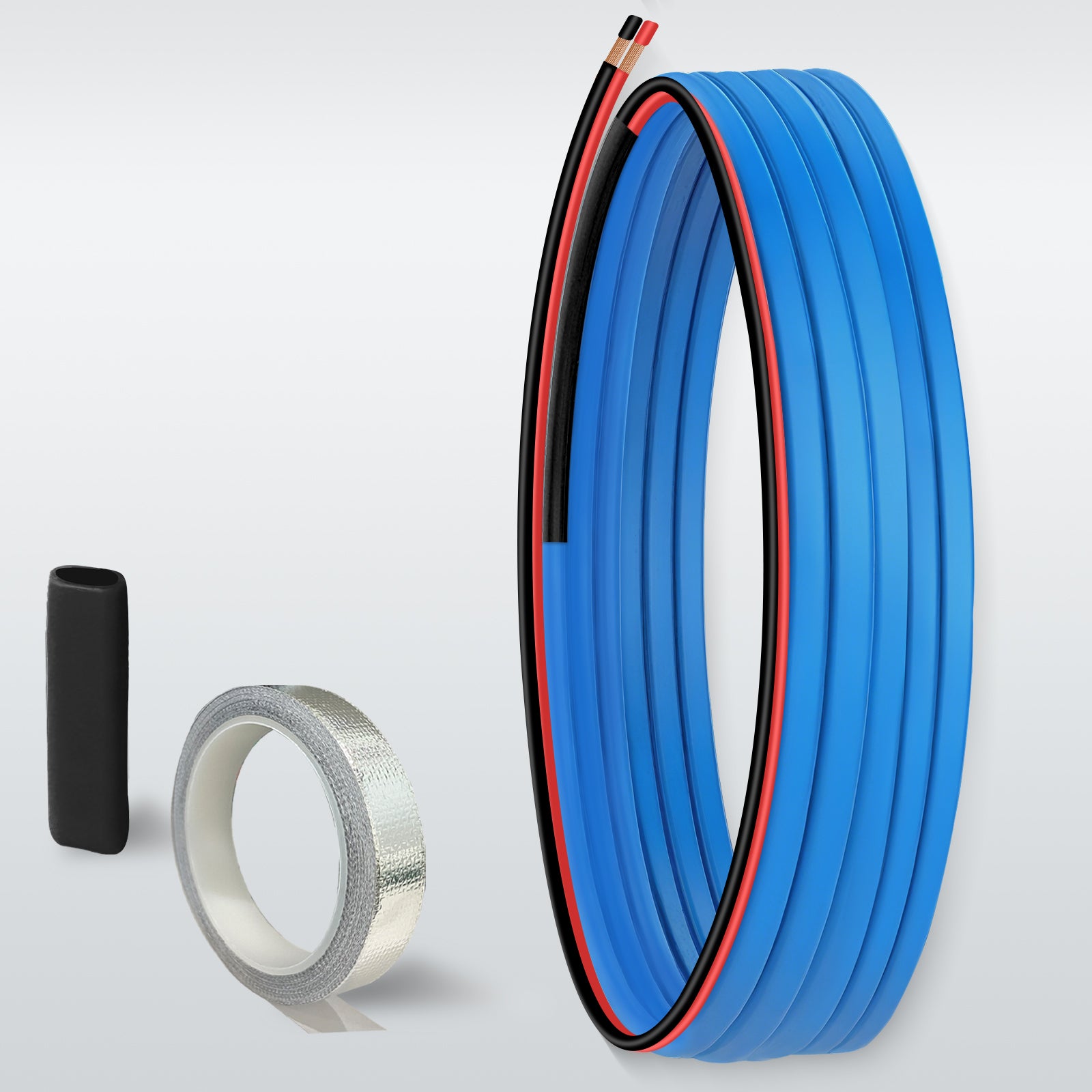
| Included Accessories | 3 ft power cord, end seal kit, aluminum foil tape, and zip ties |
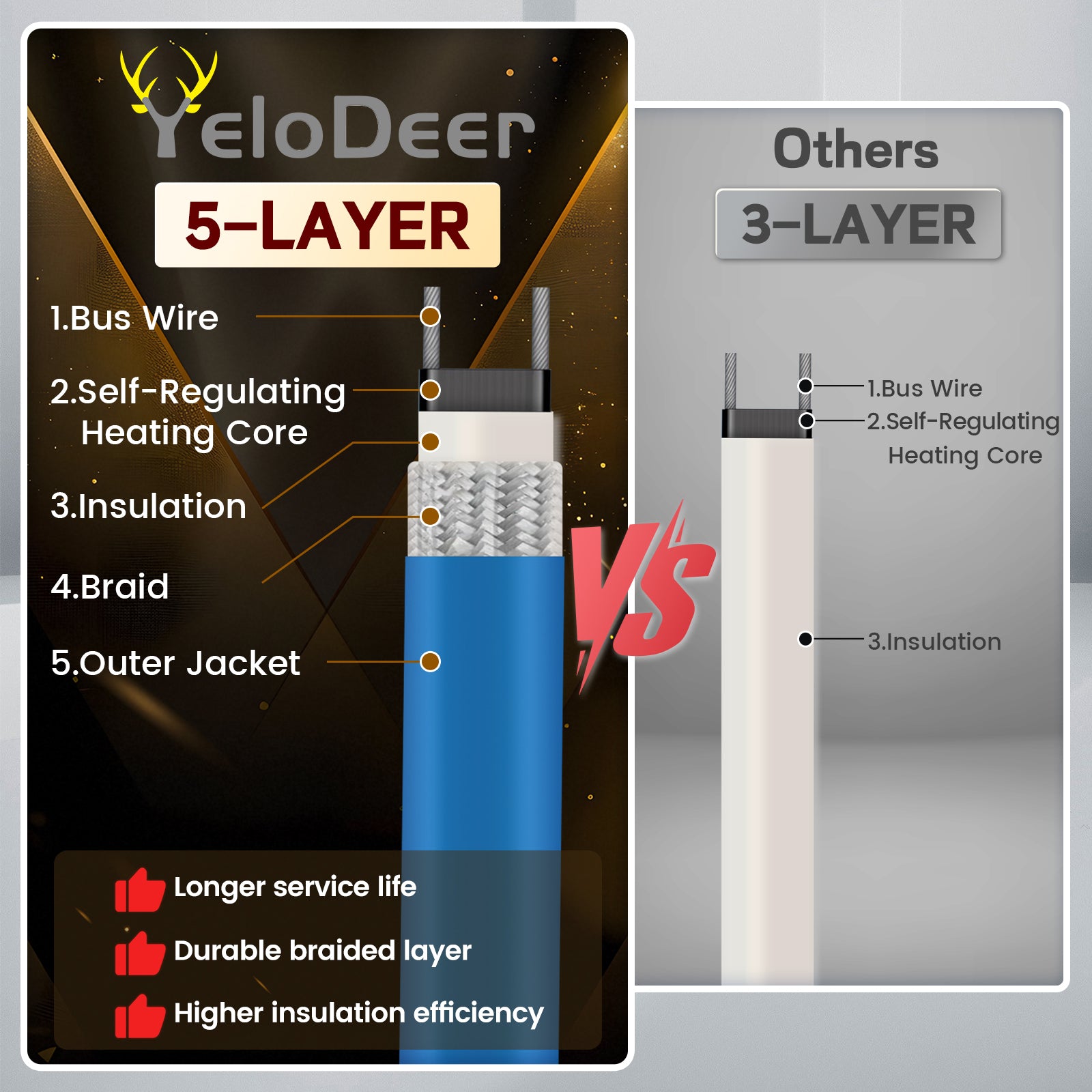
| Cable Structure | 5-layer design with bus wire, heating core, insulation, braid, and outer jacket |
| Available Lengths | 5 ft, 10 ft, 15 ft, and 20 ft |
| Recommended Use | 12V DC external pipe and hose freeze protection |
| Certification | No third-party electrical certification mark claimed |
How to Choose the Right Length
Choose the cable length based on the section of pipe or hose that needs freeze protection. For unusual layouts, photos and measurements can also be reviewed through YeloDeer Project Consultation.
Installation
Overlapping Installation
Because this is a self-regulating cable, it can touch or overlap itself when installed properly. This can be useful around valves, elbows, fittings, and short pipe sections. Avoid tight knots, crushing, sharp bends, or fastening methods that may damage the cable jacket.
Power Draw and Battery Planning
This cable is rated at 5W/ft at 50°F / 10°C. Actual power draw may change with temperature because the cable is self-regulating.
For battery-powered use, always confirm battery capacity, fuse size, wire gauge, and expected runtime before installation. A thermostat or switch is recommended to reduce unnecessary battery drain.
Can the Cable Be Cut?
Installation & Accessories
Basic Installation Overview
YeloDeer 12V Self-Regulating Heating Cable is designed for external installation on pipes, hoses, and low-voltage water systems. For broader setup guidance, review the YeloDeer Installation Guide.
- Confirm your power source is 12V DC.
- Measure the pipe or hose section that needs freeze protection.
- Clean and dry the pipe or hose surface.
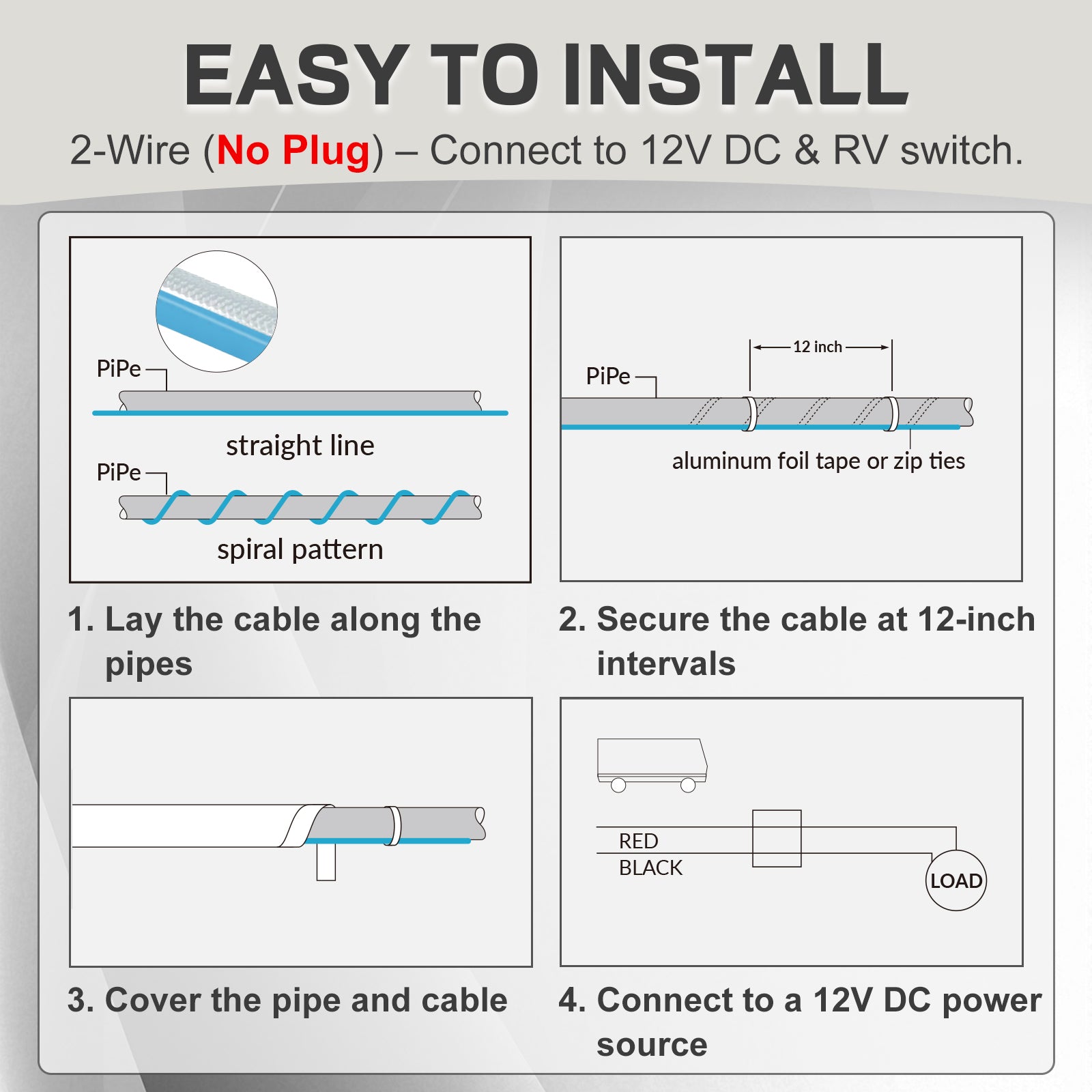
- Lay the cable straight along the pipe or wrap it in a spiral pattern.
- Secure the cable with aluminum foil tape or zip ties.
- Keep the cable in contact with the pipe or hose surface.
- If cutting is needed, cut the heating cable to the desired length.
- Seal the cut end with the included end seal kit.
- Add pipe insulation for better freeze protection and energy efficiency.
- Connect the cable to a properly protected 12V DC power source.
- Use a fuse, switch, or thermostat if needed for safer and more controlled operation.
- Test the system before severe winter conditions.
Important Installation Notes
Use only with 12V DC power. Do not connect directly to 120V AC household power. Protect all electrical connections from water, snow, road spray, vibration, and abrasion.
Using Pipe Insulation
Install the heating cable first, then apply insulation over the pipe and cable.
Using with RV or Battery Power
Using a Thermostat or Switch
A thermostat or manual switch is recommended for better control, especially in battery-powered systems. It can help reduce unnecessary battery drain, turn the cable off when freeze protection is not needed, and make RV or off-grid use easier to manage. For temperature-control options, see the YeloDeer Pipe Heat Tape Thermostat.
What Is Included
What You May Need Separately
Outdoor and Mobile Installation Reminder
For mobile applications such as RVs, campers, trailers, and boats, installation must account for vibration, movement, moisture, road spray, and abrasion. Secure the cable carefully and inspect it regularly during winter use.
FAQ
Product Basics
Is this a 12V or 120V heating cable?
This is a 12V DC heating cable. Do not connect it directly to a 120V AC household outlet. If you need standard household pipe heat tape, choose a 120V YeloDeer pipe heating cable.
Why choose 12V instead of 120V?
Choose 12V when you need freeze protection in an RV, camper, trailer, boat, off-grid cabin, battery-powered water system, solar setup, or remote location where household 120V AC power is not available or not practical.
Does self-regulating mean it turns off by itself?
No. Self-regulating means the cable adjusts heat output based on temperature. It does not fully turn off by itself. If connected to power, it may continue to draw current. For battery systems, use a switch or thermostat to avoid unnecessary power drain.
Does this cable have a built-in thermostat?
No. This cable does not have a built-in thermostat. A thermostat or manual switch is recommended if you want better temperature control or battery protection. See the YeloDeer Pipe Heat Tape Thermostat if you need a separate temperature-control option.
Is this product certified?
This product does not carry a third-party electrical certification mark. It operates on 12V DC low-voltage power, but it still requires correct installation, fuse protection, suitable wire gauge, and moisture-protected connections.
Power & Battery Planning
Can I use this with an RV battery?
Yes. This cable is designed for 12V DC systems and may be used with RV batteries when the circuit is properly fused and the battery can support the current draw. Check total power draw and expected runtime before use.
Can I use this with a solar battery system?
Yes. It may be used with a 12V solar battery system if the battery, charge controller, wiring, and fuse protection are properly sized. Because heating cables can consume significant energy over time, calculate battery capacity carefully.
Will the cable drain my battery?
It can, especially if left connected continuously. Self-regulating heating reduces output as the cable warms, but it does not mean zero power draw. Use a thermostat, manual switch, or power management method when battery runtime matters.
Compatibility & Applications
Can I use this on plastic pipes or hoses?
Yes. It can be installed externally on many suitable plastic pipes, metal pipes, RV hoses, garden hoses, and outdoor water lines. Make sure the pipe or hose is clean, dry, undamaged, and safe to heat.
Can it be used on dry or empty pipes?
Yes. When installed properly, this self-regulating cable can be used on dry or empty pipes. It reaches a stable maximum cable temperature of approximately 140°F / 60°C. Do not install it on damaged or heat-sensitive surfaces without confirming suitability.
Can I use it for livestock or pet water systems?
Yes, it may be used externally on suitable water lines for poultry, livestock, or pet water systems. Protect the cable from chewing, abrasion, standing water, sharp edges, and animal contact.
Can I use it on a boat?
It may be used on suitable boat water lines or onboard low-voltage plumbing sections when connected to a proper 12V DC system. However, it is not rated for submersion and does not carry a marine certification. All electrical connections must be protected from moisture.
Installation & Accessories
Can the cable be cut shorter?
Yes. The heating cable can be cut to length when properly sealed. This is useful for short RV water lines, fittings, elbows, valves, hoses, and compact layouts. After cutting, the cut end must be sealed with the included end seal kit. Review the Installation Guide before cutting or sealing.
Can the cable overlap itself?
Yes. Because it is self-regulating, the cable can touch or overlap itself when installed properly. Avoid tight knots, crushing, sharp bends, or damaging the outer jacket.
Can I use it outdoors?
Yes, but all electrical connections must be protected from moisture. The cable can be used in outdoor freeze protection applications, but power connections, splices, switches, and battery terminals must be kept dry and protected.
Do I need insulation?
Insulation is strongly recommended. Heating cable supplies heat, but insulation helps hold that heat around the pipe or hose. Without insulation, the cable may use more energy and may not provide enough freeze protection in colder or wind-exposed conditions.
What accessories are included?
The product includes the heating cable, 3 ft power cord, end seal kit, aluminum foil tape, and zip ties. Battery, fuse, fuse holder, switch, thermostat, extra wire, connectors, power supply, and insulation may need to be purchased separately.
Safety & Application Limits
Can I use this inside a drinking water pipe?
No. This cable is for external installation only. Do not insert it inside drinking water pipes, sewer pipes, drain pipes, tanks, or hoses. For internal potable water applications, choose a dedicated in-pipe heating cable.
Can I use it for roof and gutter de-icing?
No. This product is designed for low-voltage pipe and hose freeze protection. For roof, gutter, and ice dam prevention, choose a dedicated roof de-icing cable.
Can I connect it directly to a 120V outlet?
No. Never connect this cable directly to 120V AC household power. This product is for 12V DC power only.
Selection Help
What should I send if I need help choosing the right setup?
Please email yelodeer@yelodeer.com with pipe or hose length, pipe or hose diameter, application photos, power source type, battery voltage and capacity, straight or spiral installation plan, whether you need to cut the cable, and whether insulation will be added.
Our team can help review your application before you order. You can also use YeloDeer Project Consultation for more complex RV, off-grid, or custom freeze-protection layouts.
Related Resources
- For standard 120V pipe freeze protection, choose YeloDeer Self-Regulating Pipe Heat Tape with Thermostat.
- For no-thermostat 120V plug-and-heat applications, choose YeloDeer Yellow Self-Regulating Pipe Heat Cable.
- For custom 120V pipe heating projects, choose YeloDeer Bulk PGB Self-Regulating Pipe Heating Cable.
- For internal pipe freeze protection, choose YeloDeer In-Pipe Heating Cable or YeloDeer In-Water Heating Cable.
- For thermostat control, see the YeloDeer Pipe Heat Tape Thermostat.
- For installation planning, review the YeloDeer Installation Guide.
- For custom layouts or unclear applications, use YeloDeer Project Consultation.
- For product selection help, contact yelodeer@yelodeer.com with photos and power details.
Guide
Freeze Protection Guide for RVs, Hoses, Off-Grid Water Lines & 12V Pipe Heating
Frozen water lines often happen in smaller exposed places: an RV fresh water hose, camper plumbing section, boat water line, garden hose, poultry water line, shed pipe, or short off-grid cabin water line.
This guide explains when 12V pipe heating makes sense, when 120V is better, how to think about battery runtime, and what mistakes to avoid before winter.
Quick Search Answers
Why do RV, camper, and off-grid water lines freeze?
RV and off-grid water systems often freeze because the plumbing is exposed, lightly insulated, close to outside air, or located in compartments that do not receive steady heat.
Common freeze points include fresh water hoses, fittings, hose connections, elbows, valves, underbody RV plumbing, boat water-line sections, outdoor shed pipes, animal water lines, garden hose connections, and outdoor faucets.
A heating cable helps add heat directly to the vulnerable section, while insulation helps keep the heat in place.
12V heating cable vs 120V heat tape: which one should I choose?
Simple rule: use 120V when household power is available and practical. Use 12V when the water line is mobile, remote, off-grid, battery-powered, or difficult to reach with household AC power.
How to protect RV hoses, garden hoses, and short outdoor pipes
For RV hoses and outdoor hoses, install the heating cable externally, keep it in contact with the hose, add insulation, and protect all electrical connections from moisture.
For short outdoor pipes, measure the vulnerable section carefully. Include valves, fittings, elbows, and exposed connection points. A cut-to-length cable is useful when the problem area does not match a standard cable length.
Do not insert this cable inside a hose, drinking water pipe, tank, sewer line, or drain pipe.
Pipe heating cable vs heated water hose
A heated water hose is usually a ready-made hose with heating built in. It can be convenient when the full hose length needs freeze protection.
A pipe heating cable is more flexible. It can be applied to pipes, hoses, fittings, elbows, valves, and short custom sections. A cut-to-length heating cable is especially useful when only part of the line needs protection or the layout is irregular.
Why cut-to-length matters for freeze protection
Freeze problems often happen in awkward places. A standard fixed-length cable may be too long, too short, or difficult to route neatly.
Cut-to-length cable helps when the pipe section is only a few feet long, the vulnerable area includes valves or fittings, the cable needs to fit inside an RV compartment, or the layout is compact.
With YeloDeer 12V self-regulating heating cable, the cable can be shortened when needed. After cutting, the cut end must be sealed with the included end seal kit before the cable is powered.
How much power does a 12V heating cable use?
A 12V heating cable can still use meaningful power because heating requires energy. Lower voltage does not mean low total power.
Actual draw can vary with temperature because the cable is self-regulating. For battery use, consider battery capacity, cold-weather performance, cable length, insulation, wind exposure, and thermostat control.
Do I need a thermostat for pipe freeze protection?
A thermostat is not always required, but it often makes the system better. Without a thermostat, the cable can continue drawing power whenever connected.
A thermostat helps turn the cable on when temperatures approach freezing and off when heat is not needed. It is especially useful for RV batteries, solar battery setups, boats, off-grid cabins, and seasonal outdoor water lines. See the YeloDeer Pipe Heat Tape Thermostat for a separate control option.
Can heating cable be used for boats, animal water lines, or vehicle fluid systems?
For boats, this cable may be used on suitable low-voltage water-line sections when protected from moisture, vibration, and abrasion. It is not for submersion and does not carry a marine certification.
For poultry, pet, or small livestock water lines, it may help protect suitable external water lines. Protect the cable from chewing, abrasion, standing water, sharp edges, and animal contact.
For hydraulic lines, DEF systems, commercial vehicles, or specialized fluid systems, confirm suitability before use. These applications may require dedicated certified products or custom engineering review.
Common freeze protection mistakes to avoid
- Connecting a 12V DC cable to 120V AC power
- Using heating cable without insulation in exposed outdoor conditions
- Ignoring battery runtime
- Skipping fuse protection
- Using undersized wire
- Leaving connections exposed to moisture or road spray
- Installing external heating cable inside a pipe, hose, tank, sewer line, or drain pipe
- Using pipe heating cable for roof or gutter de-icing
- Cutting the cable but not sealing the cut end
How to choose between YeloDeer heating products
The right solution depends on power source, pipe location, exposure level, installation length, insulation, and control method.